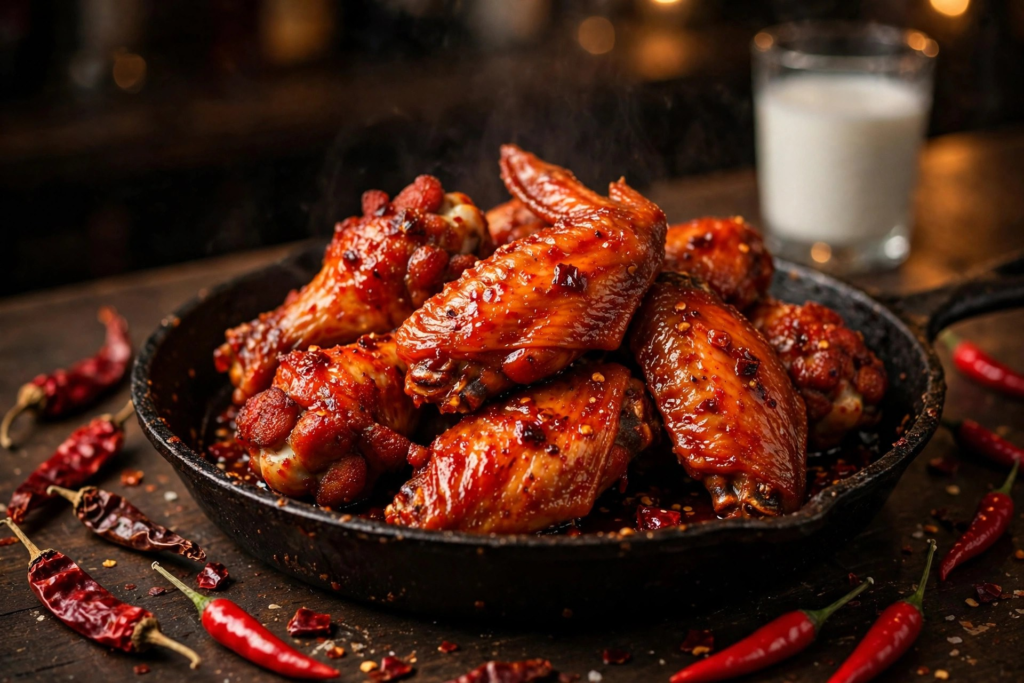
Every game-day table has one. The guest who hovers over the spread, surveys the wings and the dip and the nachos, and says the five words that kill a host’s buzz: “Is there anything… lighter?” For years, the honest answer was the celery sticks. Which is to say there was no answer.
Baked buffalo cauliflower is the answer now, and before you roll your eyes — hear us out. This is not a sad health-food compromise pretending to be wings. This is a genuinely good bar snack that happens to be a vegetable, and the trick to making it great is the same trick that makes wings great: heat, acid, fat, and a crunch that survives the sauce.
The problem with most buffalo cauliflower
Most recipes treat cauliflower like chicken and learn the hard way that it is not chicken. Chicken skin crisps under sauce and stays crisp. Cauliflower releases water. So the standard method — dredge it, sauce it, bake it — produces florets that steam inside a soggy coating and arrive at the table as orange mush with good intentions. Nobody is fooled. The wing people eat one out of politeness and go back to the wings, and the whole dish sits there getting softer and more defeated.
The fix is a two-pass method, and it is the entire game. Roast the cauliflower naked first — battered, yes, but unsauced — until the coating is set and golden. Only then does the sauce show up, followed by a short second bake to glaze it on. The coating goes into the sauce already crisp and structurally committed, and it comes out coated instead of drowned. This one change is the difference between a dish people finish and a dish people photograph and abandon.
The batter is thinner than you think
Here is the second mistake: a batter thick enough to coat cauliflower like fried chicken. Cauliflower is not chicken. A thick batter never sets properly around all those little curds and crevices; you end up with a gummy shell that peels off in one sad sheet. You want a thin batter — closer to a crepe batter than a pancake batter — just enough to give the hot oven something to crisp.
Whisk together a cup of flour, a cup of milk (dairy or not, it barely matters here), a teaspoon each of garlic powder and smoked paprika, and a good pinch of salt. The paprika is doing real work — it adds a smoky depth that makes the cauliflower taste like it came off a grill instead of a baking sheet. Toss the florets through it, let the excess drip off, and spread them on a parchment-lined sheet pan with actual space between them. Crowded cauliflower steams. Crowded cauliflower is the enemy. Give every floret its personal space and roast at 425°F for about twenty minutes, flipping once, until golden at the edges.
Want extra insurance on the crunch? A light shower of panko over the battered florets before they go in. Press it on gently. It’s the closest thing to a fried coating an oven will give you.
Sauce it like a wing shop
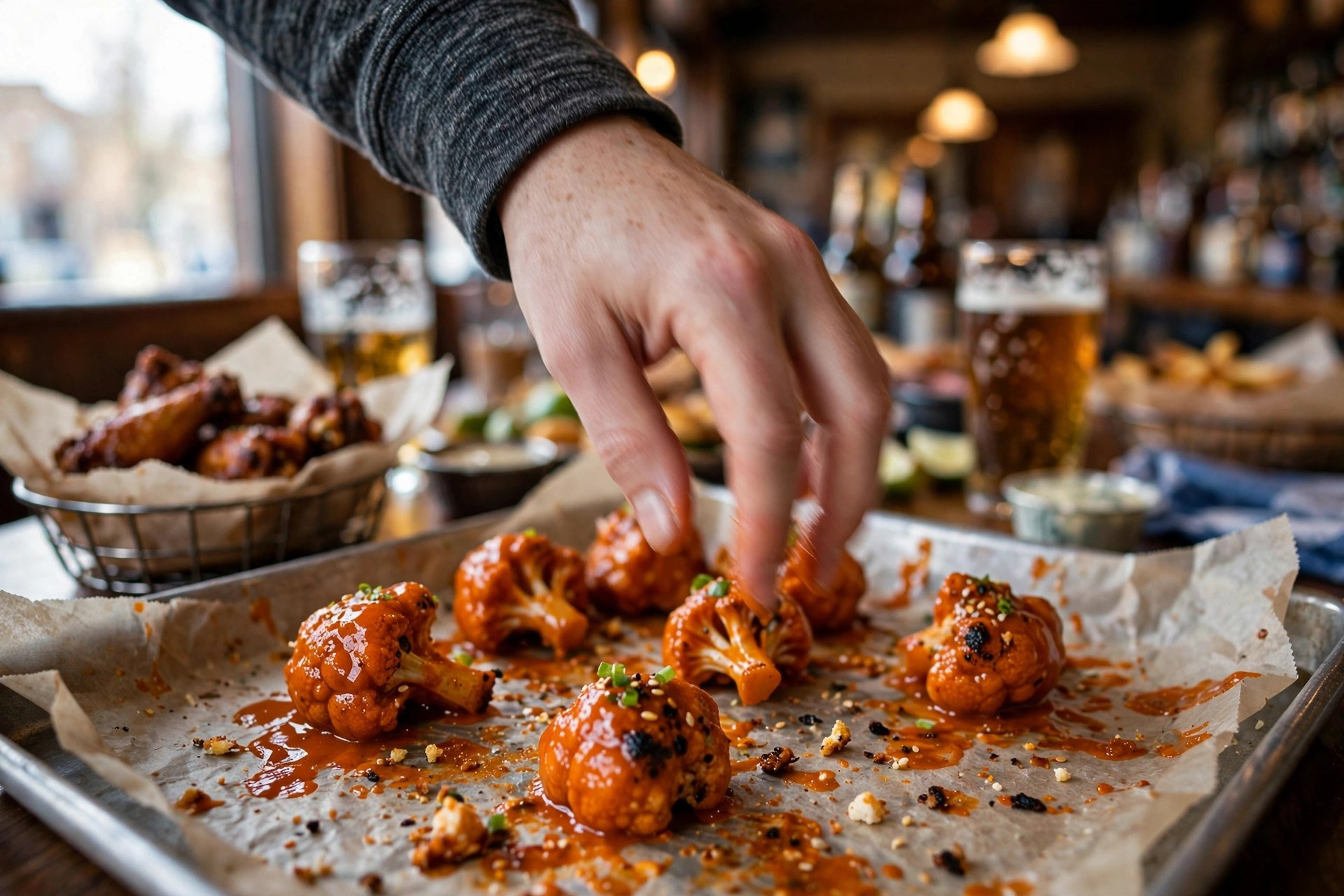
Buffalo sauce is a formula, and the formula is not complicated: cayenne-pepper hot sauce plus melted butter, whisked warm. That’s the entire classic wing sauce — the same two ingredients Teressa Bellissimo’s kitchen has been working with since 1964, and it is still the right answer. For a full head of cauliflower, melt four tablespoons of butter and whisk it into two-thirds of a cup of hot sauce with a minced garlic clove. Warm it through for a minute so it emulsifies instead of separating.
If you want a little extra something, a teaspoon of honey in the sauce rounds the edges and helps the glaze set with a shine. This is optional and the purists will pretend not to notice. Toss the hot, roasted florets in the sauce gently — a big bowl, a rubber spatula, restraint — then spread them back on the pan and give them five to eight more minutes in the oven. The sauce tightens into a glaze instead of pooling at the bottom of the bowl. That is the whole point of the second pass.
Serve it hot or don’t bother
This is the part no recipe warns you about, so consider this your warning: buffalo cauliflower has a half-life. Off the oven, in a warm cast-iron skillet, it is spectacular — crisp edges, sticky glaze, the full wing-shop illusion. Twenty minutes later on a room-temperature tray, the steam it gives off softens the coating from the inside out and it slides toward mediocrity.
So time it like a bartender times a cocktail: pull it five minutes before people will actually eat it, not when the guests arrive. The Super Bowl spread gets built at kickoff; this gets pulled right before the second quarter starts, or right before halftime. Serve it in the hot skillet with celery sticks and a bowl of blue cheese dressing — the full wing ritual, because the ritual is half the flavor. And make the blue cheese real: crumbled blue in sour cream or Greek yogurt, a squeeze of lemon, salt and pepper. Ranch works too, but you know where this bar stands on that.
Where it sits on the spread
Here’s the thing nobody expected: this dish doesn’t just serve the one guest who asked for something lighter. It serves the whole table as a palate break. The National Chicken Council estimated Americans would eat something like 1.48 billion wings during Super Bowl LX — and by the third hour of that, even the most committed wing devotee is quietly grateful for something that tastes like buffalo but doesn’t sit like a brick. The cauliflower gives the table a second wind.
Put it on the spread between the wings and the dip. Watch the skeptics take one “to be polite” and come back for three more while nobody’s looking. That is the whole business model of this dish: it wins by being good, not by being virtuous. The virtue is just a bonus you can mention to whoever asked for something lighter — right before they ask you for the recipe.