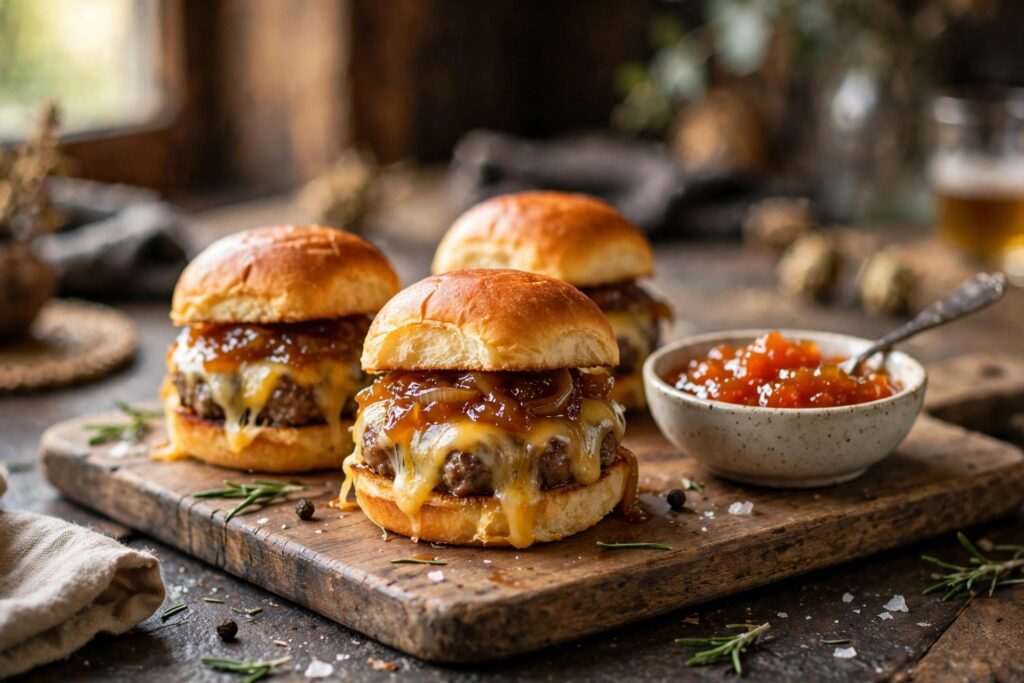
Sliders have a strange power. Put a full-sized burger in front of someone and they eat it, enjoy it, and move on. Put a tray of small ones in front of a group and suddenly everyone is sampling, comparing, reaching for a second, and debating which combination was best. Size changes behaviour. A slider is permission to try more than one thing, and on game day, that is exactly what people want.
The trick to a memorable slider is not a complicated patty or an exotic bun. It is the condiment. A plain mini burger with ketchup is fine, and fine is forgettable. The same burger with a spoonful of slow-cooked onion jam or a bright tomato marmalade becomes something people remember, because the spread does work that the meat alone cannot: it adds sweetness, acidity, and depth in a single bite.
Onion jam and tomato marmalade sound like pantry projects for a quiet weekend, and they can be. But they are also the kind of thing a good tavern kitchen keeps on hand for exactly this reason. They turn a simple, crowd-friendly food into a signature, and they are far easier to make at home than their fancy names suggest.
Why Sliders Rule Game Day
There is a practical reason sliders dominate game-day tables. They are easy to hold in one hand, which leaves the other hand free for a drink, a remote, or an emphatic gesture at the television. They do not require a plate and a seating plan. They can be eaten standing up, mid-conversation, without anyone needing to pause the game to carve or serve.
They are also forgiving to cook in quantity. A dozen slider patties fit in a single large pan, and they cook in minutes. You can cook a batch, set it out, and have the next ready before the first tray is empty.
Most importantly, sliders invite variety. One tray can carry two or three different toppings without doubling the work, because the patty and the bun stay the same and only the spread and the cheese change. That is where onion jam and tomato marmalade earn their place. They are two distinct directions from the same starting point, and offering both turns a tray of burgers into a small tasting menu.
Onion Jam: Sweet, Dark, and Patient
Onion jam is not caramelised onions with a fancier name, although it starts in the same place. Caramelised onions are soft, sweet, and golden. Onion jam goes further: the onions cook down with a little sugar, vinegar, and seasoning until they thicken into something spreadable, dark, and almost syrupy, with a sweet-sour edge that cuts through rich meat and cheese.
The process is simple, but it cannot be rushed. Thinly sliced yellow or red onions go into a pan with butter or oil and a pinch of salt, and they cook over low to medium heat until they collapse and turn a deep amber. That stage alone takes the better part of half an hour, and anyone who tells you it takes ten minutes is selling something. Once the onions are soft and sweet, a splash of vinegar, red wine vinegar or balsamic both work, plus a spoonful of brown sugar, goes in, and the mixture simmers until it thickens enough to hold its shape on a spoon.
The result keeps well in the fridge for a week or more, which makes it a genuinely useful make-ahead for a party. Bring it to room temperature before serving, because cold jam straight from the fridge dulls its flavour and stiffens on the bun. A spoonful on a beef slider with sharp cheddar or Gruyere is the classic pairing, and it is classic for a reason: the sweetness of the jam, the salt of the cheese, and the savouriness of the beef land in balance instead of competing.
Onion jam is also forgiving about the meat underneath it. It works with beef, with pork, and with a well-seasoned turkey patty that might otherwise taste a little lean. It can even rescue a slightly overcooked patty, because the moisture and sweetness in the jam cover a multitude of grilling sins.
Tomato Marmalade: Bright, Sharp, and Bold
Tomato marmalade is the louder, brighter cousin. Where onion jam is dark and mellow, tomato marmalade is vivid, tangy, and a little bit punchy, with the fresh acidity of tomatoes sharpened by vinegar and warmed by sugar and spice. It is the spread to reach for when the slider underneath it is rich or fatty, because it cuts through instead of adding more weight.
The base is usually chopped fresh tomatoes, or good canned tomatoes when fresh ones are out of season, simmered with sugar, vinegar, onion, and seasonings until the mixture thickens into a jammy consistency. Ginger, chilli flakes, or a pinch of smoked paprika can all push it in different directions, but the core idea stays the same: sweet, sour, and savoury at once, with the tomato flavour still recognisable at the centre.
It takes roughly half an hour of gentle simmering, with regular stirring as it thickens, because a sugary mixture scorches easily once the water cooks off. The finished marmalade should coat a spoon and hold a line when you drag a finger through it on a plate, not run like sauce. Let it cool before spreading, or it will soak straight into the bun.
On a slider, tomato marmalade pairs beautifully with a milder cheese, like Havarti or fresh mozzarella, and a handful of peppery greens such as arugula. The greens add bite and freshness, the cheese adds creaminess, and the marmalade does the talking. It is also a natural partner for lamb sliders, where its acidity balances the richer, gamier meat in a way plain ketchup never could.
The Patty, the Bun, and the Order of Things
Neither spread can save a bad slider, so the basics still matter. For beef sliders, a blend with enough fat to stay juicy is essential; very lean meat dries out quickly at this size. Season simply with salt and pepper, form patties slightly wider than the buns, since they shrink as they cook, and press a small dent into the centre of each patty so it cooks flat instead of puffing up like a meatball.
Cook them hot and fast, a couple of minutes per side for a thin patty, and resist the urge to press them down with a spatula. Pressing squeezes out the juices you are trying to keep, and a slider has very little juice to spare. Let the patties rest for a minute or two while you toast the buns, which is a step too many people skip. A toasted bun holds up to a juicy patty and a spoonful of jam; an untoasted one turns to mush halfway through.
Assembly order matters more than it seems. Spread the jam or marmalade on the bottom bun, so it meets the patty first and its flavour is in every bite. Cheese goes on the patty while it is still hot, so it melts properly. Greens and any fresh toppings go on top, where they stay crisp instead of wilting under hot meat. If you are serving both spreads, label the trays or use different cheeses as a visual cue, so guests can tell the onion jam sliders from the tomato marmalade ones without biting into a surprise.
Building a Game-Day Slider Tray
A good slider tray is about balance across the whole table, not just within one sandwich. If the sliders are rich and jammy, the sides should offer contrast: something crunchy, something pickled, something fresh. Coleslaw, pickles, and a simple green salad all do that job without stealing attention. For more ideas on rounding out a game-day spread, our game-day dips roundup covers the scoopable side of the table, and a loaded option like poutine potato skins gives the heavier eaters something to cheer about too.
Plan on two to three sliders per person if they are part of a larger spread, and more if they are the main event. Make the jam and marmalade a day ahead, so game day itself is just patties, buns, and assembly. Keep a tray warm in a low oven while you cook the next batch, and replenish in small waves rather than putting everything out at once. Sliders that sit for an hour lose their crisp bun and their melted cheese, and no spread can bring that back.
Once you have the two spreads down, experiment: onion jam with blue cheese and walnuts, or tomato marmalade with bacon and smoky cheese. That is the real payoff of a little weekend jam-making: a tray of small burgers that tastes like someone thought about it, long after the game is over.