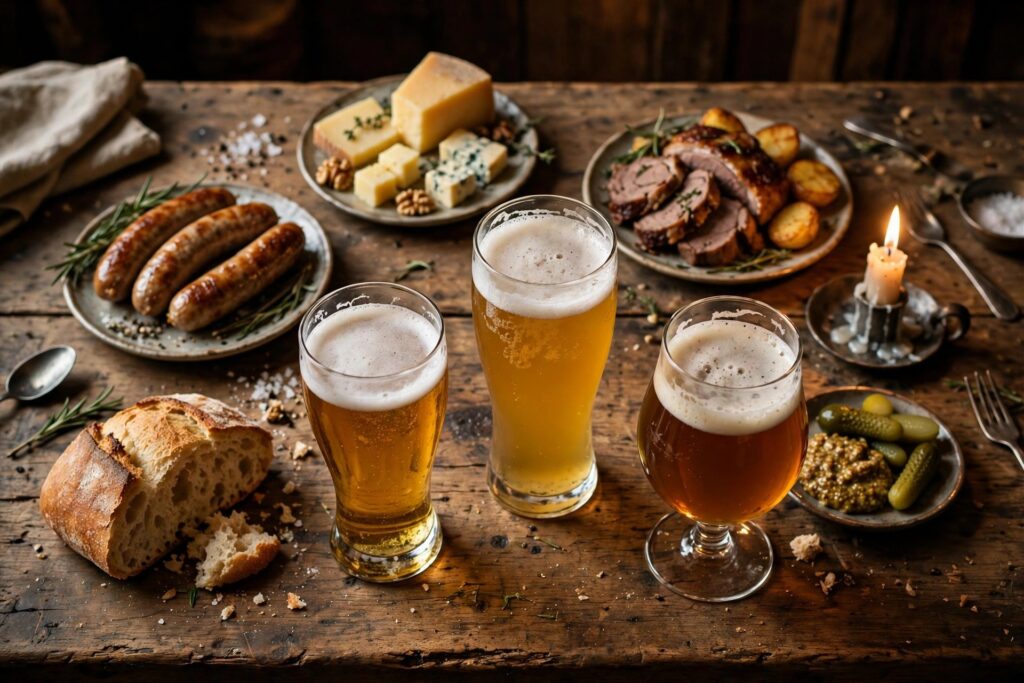
Wine has owned the pairing dinner for so long that most people assume beer is just the thing you drink while you wait for the real drinks to show up. That’s backwards. Beer brings more to a table than wine ever could: carbonation that scrubs your palate clean between bites, bitterness that cuts through fat the way a knife cuts through butter, malt sweetness that can stand up to a roast, and a range of flavors that runs from bone-dry and peppery to thick and chocolatey. A beer dinner isn’t a novelty night. Done right, it’s the best argument a tavern can make for itself.
Europe is the natural place to build one. The continent’s brewing traditions grew up alongside its kitchens, not apart from them. The same regions that gave us pilsner, wheat beer, abbey ale, and stout also gave us the food those beers were brewed to sit next to. A European beer dinner works because it isn’t a gimmick imposed on a menu — it’s a map of how people have actually eaten and drunk for centuries.
How a Beer Dinner Actually Flows
Five courses and five beers is the shape that tends to work. Fewer and the night feels thin; more and everybody is full and fuzzy by course four. Portions stay small — this is a tasting, not a feast — and pours stay small too, around five or six ounces. Nobody needs a full pint of a 9 percent abbey ale with every course. The point is to taste the pairing, not to survive it.
Order matters. Start light and bright and build toward dark and heavy, the way a meal naturally builds. Bitterness and alcohol climb as the night goes on, and the food gets richer to match. If you flip that order — say, opening with an imperial stout and following it with a delicate pilsner — the pilsner will taste like water and the whole evening will feel like it’s running downhill.
There’s one more rule worth knowing, and it’s the one that separates a good pairing from a lucky one: match intensity first, flavor second. A delicate dish needs a delicate beer, and a loud dish needs a loud beer. Once the weights line up, you can play with the flavors — echoing something in the dish, or cutting against it. Carbonation is beer’s secret weapon here. Those bubbles lift fat off your tongue in a way still wine simply can’t, which is why beer and fried food are such a natural marriage.
Course One: German Pilsner and the Cold Opener
Open with a crisp German-style pilsner and something cold and salty. A plate of cured meats, pickled vegetables, and crusty bread does the job, or a simple shrimp cocktail if you want to lean a little fancier. The pilsner’s snap — that clean, herbal bitterness from noble hops — wakes the palate up without stealing the show. It rinses away salt and fat and leaves you ready for the next plate, which is exactly what an opener should do.
This is also the course where glassware earns its keep. A tall, narrow pilsner glass isn’t a fashion choice; it holds the head, focuses the aroma, and keeps the beer cold and lively to the last sip. Serve it cold, around 38 to 42 degrees, and pour it with a proper head. Flat pilsner is a tragedy, and a warm one is worse.
Course Two: Belgian Witbier and Mussels
Second course, cross into Belgium. A witbier — pale, hazy, brewed with wheat, orange peel, and coriander — is one of the most food-friendly beers on earth, and it was practically built for a pot of steamed mussels. The beer’s citrus and spice notes echo the aromatics in the pot, while its soft wheat body and bright carbonation keep the briny broth from feeling heavy.
Here’s a move worth stealing: cook the mussels in the same witbier you’re pouring. Steam them with shallots, garlic, a knob of butter, and a generous splash of the beer, then serve the pot with bread for the broth. The dish and the drink rhyme with each other, and guests notice, even if they can’t quite say why the whole thing tastes so coherent.
Course Three: Märzen and the Roast
By course three the evening needs something with weight. A German märzen — the amber lager of Oktoberfest, all toasted bread crust, caramel, and a clean finish — is the answer. Pair it with roast pork, sausages, and sauerkraut, the kind of plate that would feel at home in a Munich beer hall. The beer’s malt sweetness meets the caramelized edges of the meat head-on, and its gentle bitterness keeps the richness from turning monotonous.
If roast pork feels like too much production for a home dinner, sausages and good mustard get you most of the way there. The point of this course is the middle of the meal’s arc: hearty, savory, satisfying, and still a couple of steps short of the heaviest beer of the night. A plate of something fried and spicy on the side wouldn’t hurt either — the märzen’s malt handles heat gracefully.
Course Four: Belgian Dubbel and the Slow Braise
The main event deserves a beer with some gravity. A Belgian dubbel — dark amber, malty, dried-fruit and caramel notes, usually around 6 to 7 percent alcohol — is made for slow-braised meat. Think beef carbonnade, the Flemish stew of beef, onions, and beer, or a braised short rib with root vegetables. The dubbel’s sweetness plays against the savory depth of the braise, and its dark fruit character finds echoes in the caramelized onions.
This is the course where cooking with the beer you’re pouring pays off most. A carbonnade made with dubbel and served with a glass of the same dubbel tastes like a single idea expressed two ways. If you’re hosting at home, this is the dish to make a day ahead — braises taste better on day two anyway, and it frees up your evening to actually enjoy your guests.
Course Five: Imperial Stout and Chocolate
Dessert is where beer dinners usually go wrong, because hosts reach for something sweet and light when they should reach for something dark and strong. An imperial stout — thick, roasty, notes of coffee, dark chocolate, and sometimes a whisper of vanilla — is dessert’s best friend. Pour it with flourless chocolate cake, a dark chocolate torte, or even just good chocolate truffles and a wedge of blue cheese for the adventurous.
The logic is simple: match sweet with sweet, or roast with roast. The stout’s roasted malt mirrors the chocolate, its body stands up to the richness, and a little alcohol warmth at the end of the night feels like a proper send-off. Keep the pour small. Four ounces of a 10 percent stout after four courses is plenty, and your guests will thank you in the morning.
Hosting Notes Worth Stealing
A beer dinner doesn’t need a lecture. The best ones we’ve seen keep the talking short — a sentence or two about each beer as it’s poured, why it was chosen, what to notice — and then let people eat, drink, and argue about it themselves. Print a small menu card with the beer names and a line about each pairing so nobody has to memorize anything.
Plan for water, bread, and a way home. Water between courses keeps palates honest and heads clear. Bread does the same work it does at any good meal. And because five beers add up even in small pours, rideshares and designated drivers aren’t an afterthought — they’re part of hosting well.
Start with one dinner, not a series. Cook the dishes you already know how to cook, pick beers from styles you already like, and let the pairings teach you what works. The next time, you’ll know exactly which course your friends are still talking about — and that’s the one to build the next menu around.