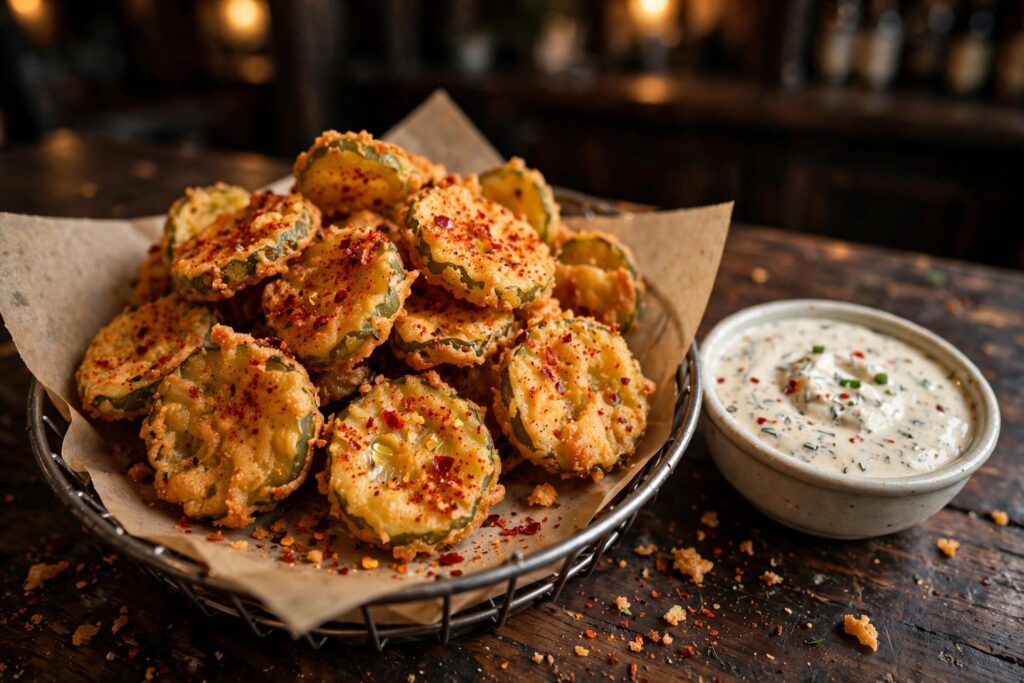
There is a moment at every good game-day spread when someone reaches for the last fried pickle, and someone else pretends not to notice. It is not the wings. It is not the dip. It is the little golden coin of a thing that somehow vanished first, even though nobody planned the menu around it. Fried pickles have that effect. Add real heat, and they stop being a side attraction entirely.
That is the whole idea behind Hot Mama fried pickles: take a bar snack everyone already loves, and stop being polite about the spice. The pickle brings the tang. The breading brings the crunch. The heat builds slow, the way good heat should, and then the cool dip walks in and saves you just enough that you go back for another one. It is a small, vicious, perfect cycle.
Where Fried Pickles Actually Came From
Fried pickles were not invented by a chain restaurant’s test kitchen. They were born in 1963 at the Duchess Drive-In in Atkins, Arkansas, a small pink building across the highway from the Atkins Pickle Company. The owner, Bernell “Fatman” Austin, was looking for a gimmick to drum up business, and he had pickles in abundance. His first version sold for fifteen cents for an order of fifteen hamburger dill slices.
Austin was not satisfied with that first attempt. By the end of that summer he had landed on the version that stuck: a large pickle sliced lengthwise, breaded in a seasoned coating his family still keeps secret, and fried until golden. The town still celebrates the invention every year at its Picklefest, held on the third weekend in May, where the Austin family fries up thousands of pickle slices for the crowd. The dish spread across the South through the 1980s, showed up on bar menus everywhere by the 2000s, and never left.
That history matters because it explains what a fried pickle is supposed to be. It is not a health food wearing a costume. It is a roadside snack, invented by a man nicknamed Fatman, in a town that called itself the Pickle Capital of the World. Respect that, and the rest of the recipe almost writes itself.
Chips, Spears, or Lengthwise Slices?
Every fried pickle argument eventually lands on shape, and it is worth settling before you cook. Chips are the most common bar version: round hamburger dill slices, easy to bread, easy to eat one-handed while watching a screen. They crisp beautifully and they hold a lot of breading relative to their size, which is exactly what you want when the breading carries the spice.
Spears are the steakhouse version, longer and meatier, with more pickle interior per bite. They are satisfying but trickier: the extra moisture inside a thick spear can steam the breading soft from within if you are not careful. Austin’s original lengthwise slices split the difference, thin enough to stay crisp, long enough to feel substantial.
For a game-day batch, go with chips. They fry fast, they feed a crowd, and they give you the best crunch-to-pickle ratio. Buy a jar of dill chips, not sweet pickles and not bread-and-butter, and drain them well. Then pat them dry with paper towels. This is the step people skip and then wonder why their breading slid off in the oil. A wet pickle is a lost pickle.
Building the Heat in Layers
The mistake most spicy fried pickles make is putting all the heat in one place. One blast of cayenne in the breading, and the first bite is exciting while the fifth is just punishment. Real heat works in layers, and each layer should do a different job.
The first layer lives in the breading. Season your flour with cayenne, garlic powder, paprika, and a pinch of black pepper, then mix more cayenne into the panko. Panko matters here: those airy Japanese-style flakes stay crunchier than fine breadcrumbs and they absorb less oil, so the coating shatters instead of going soggy. A double coat, flour then egg then crumbs and back through the egg and crumbs again, gives you a shell thick enough to survive the fryer and to carry real seasoning.
The second layer is the pickle itself. A splash of hot sauce whisked into the egg wash puts heat right against the pickle, so the tang and the burn arrive together. The third layer is the dip, and the dip is where you get to be generous. A spicy ranch, made by stirring hot sauce and a little cayenne into good ranch dressing, cools the burn just enough to keep you eating. That push and pull, heat then cool then heat again, is the whole reason people cannot stop at one basket.
How to Fry Them Right
Heat about an inch and a half of neutral oil, peanut or vegetable, in a heavy skillet to 350 degrees Fahrenheit. A thermometer is not optional here. Oil that is too cool makes greasy pickles; oil that is too hot burns the breading before the inside warms through. Fry in small batches, a single layer at a time, for two to three minutes, turning once, until deep golden. Crowding the pan drops the oil temperature and turns crisp into limp, so patience pays.
Lift them out with a slotted spoon, drain on paper towels, and salt them lightly while they are still hot. Serve immediately. Fried pickles have a short glory period, maybe ten minutes, before the steam inside starts softening the crust. This is a snack you fry when people are already gathered, not an hour ahead. If you need a make-ahead option, the air fryer version works: bread the same way, spray lightly with oil, and cook at 400 degrees for about three minutes a side. It is not quite the same as deep-fried, but it is close enough to keep the peace.
What to Serve With Them
Spicy ranch is the default and it earns the spot, but it is not the only move. A comeback sauce, the Mississippi-born blend of mayonnaise, ketchup, hot sauce, and Worcestershire, brings a sweet-tangy counterpoint that works beautifully with fried food. Blue cheese dressing is the wing-lover’s answer, and it makes sense on a spread that already has wings on it. A plain cool ranch with a squeeze of lemon also works if your breading is already bringing plenty of fire.
Think about the rest of the table, too. Fried pickles belong on the same spread as wings, dips, and anything else built for grazing. They are the sharp, bright bite between heavier foods, the thing that resets your palate and makes the next wing taste like the first one again. If you are building a full game-day lineup, a tray of these next to a loaded pub snack plate covers the crunchy, the salty, and the spicy in one move. Our pub food triple play takes that same more-is-more approach to the extreme, and these pickles would fit right in beside it.
Why They Belong on a Tavern Menu
Some bar snacks are there to fill space. Fried pickles are there to start conversations. They are cheap to make, fast to fry to order, and they pair with beer in the way that only salty, sour, crunchy things do: each bite makes the next sip taste better, and each sip makes the next bite taste sharper. A cold lager against the heat of a cayenne breading is one of those pairings that needs no explanation.
The hot version has one more advantage. Mild fried pickles are a crowd-pleaser, but spicy fried pickles are a signature. People remember the bar whose pickles had a kick. They ask for them by name. They argue about whether they can handle the heat, and then they order a second basket to prove it. That is not just a snack. That is a story a tavern can tell, one basket at a time, and it started back in 1963 with a man, a pink drive-in, and fifteen pickles for fifteen cents.