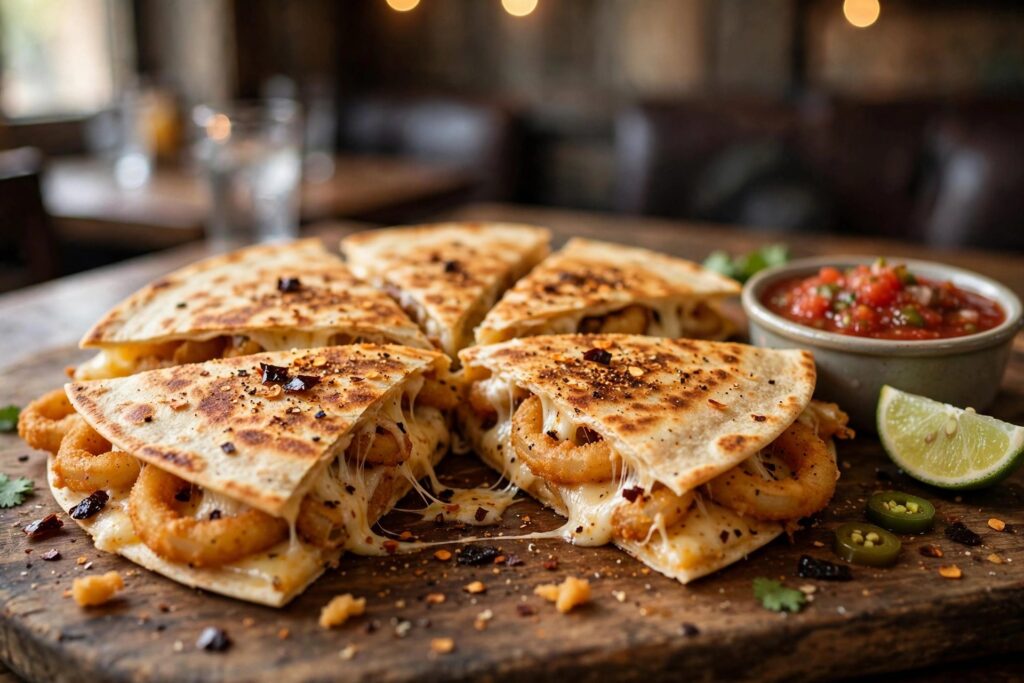
There are bar-food mashups that sound like a dare, and then there are the ones that sound like a dare and turn out to be obviously right. The ancho chile onion ring quesadilla is the second kind. It takes two things everybody already likes, crispy onion rings and a molten cheese quesadilla, and puts one inside the other, with a chile that adds depth rather than just heat. The first time you hear it, you laugh a little. The first time you cut into it and an onion ring peeks out through the cheese, you stop laughing and start eating.
It works because a quesadilla is, at heart, a delivery system. A tortilla, some cheese, something with texture and flavor in the middle, heat until everything agrees with each other. Most fillings sit quietly inside and let the cheese do the talking. Onion rings refuse to sit quietly, and that is their charm. They bring crunch to a food that is otherwise soft, sweetness from the onion itself, and a savory battered edge that stands up to melted cheese instead of dissolving into it. Add ancho chile, and the whole thing gains a low, earthy warmth that makes the cheese taste richer and the onion taste sweeter.
First, the ancho chile
Ancho is not a separate pepper species, and that is the first thing worth knowing. It is a poblano pepper left on the plant until it ripens to deep red, then dried, which concentrates its sugars and turns its fresh, grassy flavor into something darker and more complex. Good anchos smell like raisins and cocoa with an earthy undertone, and they bend a little instead of snapping, a sign they still hold some moisture. Their heat is mild, generally measured around 500 to 1,500 Scoville units, well below a jalapeño, so what you taste first is sweetness and depth, not burn. That matters for this quesadilla, because the chile is here to season, not to dominate. A hotter chile would fight the cheese. Ancho flatters it.
You can use ancho in a few forms, and each one changes the quesadilla slightly. Ancho chile powder, stirred into the onion ring batter or dusted over the finished quesadilla, is the easiest route and the most even, because the flavor distributes through every bite. A rehydrated dried ancho, soaked in hot water until soft, then chopped or blended into a paste, gives a deeper, fruitier note, but it also adds moisture, so it belongs in a sauce on the side rather than inside the tortilla. A simple ancho crema, sour cream or Mexican crema whisked with ancho powder, lime juice, and salt, is the best of both worlds: cool, tangy, and carrying that raisin-like warmth in every dip. None of these require a specialty store run. Ancho powder sits in most supermarket spice aisles, and dried anchos are a staple of any Mexican grocery.
One caution: toast dried anchos only briefly in a dry pan. Leave them a few seconds too long and they turn bitter, and bitterness does not cook out. If you are using powder, skip toasting entirely and let the heat of the quesadilla do the work.
The onion rings are not an afterthought
Everything about this dish hinges on the onion rings staying crisp inside a hot, cheesy tortilla, which sounds like a contradiction and is, in fact, a timing problem with a solution. Rings that go into the quesadilla soggy stay soggy. Rings that are fried properly, drained well, and used within minutes of cooking hold their crunch long enough to matter, because the cheese melts around them rather than soaking into them, and the tortilla, crisped in a dry pan, seals the whole thing before steam can do its damage.
Sweet onions, sliced about a quarter inch thick and separated into rings, are the right starting point, because their natural sugars caramelize slightly in the fryer and echo the sweetness of the ancho. A batter of flour seasoned with salt, paprika, a little cayenne, and ancho chile powder, loosened with stock or cold water until it coats a spoon, gives the rings their flavor and their color. Fry them in oil heated to about 350 degrees Fahrenheit, in small batches so the temperature does not crash, until they turn a deep golden brown, then drain them on a rack rather than paper towels. Salt them immediately. Fry the rings last, or keep them warm in a low oven for a few minutes while the cheese and tortillas get ready.
Fresh rings beat frozen ones here: their thinner, more irregular batter shatters against the cheese instead of forming a thick, bready wall.
Building the quesadilla
Assembly is where restraint pays off. A large flour tortilla goes into a dry, heavy skillet over medium heat, and the first layer is cheese, not rings. Monterey Jack melts cleanly and stretches the way a quesadilla should, and a little sharp cheddar mixed in adds bite without making the whole thing greasy. The onion rings go on next, arranged in a single layer so they lie flat, with a second, lighter scattering of cheese over them to act as glue. A spoonful of chopped cilantro and a few thin slices of jalapeño are optional, and only if you want a brighter, hotter edge on top of the ancho’s warmth. The second tortilla goes on top, and the whole thing cooks until the bottom is golden and the cheese has started to melt, then flips, carefully and confidently, and cooks until the second side matches.
Three details separate a good version from a leaking mess. First, do not overfill. A quesadilla stuffed past its edges cannot seal, and unsealed quesadillas shed cheese and rings all over the pan. Second, keep the heat at medium, not high. A screaming hot pan browns the tortilla before the cheese melts, leaving you with a beautiful outside and a cold, unmelted middle. Third, let it rest for a minute or two before cutting. Cutting too soon sends the cheese running, and the rings slide out with it. A minute of patience gives you wedges that hold together and a cheese pull worth the wait.
Cut the quesadilla into four wedges and serve with that ancho crema and a fresh salsa on the side. Lime wedges belong on the plate, because a squeeze of lime over the top wakes up the chile and the cheese at the same time. This is finger food that demands napkins, and that is exactly as it should be.
Why it works at a tavern table
Bar food has always been about combinations that should not work and do, and this quesadilla belongs in that lineage. It has the same spirit as the over-the-top grilled cheese variations that turn a simple sandwich into an event, the kind of cooking celebrated in Grilled Cheese Gone Wild: Bar-Food Variations Worth the Mess, where the rule seems to be that if it melts, it belongs between bread, and if it crisps, it belongs on top of something that melts. An onion ring inside a quesadilla is that rule taken to its logical conclusion, and the ancho chile is what keeps it from being a stunt. Without the chile, it is a novelty. With it, it is a flavor, earthy and sweet and warm, that ties the fried onion and the melted cheese together into something that tastes deliberate.
It also solves a real tavern-table problem: a plate of onion rings disappears in about ninety seconds, and a plain cheese quesadilla rarely starts a conversation. Put them together and you get a dish people order again. For crunch on the side as well as the inside, Hot Mama Fried Pickles: The Game-Day Snack That Earns Its Name is the obvious companion order.
Variations worth trying
Once the basic version works, it invites tinkering, and most of the tinkering is forgiving. A few slices of grilled chicken or a spoonful of shredded pork turn it into a meal rather than a snack, though the meat should be an accent, not a second filling competing with the rings. Pepper Jack in place of Monterey Jack adds a sharper heat that plays well with the ancho, and a smear of refried beans under the cheese adds body for anyone who wants a heartier wedge. Corn tortillas can work for a smaller folded version, but warm them first or they crack.
At the end of the day, the ancho chile onion ring quesadilla is not complicated food, and it should not pretend to be. It is two beloved bar snacks, folded together with a chile that knows its job, served hot and cut into wedges while the cheese is still stretching. Make it once for friends, watch the first wedge disappear, and you will understand why a joke of a dish became a keeper: sometimes the best new idea in a tavern kitchen is just two old favorites, finally introduced to each other.