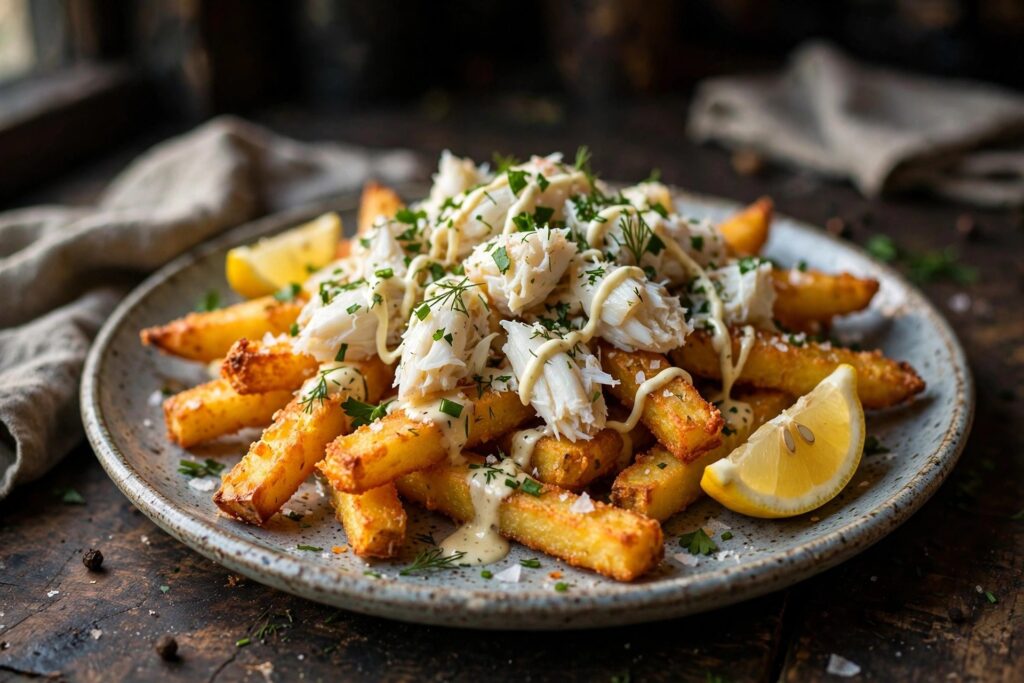
Some bar snacks announce themselves. Wings arrive with a smell that takes over the room, nachos come out on a tray the size of a hubcap, and everybody at the table reaches at once. Polenta crab fries do the opposite. They sit there quietly, golden and unassuming, looking for all the world like ordinary fries that took a wrong turn. Then you pick one up, get a piece of sweet crab with it, and suddenly the rest of the table is asking what just happened.
That quiet surprise is the whole point. This is not a dish trying to be fancy. It is a tavern idea through and through: something salty, crisp, and easy to share, built from ingredients that are far less intimidating than they sound. Polenta is just cooked cornmeal. Crab, if you buy it already picked, is just a container you open. Put them together with a little lemon and a good sauce, and you have a plate that feels like a small occasion without demanding a special occasion.
What polenta fries actually are
Polenta starts life as cornmeal simmered with water, milk, or broth until it turns thick and creamy, the kind of thing you eat with a spoon in northern Italy, where it has been a staple for centuries. Left alone in a pan, though, it does something useful: as it cools, it sets firm enough to slice. Cut that slab into sticks, give them oil and heat, and the outside crisps while the inside stays soft and almost custardy. That contrast is what makes a polenta fry work. A polenta fry has a creamy center that tastes faintly of sweet corn, which is a much better backdrop for seafood than a plain potato ever is.
Most recipes agree on the same basic rhythm, and it is worth trusting. Cook the polenta until it pulls away from the sides of the pot and holds its shape on a spoon. Stir in butter and a generous handful of grated Parmesan, which helps it set and gives the fries a savory edge. Spread it about half an inch thick in a lined pan, let it cool, then chill it for at least an hour, or overnight if you are planning ahead. Cold polenta cuts cleanly. Warm polenta smears, and smearing is how you end up with sad, lumpy sticks instead of fries.
From there you have two honest paths. Baking at around 425 to 450 degrees Fahrenheit, brushed with olive oil and flipped halfway, takes roughly 25 to 30 minutes and gives you crisp edges with less fuss. Frying in oil at about 375 degrees is faster, two to four minutes a batch, and more indulgent, with a deeper crunch. Either way, the rules are the same: cut the sticks evenly so they cook at the same rate, keep them in a single layer with space between them, and salt them the moment they come out of the heat, while the surface is still hot enough to grab onto the salt.
Why crab belongs on top
Crab and cornmeal sound like an odd pairing until you taste them together, and then they sound inevitable. Sweet corn and sweet crab have always liked each other, which is why crab and corn chowder works and why a crab cake with a little cornmeal in the crust tastes more like itself, not less. The polenta fry brings that same sweetness in a crisp package, and the crab brings the briny, delicate flavor that keeps the whole plate from feeling heavy.
The grade of crab matters, but not in the way people sometimes assume. Jumbo lump, the large whole pieces from the crab’s swimmer-fin muscles, is the showpiece grade: firm, bright white, and sweet, with only two pieces per crab, which is why it costs what it costs. Lump is a mix of broken jumbo pieces and large body flakes, and it is the sensible choice here, because it still gives you real chunks without asking you to spend showpiece money on a topping. Backfin, smaller flakes of body meat, works fine too, especially folded into a sauce or scattered generously. Claw meat is darker, stronger flavored, and cheaper, and it can bulldoze the polenta’s gentleness if you use it alone, so save it for soups and dips where its assertiveness is an asset. Whatever grade you buy, pick through it for shell and handle it gently; mashed crab tastes like paste, and no sauce rescues paste.
The topping itself should stay simple. Warm the crab barely, or leave it cool against the hot fries, which is a lovely temperature contrast on its own. A squeeze of lemon, some chopped parsley or chives, and a drizzle of something creamy, a lemon aioli or a light garlic butter, is enough. That is the whole architecture. Anything more, a heavy cheese sauce, a pile of competing toppings, and you bury the two things the plate is actually about.
How to make a plate at home
For four people as a shared appetizer, or two people who are not pretending it is an appetizer, start with a cup of polenta, coarse cornmeal rather than instant if you have the time, simmered in a mix of water and milk with a good pinch of salt. Stir often, because polenta scorches when it is ignored, and keep going until it is thick and creamy, which can take anywhere from a few minutes for quick-cooking polenta to the better part of an hour for the coarse kind. Stir in two tablespoons of butter and half a cup of grated Parmesan, then spread it in a parchment-lined pan and chill it until firm.
Cut the slab into sticks about four inches long and an inch wide, brush them with olive oil, and bake at 425 degrees until golden, flipping once, or fry them in batches until crisp. While the fries are in their last few minutes, warm a pound of lump crab meat very gently, just enough to take the fridge chill off, or leave it at cool room temperature. Pile the fries on a platter, spoon the crab over the top rather than mixing it in, so the pieces stay whole, and finish with lemon zest, flaky salt, chopped herbs, and a drizzle of lemon aioli. Serve immediately, because polenta fries, like all fries, have a short window of glory, and that window is the point.
The details that make or break them
First, thickness. Half an inch is the sweet spot. Thinner sticks go brittle and dry out before the center gets creamy. Thicker ones stay soft in the middle and never quite crisp, which turns the whole thing into warm mush with crab on it. Second, patience with the chill. An hour is the minimum, and overnight is better, because fully set polenta holds its shape in the oven and the fryer instead of slumping. Third, do not crowd the pan. Fries that touch each other steam instead of crisping, and steamed polenta is a texture nobody asked for.
Fourth, season in layers rather than all at once. Salt goes into the cooking liquid, Parmesan goes into the polenta, and a final pinch of flaky salt lands on the fries as they come out. Each layer is small, and together they add up to a fry that tastes seasoned all the way through instead of salty only on the outside. Fifth, and this one matters most on game day, fry or bake the polenta ahead of the crowd arriving, then re-crisp it in a hot oven for a few minutes while people settle in. The crab goes on at the last moment.
When this plate earns its place
Polenta crab fries belong in the same conversation as the other loaded fries that have become tavern staples, the kind of plate built for the middle of the table and a second round of drinks. If you like that whole family of food, where a humble base gets a topping that makes it feel like an event, you will recognize the logic of Poutine Potato Skins: The Bar Snack Mashup Worth Making, which takes the same idea in a completely different direction, all gravy and cheese curds instead of lemon and crab. The two plates could not taste less alike, and that is the fun of it: once you accept that a fry is a delivery system, the toppings are limited only by how much nerve you have.
Serve polenta crab fries when the game matters but the cooking should not dominate the afternoon, when friends are coming over and you want one plate that looks like you tried harder than you did, or when the table needs something that is not wings for once. They are at their best eaten standing up in a kitchen, straight off the platter, with somebody already reaching for a second one before the first is finished.