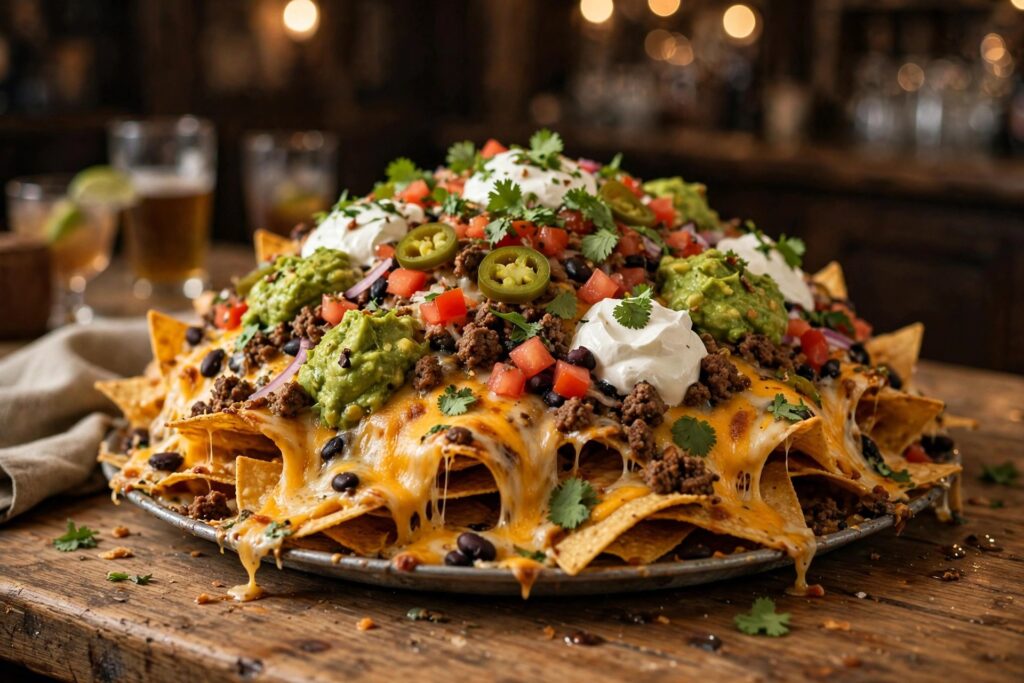
Every tavern has a dish that does half the marketing on its own. It arrives at the table, heads turn two booths over, somebody pulls out a phone, and by the time the cheese has cooled the whole room knows about it. Nacho Mountain is that dish. It is not subtle, it is not dainty, and it does not apologize for either quality. It is a platter built to be shared, photographed, argued over, and demolished.
The name is doing real work here. A mountain is not a pile. A pile is what happens when you dump a bag of chips on a plate and throw cheese on top. A mountain has structure — layers, slopes, a peak worth climbing toward. The difference between a forgettable tray of nachos and a great one is almost entirely structural, and once you understand the structure, you can build a version at home or appreciate a good one at the bar all the more.
This is a guide to building loaded nachos the way a good tavern kitchen does: sturdy chips, cheese in every layer, hot toppings kept hot, cold toppings kept cold, and a platter wide enough that nobody has to fight over the last good chip. No gimmicks, no tower molds, just the craft behind the spectacle.
Start With Chips That Can Carry Weight
Everything else is negotiable. This is not. Thin, delicate tortilla chips are wonderful for scooping salsa on their own, but they collapse under melted cheese, beans, and meat. For a loaded platter you want thick, sturdy restaurant-style chips — the kind that snap cleanly instead of crumbling, with enough surface area to hold a topping without folding in half.
Shape matters, too. Triangular chips tend to hold up better than round ones — a broad base and a point you can grip, which counts when you are three layers deep and fishing for a chip that has not gone soggy. And buy more chips than you think you need. A mountain that runs out of chips halfway down is just a plate of toppings.
Warm the chips first, too. A few minutes in a moderate oven crisps slightly stale chips and gives the platter a head start on staying crunchy, because a warm chip resists moisture better than a cold one.
Layer, Do Not Pile
Here is the single biggest difference between good nachos and bad ones. Bad nachos are built in one deep heap: chips on the bottom, everything else on top, so the top chips are drowning and the bottom chips are naked. Good nachos are built in two thin layers, each one complete on its own.
Spread half your chips across a wide sheet pan or oven-safe platter in a single, slightly overlapping layer. Scatter cheese over them — freshly shredded cheddar and Monterey Jack are the classic pair, cheddar for flavor and Jack for melt — then add your hot toppings: seasoned meat or beans, drained well so they do not bring extra liquid to the party. Repeat with the second half of the chips, more cheese, and more hot toppings. The cheese is doing double duty here. It melts everything together, and it acts as a moisture barrier between the chips and the wetter toppings.
Bake at around 375°F until the cheese is fully melted and bubbling at the edges, roughly 10 to 15 minutes. If you are using a broiler instead, stay close — the line between bubbling and burnt is about ninety seconds under a broiler, and nobody has ever improved a nacho platter by walking away from it. When the platter comes out, it should look generous but not buried. You still want to see chips peeking through the toppings. That is the mountain taking shape.
Hot Toppings Hot, Cold Toppings Cold
This is the rule that separates a tavern platter from a sad plate of leftovers. Hot toppings go on before the bake. Cold toppings go on after, right before serving. Mix them up and you get warm guacamole and cold cheese, which is the nacho equivalent of a flat drink.
For the hot layer, seasoned ground beef, shredded chicken, or black beans are all solid choices, and beans deserve more respect than they usually get — they add heft, they hold up well under cheese, and they make the platter work for a mixed table without anyone feeling like they got the consolation version. Whatever protein you use, drain it thoroughly. Excess grease and liquid are the two fastest ways to turn a crisp chip into a sponge.
Once the platter is out of the oven, that is when the fresh stuff arrives: diced tomatoes or pico de gallo, sliced jalapeños, diced red onion, chopped cilantro, dollops of sour cream, and guacamole. Some kitchens serve the cold toppings on the side in small bowls so each person can build their own final layer, and that is a genuinely good idea for a shared platter — it keeps the chips crisp longer, and it settles the age-old argument about how much jalapeño is too much by letting everyone decide for themselves.
Cheese sauce deserves its own mention. Shredded cheese gives you coverage and pull; a real sauce, made from a simple roux with milk and cheese whisked in, pools glossily between the chips. The best platters use both — shredded cheese in the layers, a drizzle of sauce at the end. A homemade sauce takes ten minutes and tastes like it.
How Big Should a Mountain Be?
A shareable platter is a promise, and the promise is that everyone at the table gets good chips, not just the people who reach first. As a rough guide, plan on about two ounces of chips per person for a snack and more if nachos are the main event, with a similar generosity on cheese and toppings. A platter for four should look almost unreasonably large when it leaves the kitchen. That is the point. Underwhelming nachos are worse than no nachos at all, because they raise expectations and then break them.
Platter shape matters, too. Wide and flat beats tall and narrow, every time — a tall stack looks dramatic for thirty seconds, then collapses into a mess with an inaccessible bottom half. A wide platter lets everyone reach the middle, and for a big group, two medium platters beat one enormous one: the second arrives hot just as the first runs low.
Serve immediately, with plenty of napkins and forks for fallen toppings. Nachos are at their best in the first fifteen minutes out of the oven, when the cheese is still molten and the chips still snap. Timing is part of the recipe.
Variations Worth Trying
Once the structure is right, the toppings are a playground. A buffalo chicken version, with shredded chicken tossed in hot sauce and a drizzle of blue cheese dressing, brings the whole wings-table flavor profile to the platter — and if that sounds like your kind of thing, our game-day dip guide covers the sauces that pair with it. A barbecue version with pulled pork, pickled red onion, and a smoky cheese works just as well, and a vegetarian version built on black beans, roasted peppers, corn, and extra guacamole needs no apology whatsoever.
Heat is another dial worth playing with. Fresh jalapeños bring a bright, green bite; pickled jalapeños bring tang; a few dashes of hot sauce at the table let the heat lovers go further without punishing everyone else. Our jalapeño poppers post makes the same point from the other direction: jalapeño is a flavor, not just a dare, and used well it lifts everything around it.
The one variation to be careful with is the everything-at-once version. Ten toppings sound generous; in practice, they compete, they release water at different rates, and the platter ends up muddled. Pick a theme — Mexican, barbecue, buffalo — and let three or four toppings do the talking. Restraint is what makes the mountain taste like something instead of everything.
Why Nachos Endure at the Tavern Table
Nachos have survived every food trend of the last few decades for a simple reason: they are built for the way people actually eat together. Nobody orders nachos alone. You order them for the table, reach across each other, and negotiate over the last cheesy chip. They turn a table into a group.
That is also why they photograph so well, and why a great platter earns its place on a tavern menu in a way that a merely good appetizer never does. The mountain is the advertisement and the meal at the same time. Build it wide, layer it twice, keep the hot things hot and the cold things cold, and serve it the moment the cheese bubbles. Do that, and the platter will take care of the rest — including, probably, the photo somebody takes before anyone is allowed to eat.