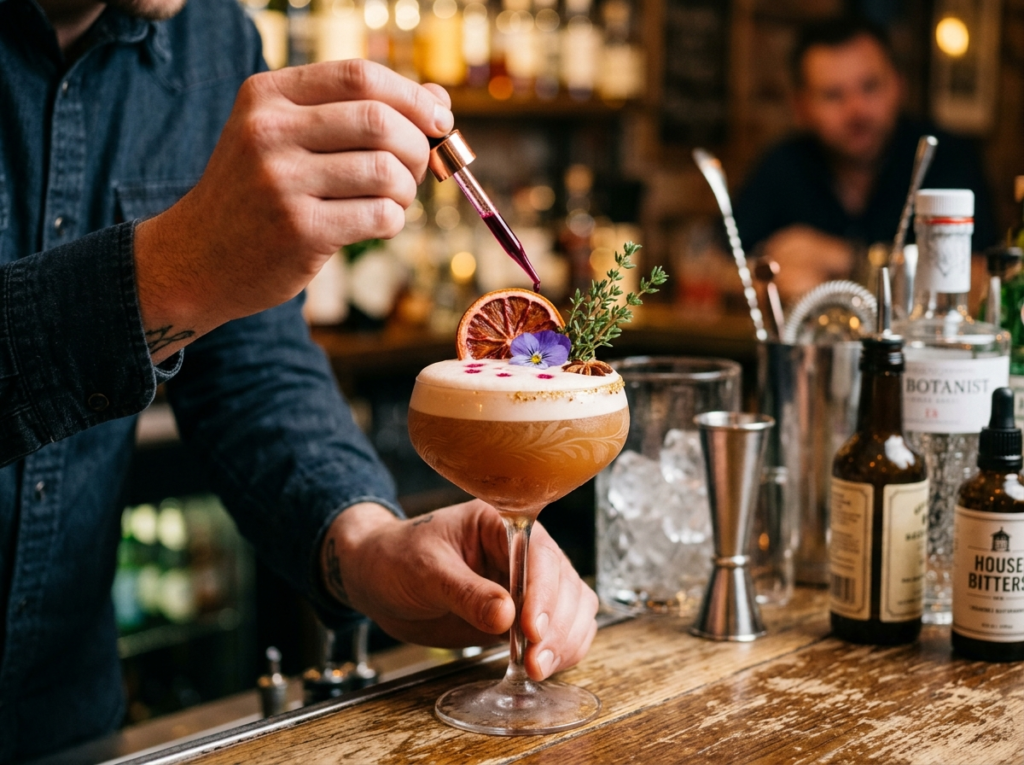
Watch a skilled bartender work and you’ll notice something odd. They’re not flipping through a book. They’re tasting, adjusting, improvising — sometimes mid-pour. There’s a structure to what they do, but it’s invisible unless you know where to look.
That’s cocktail creativity in its truest form. Not chaos, not guesswork, but a trained instinct built on understanding a few fundamentals really well. And here’s the thing: you don’t need to work behind a bar for ten years to get there. You just need to start thinking about drinks a little differently.
Creativity in Cocktails Isn’t What Most People Think
A lot of people assume cocktail creativity means throwing unusual ingredients together and hoping something interesting happens. Sometimes that works. Most of the time, it doesn’t — and you’re left with something that tastes expensive and confusing.
Real creativity here isn’t about being weird. It’s about understanding why a drink works, and then using that knowledge to go off-script with confidence.
Think of it like cooking. Once you understand acid and fat and how they balance each other, you stop needing a recipe to make a salad dressing. Cocktails work the same way. Once you understand the logic — spirit, modifier, acid, sweetness — you can riff on it endlessly.
The classic cocktail template looks something like this: a base spirit that carries the flavor, a modifier that adds complexity (vermouth, a liqueur, bitters), something acidic (usually citrus), and something sweet to balance. Almost every cocktail you’ve ever loved fits inside that shape. The creativity lives in how you fill it.
Start With Your Base Spirit — And Actually Know It
Most home bartenders buy a bottle of something, make one or two cocktails they already know, and leave the rest to collect dust. That’s the first thing to change.
Your base spirit — whether it’s bourbon, gin, mezcal, rum, or tequila — has a personality. Bourbon is warm and vanilla-forward. Gin can go anywhere from floral and delicate to piney and aggressive. Mezcal brings smoke. Each one suggests a direction before you’ve added anything else.
The creative exercise: Pour a small amount of your base spirit neat. Taste it slowly. What does it remind you of? Is it fruity? Earthy? Spicy? That flavor profile is your starting point. Everything you add should either echo that character or deliberately contrast it.
A smoky mezcal, for example, is practically begging for something citrus-bright and a little spicy to cut through. That’s not a recipe — that’s a conversation between ingredients.
Modifiers Are Where Things Get Interesting
If the spirit is your foundation, the modifier is your personality. And there’s a much wider world of modifiers than most people realize.
Vermouth gets the most attention — dry for martinis, sweet for Manhattans — but it’s just one option. Amaro, Aperol, Campari, St-Germain, Chartreuse, Cointreau, even sherry and port can all serve as modifiers depending on what you’re building. They add depth, bitterness, floral notes, herbal complexity.
The interesting creative move is cross-pollinating. A classic Negroni (gin, Campari, sweet vermouth) works brilliantly. But try it with mezcal instead of gin, and suddenly you’ve got something smokier, more complex — what most people now call a Oaxacan Negroni. You didn’t invent a new cocktail. You just asked “what if?” and followed through.
That same “what if?” is what drives bartenders to experiment with dealer’s choice cocktails, where they build something new based on a guest’s flavor preferences rather than a fixed menu. It’s improvisation with structure.
The Role of Acid, Sweetness, and Balance
Here’s where a lot of home cocktail attempts go sideways. Someone makes a sour, and it’s either puckering or cloying. The ratio is off, and the whole drink suffers for it.
Acid — usually fresh lemon or lime juice — is the thing that makes a cocktail bright. It wakes up your palate. Too little and the drink feels flat and heavy. Too much and your face does that involuntary scrunch.
Sweetness is the counterbalance. Simple syrup is the most neutral option, which makes it useful for learning. But honey syrup adds a richness, agave syrup has its own distinct flavor, and flavored syrups (lavender, cardamom, jalapeño) let you add another layer of character without adding another ingredient from a bottle.
The classic starting ratio for sours-style cocktails is 2:¾:¾ — two parts spirit, three-quarter parts acid, three-quarter parts sweetener. That’s your training wheels. Once you understand how that balance feels on your palate, you’ll start adjusting it intuitively. More citrus if you want something sharper. More sweetener if you’re working with a bitter modifier that needs taming.
This kind of taste-as-you-build habit is exactly what separates confident cocktail creativity from guesswork. And it’s not unlike how a chef constantly tastes a dish while cooking — something the team at Gabriel’s Gate talks about when discussing how professionals really work.
Texture, Temperature, and the Details That Actually Matter
Most cocktail guides skip this part, but it matters more than you’d think.
Ice isn’t just cold water waiting to happen. A large, dense ice cube melts slower — which means your drink stays cold longer without getting diluted too fast. A small, crushed-ice situation chills quickly and dilutes more, which is actually great for drinks like a Mint Julep or a Swizzle where some dilution is part of the intended flavor.
Dilution isn’t the enemy. When you shake or stir a cocktail, you’re not just mixing — you’re adding a calculated amount of water from melting ice. A properly stirred spirit-forward cocktail (a Manhattan, an Old Fashioned) is stirred until there’s about 20–30% dilution by volume. That water opens up the aromas and softens the alcohol edge. If you rush the stir, the drink will taste sharp and hot.
Texture comes from technique. Shaking with egg white or aquafaba creates a silky foam. Dry shaking (no ice first, then shaking with ice) maximizes that foam. Stirring keeps a drink silky but clear. These aren’t stylistic choices — they’re functional ones.
The right glassware matters too. Just like choosing the right wine glass changes how a wine shows itself — a point worth exploring if you’re thinking about glassware more seriously — the vessel shapes how you experience a cocktail. A coupe keeps a chilled, spirit-forward drink at the right temperature longer. A highball glass lets carbonation do its work.
Seasonal Thinking Changes Everything
One of the smartest things you can do for cocktail creativity is start thinking seasonally — the same way good cooks do.
In summer, you’re reaching for bright citrus, fresh herbs, cucumber, watermelon. Lighter spirits. Drinks that feel refreshing rather than warming. In fall and winter, the pull shifts toward spiced syrups, apple cider, pear, warming whiskeys and brandies, and flavors that feel like something you’d want on a cold night.
This isn’t just a vibe. Seasonal ingredients at their peak taste better, which means your drinks taste better with less effort. A fresh strawberry muddled into a gin cocktail in June doesn’t need much help. The same strawberry in January is a flat, watery disappointment.
Fresh herbs are an underused tool in home cocktail making. Basil, thyme, rosemary, mint — each brings something different. Rosemary muddled with gin and lemon is almost unfairly good. Fresh thyme in a honey-bourbon sour adds an earthiness that feels complex without being complicated.
And don’t overlook heat. A jalapeño-infused tequila or a ginger shrub can add a slow warmth that makes a drink feel alive. Start small — you can always add heat, but you can’t take it back.
Building Drinks Without a Recipe
This is the part where it all comes together. Once you’ve internalized the structure — spirit, modifier, acid, sweet, garnish — you can start building drinks from scratch by asking a series of simple questions.
What’s the mood? Light and refreshing, or rich and contemplative? That determines your spirit direction.
What season are you in, and what’s available? Fresh fruit, herbs, something from your pantry?
What’s the primary flavor you want to lead with, and what will support it? Your modifier and acid choices fall out of that.
Do you want something short and stirred, or long and built over ice?
From those answers, a drink starts to take shape. Try it. Taste it. Adjust the balance. Add a few drops of saline solution (yes, a small pinch of salt in water — it works remarkably well for rounding out flavors) if it needs brightness without more acid.
This process isn’t unlike how a chef approaches an improvised dish — working from technique and taste memory rather than a fixed recipe. It’s a skill that develops every time you make something, especially when you pay attention to what worked and what didn’t.
A Few Tools Worth Having
You don’t need a full professional bar setup. But a few things genuinely make a difference.
A good jigger — one with clear markings in both ounces and milliliters — keeps your ratios consistent while you’re learning. A hawthorne strainer and a fine mesh strainer together give you a clean, sediment-free pour. A long bar spoon makes stirring easier. A Boston shaker is more versatile than a cobbler shaker and easier to open when cold.
For syrups: a saucepan and some patience. Most simple syrups are literally just equal parts sugar and water, heated gently until dissolved. Infusions take slightly longer but are nearly foolproof — throw dried lavender or split vanilla beans into warm syrup, let it steep, strain, done.
Bitters deserve more attention than they get. Angostura is the classic, but Peychaud’s, orange bitters, mole bitters, and cardamom bitters each open different creative doors. Think of them the way you’d think of seasoning — a few dashes can pull a drink together in a way you can’t quite explain but absolutely notice when it’s missing.
FAQ
Can I substitute fresh citrus with bottled lemon or lime juice in cocktails?
You can, but you’ll taste the difference immediately. Bottled citrus juice is pasteurized and often has a flat, slightly metallic quality that fresh juice doesn’t have. For anything that centers on citrus — a Margarita, a Daiquiri, a Whiskey Sour — fresh juice is the single biggest quality upgrade you can make. It’s worth the ten seconds it takes to squeeze half a lime.
How do I know when a stirred cocktail is ready?
Time and feel. Most spirit-forward cocktails need about 30–45 seconds of continuous stirring with proper ice to reach the right temperature and dilution. You can also touch the outside of the mixing glass — when it’s uniformly cold and slightly frosty, you’re close. Experienced bartenders do it by instinct, but a thermometer tells you that around 23°F (-5°C) is where you want to be.
What’s the best way to start building my home bar without spending a fortune?
Start with one spirit you actually enjoy drinking and understand its flavor profile well. Add one versatile modifier (sweet vermouth or Cointreau covers a lot of ground), a bottle each of Angostura and orange bitters, fresh citrus, and simple syrup. That’s honestly enough to make twenty different drinks. Build from there as you discover what direction your creativity wants to go.
How do I create a cocktail that feels balanced if I’m making it up on the spot?
Taste constantly. Build in layers — spirit first, then modifier, then acid and sweetener, then a small adjustment in either direction. Give it a smell before you taste it; your nose will often tell you what’s missing. If it tastes flat, it likely needs acid. If it tastes sharp or hot, it needs a touch more sweetness or dilution. If it tastes muddled, it needs contrast — maybe a few drops of bitters to focus the flavor.
The Last Pour
Cocktail creativity isn’t a talent you’re born with — it’s a habit of paying attention. Every drink you make, whether it works perfectly or falls slightly flat, teaches you something about how flavors interact, how balance shifts, how technique changes outcome.
The bartenders who seem to improvise effortlessly have just made thousands of small adjustments over time. They’ve tasted their way to intuition. You can do the same thing, one drink at a time, starting tonight.
Pick up whatever’s in your cabinet. Ask the right questions. Taste as you go. And don’t be afraid of the occasional weird experiment — sometimes that’s exactly how the best drinks get born.