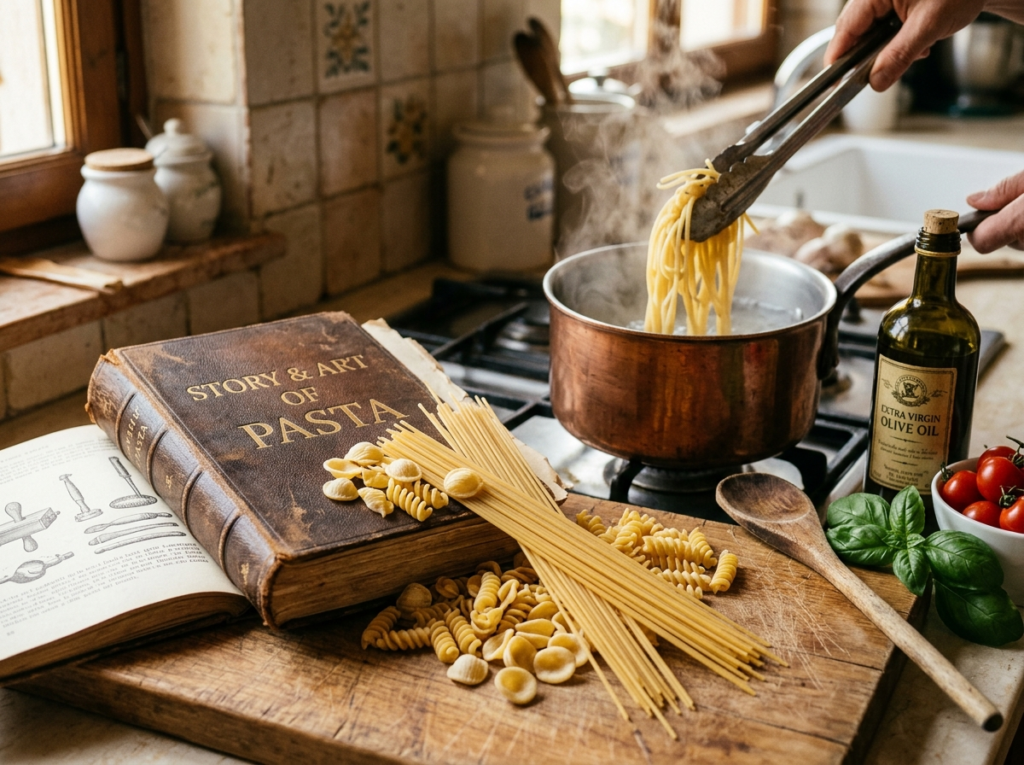
Italians eat roughly 23 kilograms of pasta per person every year. That’s more than any other country on the planet — and it’s not even close. But here’s the thing most people don’t realize: pasta didn’t start in Italy. Its story stretches back thousands of years, crosses continents, and involves a surprising cast of characters. And somewhere along the way, it became the most universally loved food on Earth.
Whether you’re someone who eats spaghetti three nights a week or you’re just learning how to boil water without burning it, this article is for you. We’ll walk through how pasta actually came to exist, why it looks and tastes the way it does today, and — most importantly — how to cook it so it turns out perfectly every single time. No chef’s degree required. Just a pot, some water, and a little patience.
Where Did Pasta Actually Come From?
There’s a popular story that says Marco Polo brought pasta to Italy from China in 1295. It’s a nice tale. It also isn’t true — at least not the way people tell it. By the time Polo returned from his travels, Italians were already eating forms of pasta. Documents from as early as 1154 mention a dried pasta being produced in Palermo, Sicily, well over a century before Polo’s famous journey.
So where does the real origin lie? That depends on how broadly you define “pasta.”
If pasta simply means dough made from grain and water, then you can trace it back to ancient civilizations across the Middle East, Asia, and the Mediterranean. The ancient Greeks had a dish called laganon — flat sheets of dough that were sliced into strips and cooked. The Romans adapted this into laganum, which many food historians consider a distant ancestor of modern lasagna.
Meanwhile, in China, archaeologists discovered a 4,000-year-old bowl of noodles at the Lajia archaeological site in 2005. Those noodles were made from millet, not wheat, but they prove that humans figured out the basic concept of turning grain into long, cooked strands of dough thousands of years ago — independently, in different parts of the world.
The truth? Pasta wasn’t “invented” by any single culture. Different civilizations arrived at similar ideas on their own. But what Italy did — and did brilliantly — was take the concept and turn it into an art form.
How Italy Made Pasta Its Own
The story of pasta becoming distinctly Italian really picks up speed in the Middle Ages. Arab traders and settlers brought dried pasta to Sicily around the 9th and 10th centuries. Dried pasta was a practical food for traders and sailors — it lasted months without spoiling, it was lightweight, and all you needed was boiling water to prepare it. Sicily’s hot, dry climate was perfect for drying pasta, and production grew quickly.
By the 13th century, dried pasta had spread to the Italian mainland. Cities like Genoa and Naples became major centers of production. Naples, in particular, developed such a deep relationship with pasta that Neapolitans earned the nickname mangiamaccheroni — “macaroni eaters.”
Did you know? Before the 17th century, most Italians ate pasta with their hands. Forks existed, but they weren’t commonly used. It was actually the court of King Ferdinand II of Naples that popularized the four-pronged fork specifically because it made eating pasta less messy in polite company.
Fresh pasta — made with eggs, flour, and sometimes water — developed separately in northern Italy. The Emilia-Romagna region became the heartland of egg-based pastas like tagliatelle, tortellini, and lasagna. Southern Italy stuck with dried pasta made from durum wheat semolina and water. This north-south divide still exists today and influences everything from the shape of the noodle to the type of sauce served alongside it.
The real explosion came in the 18th and 19th centuries. Pasta factories opened across Italy, making it affordable for ordinary families. And when the tomato — originally from the Americas — finally gained acceptance in Italian kitchens in the late 1600s and 1700s, the marriage of pasta and tomato sauce created one of the most iconic food pairings in history. If you’ve ever been curious about how Sicilian food culture shaped the broader Italian kitchen, pasta sits right at the center of that story.
Why Are There So Many Pasta Shapes?
Walk into any Italian grocery store and you’ll find dozens — sometimes hundreds — of pasta shapes. It seems excessive until you understand the logic behind it.
Every pasta shape exists to do a specific job: hold sauce. That’s the core principle. The shape, texture, and size of the noodle determine which sauces cling to it, pool inside it, or coat it evenly.
Think of it this way. A smooth, long noodle like spaghetti works beautifully with olive oil-based sauces or light tomato sauces because the sauce coats the strand evenly as you twirl it. But if you tried to eat a chunky, meaty ragu with spaghetti, you’d end up with bare noodles and all the good stuff sitting at the bottom of the bowl.
That’s where shapes like rigatoni, penne, or orecchiette come in. Their ridges, tubes, and curves trap thick sauces and hold onto small pieces of meat or vegetables. A stuffed pasta like tortellini or ravioli carries flavor inside the dough itself, so it pairs well with simpler sauces — a brown butter and sage, for instance — that complement without competing.
Here’s a simple way to think about pairing:
- Thin, long pasta (spaghetti, angel hair, linguine) → light sauces, oil-based, thin tomato sauces, seafood
- Thick, long pasta (fettuccine, pappardelle, tagliatelle) → cream sauces, meat ragus, rich preparations
- Short, tubular pasta (penne, rigatoni, ziti) → chunky sauces, baked dishes, thick tomato or vegetable sauces
- Small pasta (orzo, ditalini, pastina) → soups, broths, salads
- Stuffed pasta (ravioli, tortellini, agnolotti) → simple butter, broth, or light cream sauces
There are over 350 recognized pasta shapes in Italy. Some are regional specialties you’ll only find in specific towns. Others, like fusilli and farfalle, have become global staples. But the underlying idea hasn’t changed in centuries — the shape serves the sauce.
Dried Pasta vs. Fresh Pasta: What’s the Difference?
A lot of people assume fresh pasta is automatically “better” than dried. It’s a common misunderstanding, and even some home cooks feel guilty pulling a box of De Cecco off the shelf instead of rolling dough by hand. Let’s clear this up.
Fresh pasta and dried pasta are different products, not different quality levels. They have different textures, different uses, and different strengths. An Italian grandmother would never use fresh tagliatelle where dried spaghetti belongs, and vice versa.
Fresh pasta is typically made with all-purpose flour (or “00” flour), eggs, and sometimes a splash of olive oil. It’s soft, tender, and cooks in just two to three minutes. It absorbs sauces quickly and has a delicate, almost silky chew. Fresh pasta is ideal for rich, creamy sauces, stuffed preparations, and dishes where you want the noodle itself to feel luxurious. Regions like Emilia-Romagna, Piedmont, and Lombardy are famous for their fresh pasta traditions.
Dried pasta is made from durum wheat semolina and water — no eggs. Durum wheat is harder than regular wheat, which gives dried pasta its firm, satisfying bite (what Italians call al dente). It holds its shape during cooking, stands up to bold sauces, and stores in your pantry for years. Most of the pasta eaten globally is dried, and there’s absolutely nothing wrong with that.
Pro Tip: If you’re buying dried pasta, look for brands that use bronze dies (trafilata al bronzo). Bronze-cut pasta has a rough, slightly textured surface that grips sauce much better than pasta extruded through smooth Teflon dies. Brands like De Cecco, Rummo, and Garofalo offer bronze-cut options that can genuinely transform a simple bowl of pasta.
The takeaway? Use fresh pasta when you want tenderness and richness. Use dried pasta when you want structure and bite. Both belong in your kitchen. If you’re just starting to build your confidence in the kitchen, mastering a few basic techniques that professional chefs rely on will help you handle both types like a pro.
How to Cook Pasta Perfectly
Here’s where most people go wrong. Cooking pasta seems straightforward — boil water, add pasta, drain. But a few small details separate mushy, flavorless pasta from a bowl that actually tastes like something.
Use Enough Water
You need a big pot. Seriously. Pasta releases starch as it cooks, and if there isn’t enough water, that starch builds up and makes everything gummy. The general rule is about 4 to 6 quarts of water per pound of pasta. You don’t need to measure it exactly. Just use the biggest pot you have and fill it most of the way.
Salt the Water Generously
This is your only chance to season the pasta from the inside. Under-salted pasta tastes flat no matter how good your sauce is. The water should taste noticeably salty — not like the ocean, but clearly seasoned. A good starting point is about 1 to 2 tablespoons of kosher salt per pound of pasta. Taste the water. If it’s bland, add more.
And don’t worry about the salt making your dish too salty overall. Most of it stays in the water and goes down the drain. The pasta only absorbs a fraction.
Don’t Add Oil to the Water
You’ll hear people say to add olive oil to prevent sticking. Skip it. Oil on the surface of the water coats the pasta and prevents sauce from clinging to it later. If you’re using enough water and stirring the pasta during the first minute or two after you add it, sticking won’t be a problem.
Stir at the Start
Pasta is most likely to stick together in the first 60 to 90 seconds after it hits the water. That’s when the surface starch is at its stickiest. Give it a good stir right after adding it, then stir occasionally throughout cooking. After that initial period, the risk of clumping drops significantly.
Cook to Al Dente — Then Finish in the Sauce
Here’s the technique that separates good pasta from great pasta. Pull your noodles out of the water about one to two minutes before the package says they’re done. They should still have a firm bite — slightly underdone.
Then transfer the pasta directly into your sauce (which should already be warm in a separate pan). Add a ladle or two of that starchy pasta water. Toss everything together over medium heat for a couple of minutes. The pasta finishes cooking in the sauce, absorbing flavor. The starchy water helps the sauce emulsify and cling to every noodle.
This is how Italian cooks do it. It’s the single biggest upgrade you can make to your pasta game. That last step — finishing in the sauce — turns a plate of “noodles with stuff on top” into an actual cohesive dish.
Pro Tip: Always save a cup or two of pasta water before draining. You can add it gradually as you toss the pasta with sauce. It’s liquid gold — full of starch that acts as a natural thickener and binder.
If you’re building your cooking skills from the ground up, getting comfortable with foundational techniques like making a proper consommé teaches you a lot about how water, temperature, and timing work together — lessons that apply directly to cooking pasta well.
Classic Pasta Dishes and What Makes Them Work
You don’t need fifty recipes to eat well. Mastering even two or three classic pasta preparations will put you ahead of most home cooks. Here are a few foundational dishes and what makes each one tick.
Cacio e Pepe
Three ingredients: pasta (traditionally tonnarelli or spaghetti), Pecorino Romano cheese, and black pepper. That’s it. The magic is in technique. You create a creamy sauce by emulsifying finely grated cheese with hot, starchy pasta water. It sounds simple. It takes practice to get right. The cheese can clump if the pan’s too hot, or the sauce can turn thin and watery if there’s not enough starch. But when it works, it’s proof that restraint is the highest form of cooking.
Bolognese (Ragù alla Bolognese)
Real Bolognese has almost nothing in common with the meat sauce most people grew up eating. The authentic version from Bologna uses a soffritto of onion, carrot, and celery, a mix of ground beef and pork (sometimes veal), a splash of white wine, milk, and just a small amount of tomato. It simmers for hours — three to four, sometimes longer. The result is a deep, meaty, rich sauce that coats wide, flat noodles like tagliatelle. Not spaghetti. In Bologna, putting Bolognese on spaghetti is practically a criminal offense.
Aglio e Olio
Garlic, olive oil, red pepper flakes, and spaghetti. You gently cook thinly sliced garlic in good olive oil until it’s fragrant and barely golden — not brown, which makes it bitter. Toss in the cooked pasta with a healthy splash of pasta water, some pepper flakes, and maybe a handful of parsley. Ready in about ten minutes. It’s the dish Italian cooks make at midnight after a long day. If you understand how acid and fat balance each other in cooking, you’ll appreciate why a squeeze of lemon at the end can make this dish sing.
Carbonara
Eggs, Pecorino Romano (or a mix with Parmigiano-Reggiano), guanciale (cured pork jowl), and black pepper. No cream. Ever. The creamy texture comes entirely from tossing hot pasta with a mixture of beaten eggs and cheese. The residual heat gently cooks the eggs into a silky, clinging sauce. Use too much heat, and you’ll end up with scrambled eggs. The key is pulling the pan off the burner before combining everything.
A Quick Note on Pasta Sauce Pairing
Italians follow a principle that most of us ignore: the sauce and the pasta should be equals. Neither one should overpower the other.
A heavy, slow-cooked ragu deserves a sturdy pasta that can carry its weight — pappardelle, rigatoni, or paccheri. A light, fresh tomato sauce with basil belongs on spaghetti or linguine. A brothy, soupy preparation calls for small pasta shapes like ditalini or orzo.
This isn’t snobbery. It’s physics. A tiny angel hair noodle will collapse under a thick, chunky sauce. A massive rigatoni tube will feel clunky with a delicate butter sauce. Matching your pasta to your sauce isn’t about following rules for the sake of rules — it’s about making the food taste better.
And beyond the pasta itself, don’t underestimate the plate. Presentation matters even at home. A few simple plating tricks can make a Tuesday night bowl of penne feel like a meal worth sitting down for.
How Pasta Spread Across the World
The story of pasta becoming a global food is really a story about migration. When millions of Italians emigrated to the United States, Argentina, Brazil, and Australia in the late 1800s and early 1900s, they brought their food traditions with them. Pasta was cheap, filling, and familiar. It connected them to home.
In America, Italian immigrants adapted their recipes based on what was available. Tomatoes were abundant and affordable, so tomato-based sauces became dominant. Meat was cheaper than in Italy, so portions got larger and meatier. The Italian-American kitchen — with its baked ziti, chicken parmigiana, and spaghetti and meatballs — isn’t quite Italian, but it isn’t purely American either. It’s its own beautiful hybrid.
Meanwhile, pasta took on local identities in other countries too. Japan developed Napolitan — spaghetti cooked with ketchup, bell peppers, and sausage, named after Naples but bearing almost no resemblance to anything you’d find there. The Philippines embraced sweet-style spaghetti with banana ketchup. In parts of India, pasta started showing up in dishes seasoned with masala and local spices.
Some Italian food purists bristle at these adaptations. But the truth is, pasta has always been a food that absorbs the culture around it. That’s exactly why it survived for centuries and spread to every corner of the globe.
Storing and Handling Pasta at Home
A few practical notes that’ll save you from common kitchen headaches.
Dried pasta keeps almost indefinitely in a cool, dry pantry. Once opened, seal the box or transfer the pasta to an airtight container. It won’t “go bad” in the traditional sense, but it can absorb moisture or odors if left exposed.
Fresh pasta is perishable. If you make it at home, use it within a day or two, or freeze it. Fresh pasta freezes beautifully — spread the shapes or noodles on a parchment-lined baking sheet, freeze until solid, then transfer to a zip-top bag. Cook directly from frozen; don’t thaw first. Just add an extra minute to your cooking time.
Cooked pasta stores in the fridge for about three to five days. Toss it with a tiny bit of olive oil to prevent sticking. Reheat gently with a splash of water or broth to bring back moisture.
If you’re someone who likes having your kitchen set up for efficiency, the way you organize your space directly affects how smoothly your cooking goes — especially for quick weeknight meals where pasta is the star.
FAQ
Does rinsing pasta after cooking help or hurt?
In almost every case, don’t rinse your pasta. Rinsing washes away the surface starch that helps sauce stick to the noodles. The one exception is if you’re making a cold pasta salad. In that case, rinsing under cold water stops the cooking and cools the pasta quickly, which is exactly what you want.
Can you cook pasta in less water than what’s traditionally recommended?
You can, and some cooks do it intentionally. Using less water concentrates the starch, which gives you extra-starchy pasta water for emulsifying sauces. The trade-off is that you need to stir more frequently to prevent sticking. Harold McGee, the food science writer, has experimented with this approach and found it works fine for most shapes. It’s not traditional, but it’s not wrong either.
Is whole wheat pasta actually healthier than regular pasta?
Whole wheat pasta has more fiber and slightly more protein than standard white pasta. It also has a lower glycemic index, meaning it won’t spike your blood sugar as quickly. But the texture and flavor are different — earthier and chewier. Some people love it, others find it gritty. From a nutritional standpoint, yes, it has some advantages. But regular pasta in reasonable portions isn’t unhealthy either. If you enjoy eating more health-conscious meals at home, tools like an air fryer can also help expand your options without sacrificing taste.
What does “al dente” actually mean?
Al dente translates to “to the tooth.” It means the pasta is cooked through but still has a slight firmness when you bite into it. You shouldn’t see a white, raw center when you cut a noodle in half, but it also shouldn’t be soft all the way through. Al dente pasta has better texture, holds its shape, and continues cooking slightly when you toss it with hot sauce — which is why pulling it a minute early is the move.
Your Next Bowl Is Waiting
Pasta has been feeding people for thousands of years, and the reason is simple — it’s endlessly adaptable, deeply satisfying, and forgiving enough for a beginner while still challenging enough for a lifelong cook. You don’t need fancy equipment or imported ingredients to make a great bowl. You need good technique, decent pasta, and a sauce that matches.
Start with one dish. Maybe it’s a simple aglio e olio. Maybe it’s a slow-simmered Bolognese on a Sunday afternoon. Get comfortable with salting your water properly, pulling the pasta a little early, and finishing it in the sauce. Those three habits alone will change the way your pasta tastes.
And once you’ve got the basics down, you’ll start noticing something: pasta isn’t just a meal. It’s a framework. Change the shape, swap the sauce, add a seasonal vegetable or a different cheese, and you’ve got a completely new dish built on the same foundation. That’s the beauty of it. Four thousand years later, and we’re still figuring out new ways to enjoy the same ancient idea — grain, water, heat, and a hungry person at the table.