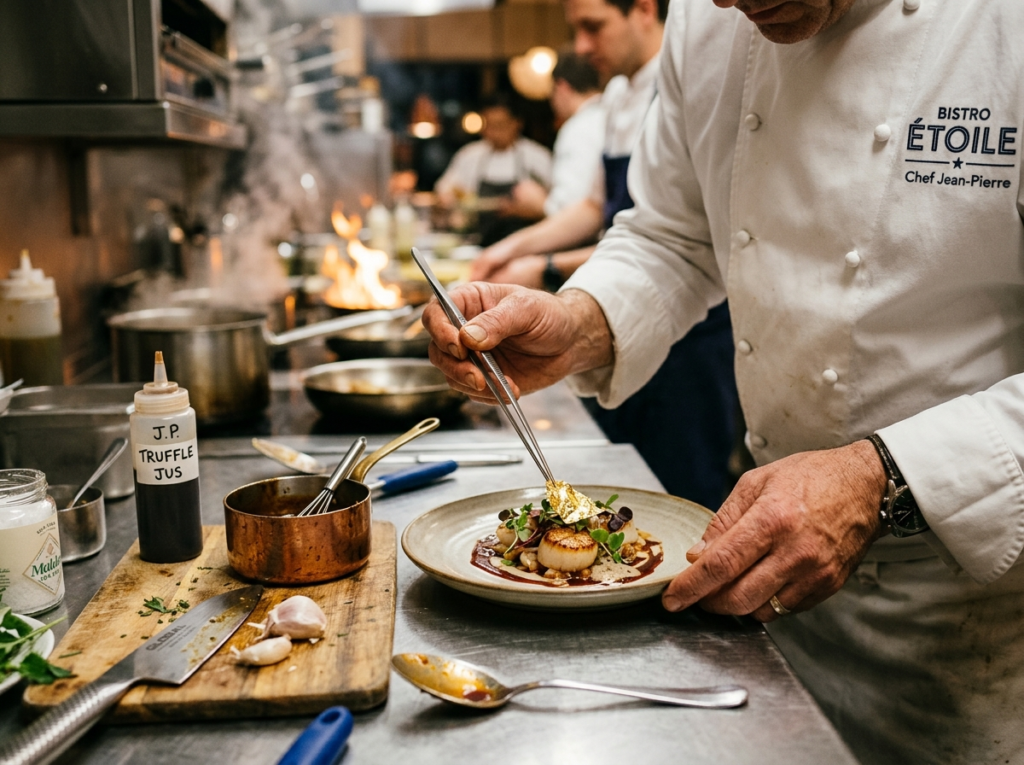
You’ve probably watched a chef on TV casually toss salt from three feet above a pan, flip an omelet without a spatula, and plate a dish that looks like it belongs in a gallery. And you’ve probably thought, “What do they know that I don’t?”
The answer? Quite a lot, actually. But here’s the thing — most of a chef’s tricks of the trade aren’t fancy techniques or secret ingredients. They’re small, smart habits built over years of cooking thousands of meals under pressure. And the best part? Almost every single one of them works just as well in your home kitchen.
This isn’t about turning you into a restaurant chef. It’s about borrowing the thinking behind how professionals cook so your food tastes better, your process gets smoother, and your time in the kitchen stops feeling like a chore.
Let’s get into it.
Why Professional Food Tastes Different (It’s Not What You Think)
Most people assume restaurant food tastes better because of expensive ingredients or industrial equipment. That’s only a tiny piece of the puzzle.
The real difference? Chefs understand how heat, seasoning, and timing interact with each other. They’ve internalized principles that home cooks often skip over — not because they can’t learn them, but because nobody ever explained them in plain terms.
A chef doesn’t just follow a recipe. They read the food. They listen to the sizzle in the pan. They smell when garlic is thirty seconds from burning. These aren’t supernatural abilities. They’re habits anyone can develop with a little awareness.
The gap between home cooking and professional cooking is rarely about talent. It’s about knowing which small things make a big difference — and then actually doing them consistently.
Mise en Place: The One Habit That Changes Everything
If you take only one trick from this entire article, let it be this: mise en place.
It’s a French term that means “everything in its place.” Before a chef turns on a single burner, every ingredient is measured, chopped, peeled, and ready to go. Sauces are prepped. Garnishes are portioned. Tools are within arm’s reach.
Why does this matter so much? Because cooking is a series of time-sensitive decisions. Once that oil starts smoking, you don’t have three minutes to dice an onion. Once the pasta is al dente, you can’t pause everything to find your colander buried behind the slow cooker.
At home, this looks pretty simple. Before you start cooking, read the entire recipe. Pull out everything you need. Chop your vegetables. Measure your spices. Set them in small bowls or even on a plate. It feels like extra work upfront, but it actually saves time — and it dramatically reduces mistakes.
Professional kitchens are chaotic environments. The only reason they function is because everything is organized before the chaos begins. If you’ve ever felt frantic while cooking dinner, a solid home kitchen organization system will change your whole experience.
Season in Layers, Not All at Once
Here’s something that separates a good cook from a great one: when they season, not just how much.
Most home cooks add salt once — usually at the end. Chefs season at every stage. A pinch of salt when the onions hit the pan. A little more when the tomatoes go in. Another adjustment when the broth is added. And a final taste before plating.
Why? Because salt doesn’t just make things “salty.” It amplifies flavors that already exist. When you salt a raw onion before it caramelizes, you’re pulling out moisture and building a deeper sweetness. When you season pasta water until it tastes like the sea, you’re flavoring the noodle from the inside out — something no amount of sauce on top can replicate.
The same principle applies to acid. A squeeze of lemon juice or a splash of vinegar at the end of cooking can transform a flat dish into something vibrant. Chefs call this “brightening.” It’s the reason restaurant soups and sauces taste so alive compared to homemade versions that seem… fine but forgettable.
Pro Tip: Keep a small bowl of kosher salt right next to your stove. If you have to walk to the pantry every time you want to season, you won’t do it often enough. The understanding of how acid and fat balance each other is one of the most powerful flavor concepts you can learn.
Your Pan Isn’t Hot Enough
This is probably the most common mistake home cooks make, and every single professional chef will tell you the same thing: you’re not getting your pan hot enough before adding food.
When protein — whether it’s chicken, steak, or fish — hits a lukewarm pan, it steams instead of searing. Steam means no browning. No browning means no flavor development. That golden, caramelized crust you see on restaurant steaks? That’s the Maillard reaction at work, and it only happens at high temperatures.
Here’s how to tell your pan is ready: hold your hand about six inches above the surface. You should feel real heat radiating up. If you’re using oil, it should shimmer and move easily across the pan — almost like water. For stainless steel, the water droplet test works beautifully: flick a few drops of water into the pan. If they dance and skitter across the surface, you’re at the right temperature. If they just sit there and bubble lazily, wait longer.
And once the food goes in? Don’t touch it. Seriously. Put it down and walk away for a minute. If you’re constantly moving and flipping, you’re interrupting the sear. The food will release naturally from the pan when it’s properly browned. If it’s sticking, it isn’t ready to flip yet.
This single adjustment — hotter pan, less fidgeting — will make your home-cooked meat taste noticeably better starting tonight.
The Art of Tasting as You Go
Professional chefs taste their food constantly. Not once. Not twice. They’re tasting at nearly every stage of cooking. A spoonful here, a quick dip of a clean spoon there.
This might sound obvious, but watch most home cooks in action. They follow a recipe mechanically, add the stated amounts, and taste for the first time when the food hits the plate. By then, it’s too late to fix anything.
Tasting as you go isn’t just about checking salt levels. You’re monitoring balance. Does the dish need more acidity? Is it too sweet? Does it feel flat and one-dimensional? Your palate tells you things a recipe never can, because recipes can’t account for variations in your ingredients, your stove, your altitude, or even the age of your spices.
Here’s a good habit to build: every time you add a new ingredient, give the dish a minute to incorporate, then taste. Ask yourself one question — “What’s missing?” Often the answer is salt. Sometimes it’s acid. Occasionally it’s a tiny pinch of sugar to round off harsh edges. But you’ll never know unless you taste.
Did You Know? The spices sitting in your cabinet for more than a year have likely lost a significant portion of their potency. Ground spices especially lose their punch after about six months. If your food tastes bland despite following the recipe exactly, your spice rack might be the culprit.
Knife Skills Matter More Than Any Gadget
You can spend hundreds of dollars on kitchen gadgets, and none of them will improve your cooking as much as learning to use a chef’s knife properly.
A sharp knife and basic cutting technique do three things for you. They make your prep faster, they make your cuts uniform (which means even cooking), and they actually make cooking safer. Dull knives are dangerous — they require more force, which means less control, which means more slips.
You don’t need a $300 Japanese blade to get started. A decent 8-inch chef’s knife that you keep sharp will outperform a premium knife that’s been neglected. And sharpening doesn’t mean running it through one of those pull-through gadgets that actually chew up the edge. A honing steel before each use and proper sharpening every few months will keep your knife performing the way it should.
As for technique, focus on three cuts: the rough chop (fast, imprecise, for stocks and stews), the dice (uniform cubes for sautés and sauces), and the mince (very fine, for garlic, herbs, and aromatics). Once you’re comfortable with these, you’ll move through prep work twice as fast. If you want to go deeper, building real knife skills is one of the most rewarding things a home cook can do.
Learn to Build Flavor from the Bottom Up
Chefs think about flavor in terms of foundation, body, and finish.
The foundation starts with aromatics — onions, garlic, celery, carrots, ginger, shallots. These go into the pan first, cooked slowly until they’re soft and fragrant. Rushing this step is one of the quickest ways to make a dish taste underdeveloped.
The body is your main ingredients and the liquid or sauce that ties everything together. This is where stocks come in. A homemade stock turns a simple soup into something with real depth. Even a quality store-bought stock beats water every time. And if you really want to level up, understanding how to make a proper consommé or demi-glace will open up a whole new world of flavor.
The finish is everything you add at the end — fresh herbs, a squeeze of citrus, a drizzle of good olive oil, a sprinkle of flaky salt. These aren’t decoration. They’re the final layer that makes a dish feel complete. Chefs call it “finishing” for a reason: it’s the last impression your food makes on someone’s palate.
Think of it like painting. You start with a base coat. You build up layers of color. And then you add the fine details that bring the whole thing to life. Skip any layer and the result feels incomplete.
Rest Your Meat (and Everything Else)
You’ve probably heard the advice to rest your steak after cooking, but do you actually do it? Most people can’t resist cutting into it immediately. Here’s why patience pays off.
When meat cooks, the heat pushes moisture toward the center. If you cut it right off the grill or out of the pan, all that juice runs out onto the cutting board — and your steak goes from juicy to dry in about ten seconds.
Resting lets the temperature equalize and the muscle fibers relax, redistributing the moisture throughout the meat. A good rule of thumb: rest your meat for roughly the same amount of time you cooked it, or at least five to ten minutes for a standard steak. Tent it loosely with aluminum foil so it stays warm without steaming itself.
But this principle extends beyond meat. Baked goods need to cool so their structure sets. Freshly baked bread from a great bakery tastes incredible precisely because the bakers know when to pull it and how long to let it rest. Pasta sauces benefit from a few minutes off the heat to let the flavors meld. Even scrambled eggs should come off the stove slightly underdone, because they keep cooking from residual heat — a concept called carryover cooking that chefs account for every single time.
Clean as You Go
Walk into a professional kitchen during service and you’ll notice something surprising: it’s cleaner than you’d expect. Not because someone is mopping in the corner, but because every cook is cleaning as they work.
Dirty pan from searing chicken? Wiped down and back on the burner for the sauce. Vegetable trimmings? Swept into a bowl (chefs call it a “garbage bowl”) and cleared periodically. Cutting board? Wiped between ingredients so flavors don’t cross-contaminate and workspace stays functional.
This habit does two things. It keeps your workspace manageable, which helps you think clearly. And it means you don’t end the meal with a mountain of dishes that makes you regret ever picking up a spatula.
The trick is to use your downtime. While onions are softening, wash the knife and cutting board. While something simmers, put away ingredients you’re done with. While meat rests (see above), wipe down counters. By the time food hits the table, your kitchen should be close to clean already.
Quick Fact: The French culinary term for this practice is “nettoyage en continu.” It’s taught from day one in culinary schools because a cluttered station leads to slow, sloppy, and sometimes unsafe cooking.
Understand Your Heat Sources
Not all burners on your stove behave the same way, and chefs know exactly how each one in their kitchen performs. You should too.
Most home stoves have one high-output burner (usually the large one in the back or front right), a couple of medium burners, and one small burner that’s perfect for simmering. Use them strategically. Searing goes on the hottest burner. Sauces and reductions go on a medium one. Keeping something warm while you finish other components? That’s the small burner’s job.
If you’re cooking with gas, you have instant temperature control — turn the dial and the flame responds immediately. Electric and induction cooktops have a lag, which means you need to anticipate. Pull a pan off an electric burner if you need to stop cooking quickly, because reducing the dial won’t drop the temperature fast enough.
Oven temperature is another area where home cooks get tripped up. Most home ovens are off by 25 to 50 degrees from what the dial says. An oven thermometer — they cost less than ten dollars — is one of the smartest investments you’ll make. If your baked goods are inconsistent or your roasts always seem over or underdone, an inaccurate oven is likely the reason.
The Power of Finishing Touches and Plating
Here’s something chefs understand intuitively that home cooks tend to overlook: we eat with our eyes first.
You don’t need tweezers and edible flowers to plate food beautifully at home. A few simple principles make a real difference. Use a plate that’s slightly larger than the portion, so the food has room to breathe. Wipe any drips or smudges from the rim before serving. Add a final touch of color — a scatter of fresh herbs, a drizzle of good oil, a few flakes of sea salt.
Height matters too. A flat pile of food looks like cafeteria fare. Stack things slightly. Lean the protein against the starch. Nestle vegetables around rather than spreading them randomly. These tiny adjustments take about twenty extra seconds but completely change how a dish is perceived.
The principles behind simple plating for home cooks aren’t complicated, but they do make your dinner feel like an event instead of just fuel.
And temperature matters at the point of serving too. Warm your plates for hot dishes — just run them under hot water for a moment or put them in a low oven for a few minutes. Cold food on a cold plate, hot food on a warm plate. It’s a tiny detail that chefs never skip.
Don’t Fear Fat and Salt
Home cooks tend to be cautious with butter, oil, and salt because years of conflicting nutrition advice have made them nervous. Chefs don’t have that hesitation, and it shows in the food.
This doesn’t mean drowning everything in butter. It means using enough fat to properly cook and enough salt to properly season. When a recipe says “a generous amount of olive oil,” it doesn’t mean a timid drizzle that barely coats the pan. It means enough to actually do the job — conduct heat, prevent sticking, and add flavor.
The same goes for finishing fats. A knob of cold butter stirred into a pan sauce right before serving — a technique the French call “monter au beurre” — creates a silky, glossy texture that’s impossible to achieve any other way. A really good extra virgin olive oil drizzled over pasta after plating adds a richness and aroma that cooking oil can’t match.
Salt is not the enemy either. Under-seasoned food is far more common in home kitchens than over-seasoned food. The key is tasting as you go (there’s that habit again) and adjusting in small increments. You can always add more. You can’t take it away.
Stock Your Pantry Like a Chef
Ever wonder how chefs can seemingly whip up a meal from nothing? Their secret is a well-stocked pantry.
A professional kitchen always has certain essentials on hand: quality olive oil, neutral cooking oil, various vinegars (sherry, red wine, rice), soy sauce or fish sauce for umami, Dijon mustard, canned tomatoes, dried pasta, good stock (homemade or decent store-bought), and a solid spice collection.
With those building blocks, you can improvise endlessly. A quick pasta with garlic, olive oil, chili flakes, and a splash of pasta water becomes dinner in fifteen minutes. Canned tomatoes with onion, garlic, and a bay leaf turn into a versatile sauce in thirty. Having these staples means you rarely find yourself staring into the fridge wondering what to make — something the no-plan meal plan approach handles brilliantly.
Pro Tip: Buy spices from stores that have high turnover — ethnic grocery stores are often the best source. You’ll get fresher products at a fraction of the supermarket price. And buy whole spices when you can, then toast and grind them yourself. The flavor difference is staggering.
Learn Techniques, Not Just Recipes
This might be the most important shift in thinking you can make as a home cook. Recipes are instructions for one dish. Techniques are tools you can use forever.
If you learn how to braise, you can braise anything — beef short ribs, chicken thighs, lamb shanks, even hearty vegetables. If you understand emulsification, you can make vinaigrettes, hollandaise, and aioli without looking anything up. If you master a basic roux, you can build any cream sauce, gravy, or cheese sauce from memory.
Chefs aren’t memorizing thousands of recipes. They know maybe a dozen core techniques and apply them across hundreds of dishes. Sautéing, roasting, braising, poaching, grilling, emulsifying, reducing, blanching — these are the verbs of cooking. Learn the verbs and you can write any sentence.
That’s why culinary school doesn’t start with recipes. It starts with stocks. With knife skills. With mother sauces. With understanding what heat does to protein and starch and fat. The recipes come later, almost as an afterthought, because once you understand the principles, recipes become suggestions rather than rules.
Trust Your Senses Over the Timer
A recipe says “roast for 45 minutes.” Your oven runs hot. The chicken is smaller than what the recipe writer used. After 45 minutes, it’s overcooked and dry. Sound familiar?
Chefs rely on their senses far more than timers. They press a steak with their finger to gauge doneness — soft means rare, springy means medium, firm means well done. They shake a pan of roasting vegetables and listen for the sound to change from wet sizzling to dry crackling. They smell the shift from raw to caramelized.
You can develop these instincts too. Start by paying attention to what your food looks, sounds, and smells like at each stage of cooking. Over time, you’ll start recognizing patterns. You’ll know your bolognese is ready not because two hours have passed, but because it smells different and looks glossier. You’ll know your bread is done because the bottom sounds hollow when you tap it.
An instant-read thermometer is a bridge between following recipes blindly and cooking by feel. Use it until you build confidence. Chicken breast is done at 165°F internally. A medium-rare steak hits about 130°F before resting. Once you’ve checked temperatures enough times while also noting how the food looks and feels, you’ll eventually rely less on the thermometer and more on yourself.
FAQ
What’s the single most impactful chef’s trick for home cooking?
Seasoning in layers throughout the cooking process makes the biggest difference for most home cooks. Adding salt, acid, and fat at multiple stages rather than just at the end builds depth and complexity that single-seasoning can’t match. Pair that with tasting as you go, and your food will improve dramatically.
Do I need expensive equipment to cook like a chef?
Not at all. A sharp 8-inch chef’s knife, a heavy-bottomed stainless steel or cast iron skillet, a sturdy cutting board, and an instant-read thermometer cover about 90% of what you need. Chefs produce great food because of skill and habits, not because of gadgets. Spend your money on quality ingredients and a good knife rather than single-use appliances.
How do chefs make everything taste so flavorful without it being heavy?
Balance is the answer. Professional cooks balance richness (fat, starch) with brightness (acid, fresh herbs). A squeeze of lemon, a splash of vinegar, or a handful of fresh parsley at the end of cooking keeps rich dishes from feeling overwhelming. That interplay between acid and fat is something chefs think about with every single dish.
How long does it take to develop real cooking instincts?
If you cook regularly — three to five times per week — and you actively pay attention (taste, observe, adjust), you’ll notice significant improvement within a few months. Within a year of deliberate practice, you’ll be cooking most meals without needing to check recipes constantly. The key word is “deliberate.” Mindlessly following instructions doesn’t build instinct. Engaging your senses does.
Every professional chef started exactly where you are — standing in a kitchen, trying to make something taste good. The difference between then and now, for them, was accumulating hundreds of small tricks and habits that eventually became second nature.
You don’t need to learn all of them at once. Pick two or three from this list — maybe mise en place, seasoning in layers, and getting your pan properly hot — and commit to practicing them this week. Once those feel natural, add another. Then another.
Cooking isn’t about perfection. It’s about paying attention, being curious, and building confidence one meal at a time. The tricks of the trade aren’t really secrets at all. They’re just good habits that nobody bothered to explain until now.
So tonight, when you step into the kitchen, do one thing differently. Your dinner will thank you for it.