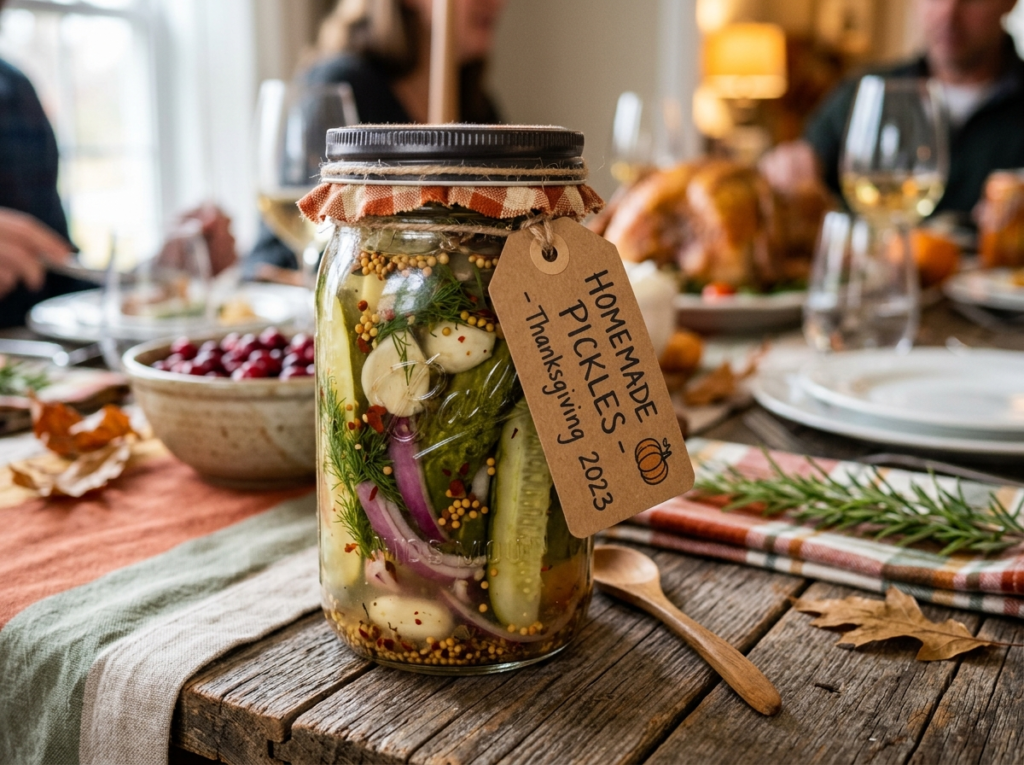
Most Thanksgiving tables look the same. You’ve got the turkey in the center, mashed potatoes, gravy, stuffing, maybe a casserole or two, and something sweet waiting on the counter. It’s comforting, familiar, and honestly a little heavy. Every dish tends to lean in the same direction — rich, buttery, warm. Your palate gets tired by the second plate.
That’s exactly where homemade pickles come in.
A jar of bright, tangy, crunchy pickled vegetables can do something no amount of cranberry sauce ever will. It cuts through all that richness. It wakes up your taste buds between bites of gravy-soaked everything. And the best part? Most homemade pickles take less than 30 minutes of active work. Some don’t even need cooking.
If you’ve never thought of pickles as a Thanksgiving side dish, you’re not alone. But once you try it, you won’t go back to a table without them.
Why Pickles Deserve a Spot at Thanksgiving
Think about what your Thanksgiving spread actually needs. You’ve already got salt from the gravy. You’ve got fat from the butter in basically everything. You’ve got sweetness from the yams and the pies. What’s missing? Acid. That bright, sharp, tart flavor that makes everything else taste better.
Professional chefs talk about this all the time. A dish isn’t balanced until it has some acidity. That’s why a squeeze of lemon transforms a piece of fish, and why vinaigrette makes a salad come alive. If you’re curious about how acid and fat work together in cooking, it’s worth understanding this principle because it’ll change how you approach every meal — not just Thanksgiving.
Pickles bring that acid to the table, literally. They also bring crunch, which is another texture that’s usually missing from a Thanksgiving spread dominated by soft, mashed, and roasted things. A forkful of crisp pickled red onions after a bite of turkey and stuffing? That contrast is what keeps you eating and enjoying every bite instead of just powering through.
And there’s something else worth mentioning. Pickles are one of the few Thanksgiving dishes you can make days ahead. In a holiday where timing is everything and oven space is a battlefield, having a side dish that’s already done and sitting happily in your fridge is a real gift to yourself.
Quick Pickles vs. Fermented Pickles: What Works for Thanksgiving
Before you start pulling out mason jars, let’s talk about your two main options.
Quick pickles (also called refrigerator pickles) are made by pouring a hot vinegar brine over vegetables and letting them sit. They’re ready in as little as one hour, though they taste better after a day or two. No canning equipment needed. No fermentation time. Just vinegar, salt, sugar, spices, and whatever vegetable you want to pickle.
Fermented pickles are the old-school method. You submerge vegetables in a saltwater brine and let naturally occurring bacteria do the work over days or weeks. These give you that deep, funky, probiotic-rich flavor you find in traditional deli pickles or Korean kimchi. They’re wonderful, but they take time and some experience to get right.
For Thanksgiving? Quick pickles are your best friend. You can make them three or four days before the holiday, they’re completely predictable, and they taste great. If you’re already an experienced fermenter, by all means bring your best batch to the table. But if you’re new to this, stick with the quick method. It’s almost impossible to mess up.
The Best Vegetables to Pickle for Thanksgiving
You can pickle just about any vegetable, but some are especially good for a Thanksgiving table because they complement the flavors already there.
Red onions are probably the single best pickle you can make for this meal. They turn a gorgeous magenta color in the brine, they’re sweet and tangy, and they go with everything — turkey, ham, roasted vegetables, even leftover sandwiches the next day. Thinly slice two large red onions, pack them into a jar, and pour over a brine of equal parts apple cider vinegar and water with a tablespoon each of sugar and salt. Done.
Cucumbers are the classic choice, and for good reason. Thin-sliced Persian cucumbers or English cucumbers pickle quickly and stay crunchy. Add some dill, garlic, and a pinch of red pepper flakes to your brine for a pickle that people will keep reaching for all night.
Carrots are underrated as a pickle vegetable. Cut them into sticks or thin coins, and they hold their crunch beautifully. A brine with cumin, coriander, and a little orange zest makes a carrot pickle that feels festive without being fussy.
Green beans pickled with garlic and dill — sometimes called “dilly beans” — are a Southern Thanksgiving tradition in many families. They’re crunchy, savory, and hold up well on a relish tray.
Cranberries might surprise you here. Quick-pickled cranberries with cinnamon, star anise, and orange peel are a stunning alternative to traditional cranberry sauce. They’ve got that tartness you expect, but the vinegar brine adds complexity that cooked cranberry sauce just doesn’t have.
And don’t overlook fall vegetables. Thinly sliced radishes, fennel, or even small cauliflower florets all pickle beautifully and give your table a seasonal feeling that store-bought pickles never will.
A Simple Brine Formula That Works Every Time
Here’s the thing about pickle brines — you don’t need a different recipe for every vegetable. Once you know the basic ratio, you can adjust flavors from there. Think of it like learning basic knife skills — once you’ve got the technique down, you can apply it to anything.
The basic quick pickle brine:
One cup vinegar, one cup water, one tablespoon kosher salt, one tablespoon sugar. That’s it. Heat the water, vinegar, salt, and sugar in a small saucepan until the salt and sugar dissolve. Pour it over your prepared vegetables in a clean jar. Let it cool to room temperature, then put the lid on and refrigerate.
That ratio works with any vinegar. White vinegar gives you the sharpest, cleanest flavor. Apple cider vinegar is a little mellower and sweeter — it’s my go-to for Thanksgiving pickles. Rice vinegar is milder still, and works well with Asian-inspired spice combinations. Red wine vinegar adds depth and color.
Pro Tip: Don’t use balsamic vinegar for pickling. It’s too thick, too sweet, and the flavor overwhelms the vegetables.
Now, the fun part is what you add beyond the basic brine. Whole spices work best because they infuse slowly and don’t cloud the liquid. Mustard seeds, black peppercorns, coriander seeds, bay leaves, whole cloves, cinnamon sticks, dried chili peppers, fresh dill, fresh garlic — these are all fair game. Toss a few into the jar before you pour the brine, and you’ve got a custom pickle.
How to Build a Thanksgiving Pickle Platter
One jar of pickles on the table is great. A whole platter of different pickles? That’s a conversation starter. And it’s way easier to put together than you’d think.
Start three or four days before Thanksgiving. Make two or three different types of pickles on the same day. It’ll take you maybe an hour total, and most of that time is just slicing vegetables. Use the same base brine and vary the spices and vinegar types so each pickle tastes different.
Here’s a combination that works really well together on one platter: pickled red onions with apple cider vinegar and a bay leaf, pickled cucumber rounds with white vinegar and dill, and pickled carrot sticks with rice vinegar and a few slices of fresh ginger. Three colors, three flavor profiles, one brine formula.
When you’re ready to serve, drain the vegetables (save the brine — more on that later) and arrange them on a board or shallow dish. If you’re someone who cares about how food looks on the plate — and if you’ve ever spent time thinking about simple plating tips — a pickle platter gives you a chance to play with color and arrangement. Those bright pinks, oranges, and greens look stunning against the browns and golds of a typical Thanksgiving table.
Add some olives if you want, maybe a few chunks of good cheese, and suddenly you’ve also got a pre-dinner snack that keeps guests happy while the turkey rests. If you’re an olive fan, a mix of briny olives alongside tangy pickles creates an appetizer spread that practically takes care of itself.
Timing and Storage: When to Make Your Pickles
Timing matters. Quick pickles technically “work” after about an hour in the brine, but they’re significantly better after 24 to 48 hours. The flavors deepen, the vegetables soften just slightly while keeping their crunch, and everything melds together.
My recommendation: make your Thanksgiving pickles on Sunday or Monday before Thursday’s meal. That gives them three or four days to develop flavor, and you’ve got one less thing to worry about during the actual cooking frenzy.
Quick pickles stored in the refrigerator will stay good for about three to four weeks. So even if you make more than you need — and you should — you’ll have pickles for turkey sandwiches, post-holiday salads, and random snacking well into December.
A word about jars. You don’t need fancy canning jars, though Mason jars look nice and seal well. Any clean glass jar with a lid works. Old pasta sauce jars, jam jars, whatever you’ve got. Just make sure you let the brine cool slightly before pouring it into a jar that’s at room temperature. Pouring boiling liquid into a cold glass jar can crack it. A little patience here saves you a mess and a jar.
Keep the lids on loosely until the pickles are completely cool, then tighten and refrigerate. The airtight seal keeps everything fresh and prevents your pickles from picking up fridge odors. Nobody wants pickles that taste like last week’s leftovers.
What to Do With Leftover Pickle Brine
Don’t throw it away. Seriously. That leftover brine is liquid gold.
You can reuse it once to pickle a fresh batch of the same vegetable. The flavor won’t be quite as strong the second time around, but it still works well. Just slice up more onions or cucumbers, pack them in, and wait another day or two.
Beyond re-pickling, that brine makes an excellent base for salad dressings. Whisk it with some olive oil, a little Dijon mustard, and a pinch of pepper, and you’ve got a vinaigrette with way more character than anything you’d buy at the store.
You can also use pickle brine as a marinade. Turkey breast, chicken thighs, and pork chops all benefit from a few hours in acidic, salty, spiced brine. It tenderizes the meat and seasons it from the inside out. This is basically the same principle behind brining your Thanksgiving turkey — you’re just using a brine that already has built-in flavor.
And here’s a trick bartenders know: pickle brine is a fantastic cocktail ingredient. A splash of dill pickle brine in a martini makes a dirty martini. Spicy pickle brine works in a Bloody Mary. If you’re someone who likes to experiment with cocktails, keep your brine around and play with it.
Pairing Pickles With Traditional Thanksgiving Dishes
Not all pickles go with all dishes. Here’s how to think about pairing them so they actually enhance the meal instead of competing with it.
With turkey: Pickled red onions or pickled cranberries. The sweetness and acid cut through the rich, savory meat beautifully. If your turkey is smoked or deep-fried, the contrast is even more dramatic and satisfying.
With mashed potatoes and gravy: A couple of pickled green beans or pickled carrot sticks on the same forkful add a crunch and tang that makes the creamy potatoes pop. It sounds unusual, but trust the contrast.
With stuffing or dressing: Pickled fennel is spectacular here. The mild anise flavor plays well with sage and thyme, and the acidity keeps the heavy bread-based stuffing from feeling too dense.
With ham: If your family does ham instead of (or alongside) turkey, any mustard-seed-heavy pickle is a natural match. That classic ham-and-mustard pairing translates perfectly to ham and mustard-seed pickled vegetables.
With cheese plates: If you do a pre-dinner cheese board, almost any pickle works. The acid in pickles helps cleanse your palate between different cheeses, the same way the right wine glass helps you taste wine properly — it’s all about creating the right conditions for your taste buds.
A Few Things to Watch Out For
Pickling is forgiving, but a few mistakes can trip you up.
Don’t use table salt. It contains iodine and anti-caking agents that can make your brine cloudy and give it an off flavor. Stick with kosher salt or pickling salt. Both dissolve cleanly and won’t affect the color of your brine.
Don’t skip the sugar. Even if you don’t want sweet pickles, a small amount of sugar in the brine balances the acidity and makes the overall flavor rounder. You’re not making candy — you’re building balance. You can reduce the sugar, but don’t eliminate it entirely.
Cut your vegetables evenly. Uneven pieces pickle at different rates. Thick chunks will still be raw in the center while thin slices are already mushy. Take a few extra minutes to cut everything the same thickness. If you want to sharpen your cutting technique, even basic practice will make your pickles better.
Don’t use reactive metal bowls or containers. Vinegar reacts with aluminum and copper. Use glass, ceramic, or food-grade plastic containers. Stainless steel is fine for heating the brine, but glass jars are best for storage.
And one more thing: taste your pickles before serving them. It sounds obvious, but people get busy on Thanksgiving and forget. Give them a try on Wednesday night. If they need a little more salt, you can add a pinch directly to the jar and shake gently. If they’re too sour, a half teaspoon of sugar or honey stirred in will mellow things out. You’re the cook — adjust until it’s right.
FAQ
How far in advance can I make quick pickles for Thanksgiving?
You can make them up to three weeks ahead and they’ll be fine in the fridge. For the best texture and flavor, though, three to five days before serving is the sweet spot. The vegetables stay crisp and the brine has time to fully infuse without making anything too soft.
Can I pickle fruits for Thanksgiving too?
Absolutely. Grapes, pears, and apples all pickle well, and they’re surprisingly good alongside savory dishes. Pickled grapes with rosemary are a real crowd-pleaser on a cheese board. Pickled apple slices — especially if you’re comparing different apple varieties — make a tangy side that pairs well with pork and turkey.
Are quick pickles safe to give as gifts?
Quick pickles stored in the fridge are safe for personal use and gifting, but they aren’t shelf-stable like canned pickles. If you want to give them as Thanksgiving host gifts, just let the person know to keep them refrigerated and use them within three to four weeks. For true shelf-stable pickles, you’d need to follow proper water bath canning procedures from a reliable source like the USDA’s canning guidelines.
Do I need any special equipment to make quick pickles?
No. You need a clean jar with a lid, a small saucepan, a knife, a cutting board, and your ingredients. That’s genuinely it. No canning supplies, no special thermometers, no fancy equipment. It’s one of the simplest things you can make in a kitchen, and if you’ve ever thought about organizing your small kitchen better, you probably already have everything within reach.
Your Thanksgiving Table Just Got More Interesting
A jar of homemade pickles won’t replace the turkey. It won’t steal the spotlight from your grandmother’s stuffing recipe. But it’ll quietly make everything else on the plate taste a little better. It’ll give your guests something unexpected to talk about. And it’ll cost you maybe 20 minutes of effort and a couple of dollars in ingredients.
This Thanksgiving, set a jar — or better yet, a whole platter — of homemade pickles right in the middle of the table. Watch how quickly they disappear. And next year, when someone asks what they can bring to dinner, tell them to bring the pickles. You’ll have created a new tradition without even trying.