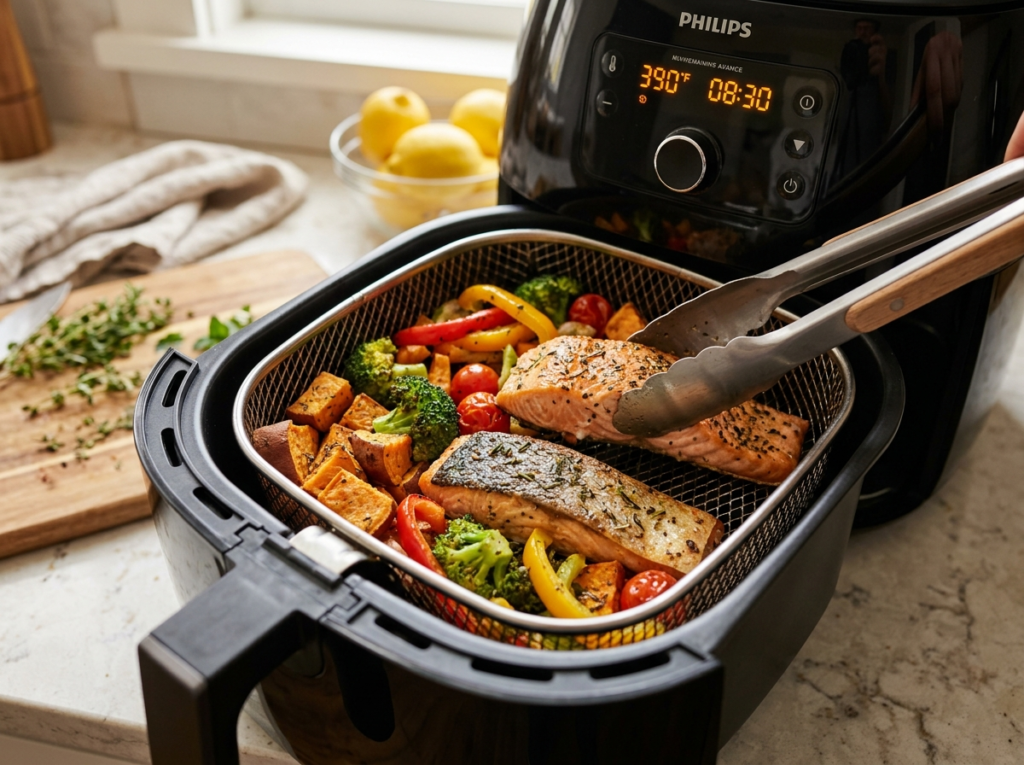
Most people buy an air fryer thinking it’ll change everything. Then it sits on the counter for three weeks, mostly used for reheating fries. Sound familiar?
Here’s the thing — the air fryer can genuinely help you eat healthier. Not because it’s magic, but because it quietly removes some of the biggest friction points in cooking real food. Less oil, faster cook times, easier cleanup. When healthy food is easier to make, you actually make it. That’s the whole game.
But there’s a right way to use it — and a way that just swaps one bad habit for another. Let’s get into it.
Why the Air Fryer Changes How You Cook Day-to-Day
The air fryer works by circulating hot air rapidly around your food. It’s essentially a compact convection oven — just faster and more concentrated. That hot, moving air creates the same browning and crisping you’d get from deep frying, but without submerging your food in oil.
You might’ve already read that part on the box. But what does it actually mean for how you eat?
It means roasted vegetables are done in 12 minutes instead of 35. It means a piece of salmon takes 8 minutes. Chicken thighs? Done in 20, with crispy skin you didn’t have to babysit. When healthy cooking gets that fast, your 7pm “I’ll just order pizza” moment becomes a lot less convincing.
The speed factor is genuinely underrated. Most people don’t skip vegetables because they dislike them — they skip them because roasting takes forever and they’re tired. A tool that cuts that time by more than half changes the equation.
The Oil Question (And Why It Actually Matters)
A typical deep-fried serving of chicken uses anywhere from 200 to 300 extra calories in absorbed oil — sometimes more, depending on the coating and how long it sits in the fryer. Air frying cuts that dramatically. You’re usually using one teaspoon to one tablespoon of oil, total.
That said, oil itself isn’t the enemy. Good fats — olive oil, avocado oil — are part of a healthy diet. The benefit isn’t “zero oil” cooking. It’s controlled oil cooking. You decide exactly how much goes on, instead of your food soaking it up passively.
For someone trying to reduce calorie intake without obsessing over every meal, that kind of passive reduction adds up quickly across a week.
What You Should Actually Be Cooking in It
This is where most air fryer content goes sideways. Everyone talks about “air fryer chicken wings” and “air fryer donuts” — which, fine, those exist. But if you actually want to eat healthier, the real wins are somewhere else.
Vegetables are the air fryer’s best-kept secret. Broccoli, cauliflower, zucchini, Brussels sprouts, green beans, asparagus — they all come out with that slightly charred, caramelized edge that makes vegetables genuinely craveable. Not mushy. Not sad. Actually good.
The technique is simple: toss in a little olive oil, season well (salt, pepper, garlic powder at minimum), and don’t overcrowd the basket. That last part matters more than people realize. If you pile too much in, steam builds up and you lose the crispiness. Single layer, always.
Pro Tip: If you’re new to cooking vegetables and want a starting point, learning how to cook all the leaves — from kale to Swiss chard — will give you a solid base before you start experimenting with the air fryer.
Proteins work beautifully too. Chicken breast, fish fillets, shrimp, even tofu — all of them cook quickly and evenly. The key is not overcooking. Because the air fryer is efficient, it’s easy to go one or two minutes over and dry things out. Use a meat thermometer until you have a feel for your specific machine.
Eggs — yes, eggs. Hard-boiled eggs in an air fryer are peeled more easily than traditionally boiled ones, and the texture is often creamier. That matters when you’re trying to meal prep quick, high-protein snacks for the week.
What to Limit (Even in the Air Fryer)
The air fryer doesn’t automatically make every food healthy. Frozen processed foods — pre-battered chicken nuggets, frozen mozzarella sticks, packaged egg rolls — come out crispier and more convenient, but the nutritional profile doesn’t change. You’re still eating ultra-processed food, just with less added oil.
The air fryer is a cooking method, not a nutritional filter. It improves how you cook; it doesn’t improve what you’re cooking.
If you find yourself using it mostly for frozen snacks, that’s worth noticing. The tool is ready to do more — the question is whether your habits are keeping up.
How to Build a Healthier Routine Around It
The air fryer works best when it becomes part of a rhythm, not just a novelty. Here’s how to actually build that.
Use it for meal prep on Sundays. You can roast three or four different vegetables in batches, cook a full tray of chicken thighs, and prep a week’s worth of proteins in under an hour. Mix and match throughout the week. It’s a low-effort version of what a pro chef does when organizing meal prep in a small home kitchen — systems, not heroics.
Make breakfast less of a burden. A lot of people eat poorly in the morning because healthy breakfast feels like effort they don’t have at 7am. Air-fried eggs, reheated roasted vegetables from the night before, a quick piece of salmon — these take under ten minutes. If you want more ideas for keeping breakfast low-effort, this take on not feeling burdened by breakfast is worth reading.
Replace one fried food per week. You don’t have to overhaul everything at once. If you normally deep-fry pork chops, try them in the air fryer. If you love fried zucchini, make it in the air fryer with a light breadcrumb coating. Each swap reduces oil intake and often keeps flavor intact. Small, consistent changes beat dramatic overhauls that last a week.
The Seasoning Factor Nobody Talks About
Here’s something that genuinely makes a difference: healthy food cooked without oil tastes worse. That’s just true. But healthy food cooked with a small amount of good oil, properly seasoned, can taste excellent.
The air fryer helps you get crispy textures without excess fat — but you still need to season properly. Salt is your friend. So is acid. A squeeze of lemon after roasting vegetables or a splash of vinegar on roasted chicken changes the entire flavor profile. If you want to understand why acid matters so much in cooking, this breakdown of acid and fat as the yin and yang of cooking explains it clearly.
Don’t underestimate herbs and spices either. Smoked paprika, cumin, turmeric, dried oregano — these add enormous flavor with zero calories. A well-seasoned air-fried piece of fish beats bland “diet food” every time, and it’s not even close.
Choosing the Right Air Fryer for the Way You Eat
Not all air fryers are equal, and the wrong one can make healthy cooking more annoying, not less.
Basket size matters most. A 2-quart air fryer works for one person. If you’re cooking for two or doing weekly meal prep, go for at least 5 to 6 quarts. The biggest mistake people make is buying too small, then having to cook in four batches and losing patience.
Basket vs. oven-style: Basket air fryers are faster and more efficient for single layers of food. Oven-style air fryers give you more space and the ability to use racks, which is great for batch cooking. If you’re serious about cooking more at home, the oven-style is worth the counter space.
Temperature range: Look for a model that goes up to at least 400°F. Some vegetables and proteins need that high heat for proper browning. Models that max out at 360°F will leave you with food that’s cooked but not crispy — which defeats part of the purpose.
Quick Fact: The air fryer market has grown substantially since 2020, with Philips, Cosori, Ninja, and Instant Brands leading the category. All four have solid models in the 5–7 quart range that consistently get high marks for even cooking and durability.
The Honest Truth About Air Fryers and Health
An air fryer won’t make you healthy on its own. No appliance does.
What it does is lower the barrier to cooking real food at home. And cooking at home is one of the most consistently documented behaviors among people who maintain a healthy weight and diet over time. You control the ingredients. You control the portions. You control the oil, the salt, the quality of what goes on your plate.
The air fryer makes that easier. Faster roasting means more vegetables actually get eaten. Quicker weeknight proteins mean fewer last-minute takeout orders. Less cleanup — seriously, air fryer baskets are far easier to wash than sheet pans covered in roasted-on fat — means you’re less likely to dread the whole process.
That friction reduction is real and worth taking seriously. If you’ve ever told yourself you’d cook more if it wasn’t such a hassle, the air fryer is one of the few kitchen tools that actually delivers on that.
And unlike, say, a pasta machine or a mortar and pestle, it earns its counter space every week.
FAQ
Q: Is air frying actually healthier than oven roasting?
They’re closer than most people expect. Oven roasting is already a healthy cooking method — you’re not adding much oil, and you get good caramelization. The air fryer’s advantage is primarily speed and convenience, not a dramatic nutritional difference. That said, faster cooking means you’re more likely to actually do it, which is the bigger win. For everyday cooking, the practical advantage of the air fryer is real.
Q: Can I air fry without any oil at all?
Technically, yes — but you probably won’t like the results. Foods with natural fat (like salmon or chicken thighs) can manage without added oil. Vegetables and lean proteins without any oil tend to dry out and don’t develop the texture that makes air-fried food appealing. A light spray of avocado or olive oil goes a long way. Think one teaspoon, not a tablespoon.
Q: Does air frying destroy nutrients in vegetables?
All cooking methods affect nutrients to some degree — heat breaks down certain vitamins, particularly water-soluble ones like vitamin C and folate. Air frying is actually gentler on some nutrients than boiling because you’re not leaching them into water. The short cook times also help. In practice, the nutrient difference between air-fried and other home-cooked vegetables is small. Eating the vegetables matters far more than the method you used to cook them.
Q: What’s the best oil to use in an air fryer?
Avocado oil is the top choice because of its high smoke point (around 520°F), which means it won’t burn at high air fryer temperatures. Light olive oil also works well. Extra virgin olive oil is fine at moderate temperatures (under 375°F) but can smoke at higher settings. Skip butter for high-heat air frying — use it on foods that cook at lower temperatures.
Q: How do I keep food from drying out in the air fryer?
Two main things: don’t overcook, and don’t skip the oil. Air fryers cook fast and efficiently, so even two extra minutes can dry out a chicken breast or fish fillet. Use a meat thermometer (165°F for poultry, 145°F for fish and pork) rather than guessing. A thin coating of oil also creates a barrier that holds moisture in during cooking.
The best thing you can do right now is pick one meal this week and make it in the air fryer instead of how you’d normally cook it. Start with something simple — a sheet of broccoli florets, a couple of chicken thighs, or a piece of salmon. Give it the right temperature, don’t crowd the basket, season it properly, and see what comes out.
Good habits don’t start with an overhaul. They start with one meal that was easier than expected and tasted better than it had any right to.