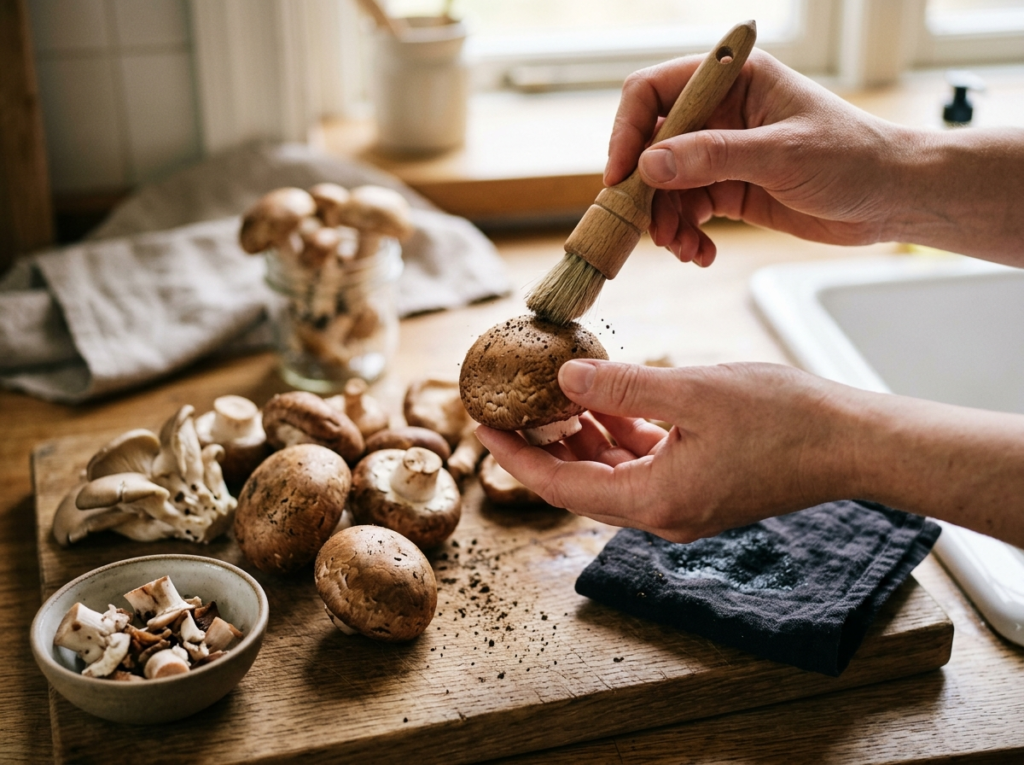
Mushrooms are already about 90% water, but a quick rinse still won’t ruin them. That’s the part a lot of home cooks get wrong. If you’ve ever stood at the sink wondering whether to wash, wipe, peel, or just cook them as they are, you’re not alone. Here’s how to clean mushrooms the easy way, so they stay clean, firm, and ready for the pan.
How to clean mushrooms: the short answer
Here’s the simple version: brush off loose dirt, rinse briefly under cold water if needed, dry them well, and cook them soon after.
You do not need to baby every mushroom with a single paper towel swipe. And you also don’t want to dump them in a bowl of water and forget about them. The sweet spot is somewhere in the middle.
If the mushrooms look pretty clean, just wipe or brush them. If they look gritty, muddy, or dusty, give them a fast rinse under running water. Then pat them dry.
That’s really it.
The big mistake people make is treating mushrooms like they’re either sugar cubes or kitchen rocks. They’re neither. A brief rinse is fine. A long soak is not.
Quick fact: Button, cremini, and portobello mushrooms are all the same species: Agaricus bisporus. The difference is mostly age and size.
Why mushrooms feel so tricky to clean
Part of the confusion comes from old kitchen advice. A lot of people were taught, “Never let mushrooms touch water.” That sounds serious, so it sticks.
But mushrooms aren’t tiny bath sponges. They do absorb some water, yet a quick rinse won’t turn them into mush. What really causes sad, pale mushrooms in the pan is usually too much surface moisture and crowding the skillet, not a five-second rinse.
Another reason people get stuck here? Mushrooms often arrive looking almost clean, but not fully clean. Store-bought mushrooms are usually grown in a controlled substrate and handled for sale, but they can still carry bits of compost, peat, or grit around the cap and stem. Wild mushrooms can hold even more dirt, pine needles, or tiny bugs.
So the real question isn’t “Should mushrooms ever touch water?”
It’s “How dirty are these mushrooms, and what’s the fastest clean-up method that won’t slow down cooking?”
That’s the approach good cooks use.
If your prep space gets messy fast, it helps to set up your counter before you start. A few habits from this guide on how a pro chef organizes a small home kitchen can make even simple jobs like cleaning mushrooms feel easier.
How to clean mushrooms step by step
You don’t need special tools. A clean kitchen towel, paper towel, small brush, colander, and a knife will handle almost every mushroom you bring home.
If they’re only lightly dirty
For mushrooms with just a few dusty spots, wiping works well.
Hold one mushroom in your hand and gently rub the cap with a damp paper towel or a soft brush. A pastry brush works. A mushroom brush works too, if you have one. Then trim the dry end of the stem if it looks tough or dark.
This method is great for:
- white button mushrooms
- cremini mushrooms
- portobellos that look mostly clean
- shiitake caps with light debris
It’s also the method people like when they want the driest possible surface before sautéing.
Still, don’t turn this into a perfection contest. If a tiny speck remains and the mushroom is headed into a hot pan, you’ll survive.
If they’re very dirty or gritty
Some mushrooms need more than a wipe. If you can see grit tucked around the stem or clinging to the cap, rinsing is faster and better.
Here’s a clean, easy routine:
- Put the mushrooms in a colander or hold them under cold running water.
- Rub gently with your fingers to loosen dirt.
- Trim off the stem ends or any bruised spots.
- Spread them on a towel and pat dry right away.
That rinse should be brief. Think “quick shower,” not “long swim.”
For a big batch, rinse a handful at a time instead of stacking them in a deep bowl. That helps you clean them evenly and keeps them from sitting in water.
A small knife makes trimming faster, and better basic knife skills help a lot when you’re slicing delicate mushrooms without crushing them.
Drying matters more than people think
If there’s one part worth slowing down for, it’s drying.
A wet mushroom can still be clean, but it won’t brown well. Surface water has to cook off before the mushroom starts to sear, which means more steaming and less color.
After rinsing, lay the mushrooms in a single layer on a towel. Pat the tops dry. Roll them around a bit so the stems lose moisture too. If you’re cleaning a large batch, use a second towel instead of piling damp mushrooms on the first one.
Pro tip: Clean mushrooms right before cooking whenever you can. You’ll get better texture and less fridge slime.
How to clean mushrooms by type
Not all mushrooms trap dirt in the same way. A smooth button mushroom is easy. A wrinkly morel is a whole different story.
Button, cremini, and portobello mushrooms
These are the easiest mushrooms to clean.
A quick wipe is fine if they look clean. A short rinse is better if the caps feel dusty or the stem area looks gritty. Trim the stem ends, and they’re ready.
Portobellos need one extra note: some recipes tell you to scrape out the dark gills. You can, but you don’t have to.
Remove the gills if:
- you want a cleaner look
- you’re making a pale sauce or stuffing
- you don’t want the dark color spreading to other ingredients
Leave them in if:
- you’re grilling or roasting them
- the color doesn’t matter
- you want less prep work
Peeling the cap is also optional. Most of the time, it isn’t worth the trouble unless the skin is damaged.
Did you know? A portobello is just a mature cremini. Same mushroom family, bigger stage of life.
Shiitake, oyster, maitake, and enoki mushrooms
These need a little more attention because of their shape.
Shiitake:
Wipe or rinse the caps, then remove the stems. Shiitake stems are usually too woody to enjoy in most dishes. You can save them for stock if you want extra flavor later.
Oyster mushrooms:
They bruise easily, so be gentle. Break the cluster into smaller pieces first. Then brush off visible dirt or rinse very briefly. Dry them carefully.
Maitake (hen of the woods):
Dirt likes to hide in the folds. Split the cluster into sections so you can see the inner parts. Brush first. Rinse only if needed.
Enoki:
Cut off the packed root end at the bottom. Then separate the strands and give them a quick rinse if they need it.
These mushrooms often reward a little patience. Their folds and layers trap grit in places a smooth mushroom never would.
Morels and wild mushrooms
Morels are famous for holding sand and tiny insects inside their honeycomb shape. A simple wipe usually won’t cut it.
Slice morels lengthwise so you can check inside. Then swish them briefly in cold water to loosen dirt. Some cooks use lightly salted water for a fast swish, especially if bugs are a concern. The key word is still briefly. Drain them well and pat them dry right away.
Chanterelles and other wild mushrooms can carry forest debris, needles, and hidden grit near the base. Trim the bottoms and inspect the folds carefully.
Warning: Never eat wild mushrooms unless an experienced expert has identified them as safe. Cleaning a mushroom doesn’t make an unsafe mushroom edible.
That safety note matters. Wild mushroom mistakes can be serious.
What to avoid while cleaning mushrooms
A lot of mushroom problems come from a few habits that sound harmless but work against you.
Don’t soak mushrooms in a bowl of water unless a very dirty wild variety truly needs a fast swish. A long soak makes them waterlogged and harder to brown.
Don’t use soap, bleach, or produce wash. Plain water is enough. Mushrooms are porous, and soap can leave residue you don’t want to eat.
Don’t wash mushrooms hours or days too early unless you have a plan to dry and use them soon. Extra moisture in the fridge speeds up sliminess.
Don’t leave cleaned mushrooms packed tightly in a wet bowl. That trapped moisture builds fast.
Don’t panic about every tiny mark. Mushrooms grow naturally, and not every speck means “dirty.”
Here’s the common misconception worth clearing up: water itself isn’t the enemy. Standing water and poor drying are the problem. A quick rinse followed by good drying is totally fine for most home cooking.
Little habits like that show up in a lot of solid prep routines. If you like practical kitchen shortcuts, these chef’s kitchen tricks are worth a read too.
Can you clean mushrooms ahead of time?
Yes, but it’s not the best plan unless you need the head start.
The best time to clean mushrooms is right before you cook them. That gives you the driest surface and the freshest texture.
If you want to prep ahead, do this:
Rinse or wipe them, dry them really well, and store them in the fridge in a paper bag or a container lined with paper towels. Keep the lid loose or slightly vented if you use a container. The goal is to let moisture escape.
Try to use pre-cleaned mushrooms within a day if possible. The longer they sit after washing, the more likely they are to soften.
If you bought packaged mushrooms labeled “washed” or “ready to use,” you can usually cook them as they are. Still, give them a quick look. If you see visible dirt, a fast rinse won’t hurt.
You’ll know mushrooms are past their best if they feel slimy, smell sour, or look deeply shriveled. At that point, cleaning won’t fix them.
Pro tip: If you rinse a whole pound of mushrooms for meal prep, spread them on towels for a few minutes before storing. That extra drying time really helps.
After cleaning, cook them so the effort pays off
Clean mushrooms are only half the job. If you toss them into a lukewarm crowded pan, they’ll steam and sulk. Not ideal, right?
Keep the pan hot and uncrowded
Start with a hot pan. Add a little oil or butter, then give the mushrooms space. If the pan is packed, they release moisture and steam instead of browning.
A wide skillet helps. For deep color and a good sear, a hot cast-iron pan works beautifully.
Stir less than you think. Let the mushrooms sit long enough to color on one side. Then turn them.
Salt is fine during cooking, but don’t expect instant browning if the pan is overloaded. The mushrooms will release liquid no matter what. Your job is to help that moisture cook off fast.
Did you know? Mushrooms shrink a lot in the pan because they give up moisture as they cook. That’s normal. A heaping pile can turn into a modest side dish pretty quickly.
A few easy ways to use them tonight
Once the mushrooms are clean, dry, and cooked well, you’ve got options that feel much fancier than the effort involved.
Toss sautéed mushrooms with pasta, fold them into eggs, spoon them over toast, add them to risotto, layer them into sandwiches, or use them next to roast chicken or steak. They also roast well on a sheet pan and crisp nicely in an air fryer if you don’t overcrowd the basket.
If dinner needs a little polish, these simple plating tips for home cooks can make a pan of mushrooms look surprisingly elegant.
And if your mushrooms are heading into a pasta dinner, this piece on the history of pasta and how to cook it is a fun, useful companion.
The nice part about learning how to clean mushrooms the right way is that it removes one of those tiny kitchen hesitations. You stop second-guessing. You see dirt, you deal with it, you cook.
That’s the whole goal.
4. FAQ Section
FAQ
Should you wash mushrooms or wipe them clean?
Both methods work. If your mushrooms only have a little dirt, wiping them with a damp paper towel or soft brush is enough. If they look gritty or muddy, rinse them briefly under cold running water and dry them well.
Can you soak mushrooms in water?
It’s best not to soak most mushrooms. They can take on extra water, which makes browning harder later. A quick rinse is fine, and very dirty morels or wild mushrooms may need a short swish, but don’t leave mushrooms sitting in water.
Do you need to peel mushrooms before cooking?
No, most mushrooms do not need peeling. A quick clean and a stem trim are usually all you need. Some cooks peel large portobellos for looks, but it’s optional.
Should you remove the gills from portobello mushrooms?
Only if you want to. The gills are edible. People usually remove them if they want a cleaner appearance, less dark color in a dish, or more room for stuffing.
Can you clean mushrooms ahead of time?
Yes, but try to cook them soon after. Dry them very well, then store them in the fridge in a paper bag or a paper towel-lined container. For the best texture, clean mushrooms right before cooking.
What’s the best way to clean morel mushrooms?
Slice morels lengthwise, check the hollow center, then swish them briefly in cold water to remove grit. Drain and dry them right away. Because wild mushrooms can be risky, only eat morels that have been safely identified.
5. Conclusion
The next time you bring home a box of mushrooms, don’t overthink it. If they’re lightly dusty, wipe them. If they’re gritty, rinse them fast. Dry them well, give them room in the pan, and let heat do its job.
That one small shift changes everything. Your mushrooms stay clean, your texture stays better, and dinner gets a whole lot easier.