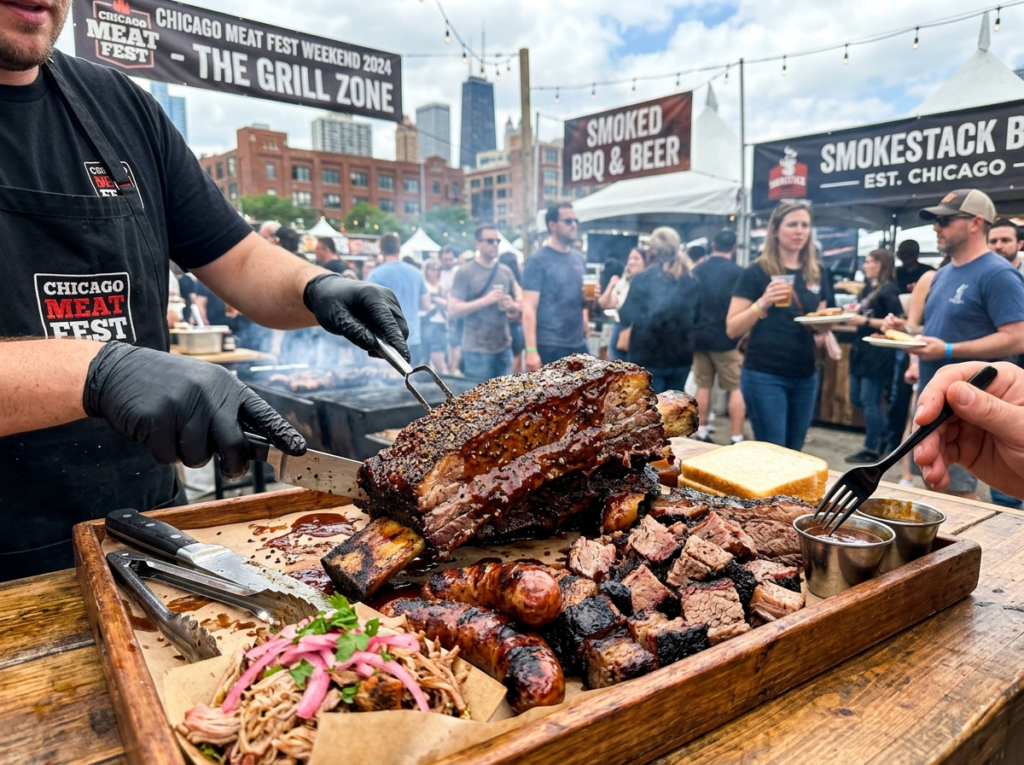
Chicago doesn’t mess around with meat. You probably already know about the deep-dish pizza and the Italian beef sandwiches, but this city runs much deeper than that. We’re talking about a place where whole-animal butchery shops sit next to Michelin-starred steakhouses, where backyard smokers compete with world-class barbecue joints, and where a Polish sausage from a corner stand can genuinely change the way you think about encased meats. If you’ve got a weekend and a serious appetite, Chicago will reward you in ways few other American cities can.
I spent a recent weekend doing exactly this — eating my way through as much of Chicago’s meat scene as my body could handle. And honestly? It deserved to be written about. Not as a checklist, but as a real experience. The kind where you walk into a place because the smell pulled you off the sidewalk, or you order something you’ve never tried because the guy behind the counter looked at you like you’d be crazy not to.
So here’s how a meat fest weekend in Chicago actually plays out — the spots, the cuts, the moments, and a few things I wish someone had told me before I went.
Why Chicago Is a Meat City at Its Core
You can’t really understand Chicago’s food identity without understanding its history with meat. This is the city that built the Union Stock Yards in 1865 — a sprawling complex on the South Side that became the meat-processing capital of the entire country. At its peak, the stockyards handled over 80% of the meat consumed in America. Upton Sinclair wrote The Jungle about conditions there in 1906, and it literally changed federal food safety laws.
That heritage didn’t just disappear. It seeped into the culture, into the neighborhood restaurants, into the way Chicagoans think about food. Meat isn’t a trend here. It’s foundational.
The city’s immigrant communities layered their own traditions on top of that foundation. Polish, Mexican, German, Lithuanian, African American, Italian — each group brought its own way of smoking, curing, grinding, and grilling. Walk through different neighborhoods today, and you can taste those histories still alive in every bite.
Quick Fact: Chicago’s meatpacking district operated for over 100 years before closing in 1971. The cultural impact, though, never left.
What makes this city different from, say, Austin or Kansas City is the sheer variety. You’re not locked into one style. You can eat Korean barbecue for lunch, a dry-aged porterhouse for dinner, and grab a Maxwell Street Polish on your way back to the hotel — all without leaving a five-mile radius.
Friday Night — Setting the Tone Right
Your weekend starts Friday evening, and you want to kick it off properly. Don’t go straight for the heaviest meal of your life. Trust me on this. You’ve got two full days ahead of you, and pacing matters more than you think.
A Steakhouse Worth the Splurge
Chicago’s steakhouse scene is honestly one of the best in the country. Places like Bavette’s Bar & Boeuf in River North aren’t just about the steak — they’re an experience. Dark leather, jazz in the background, cocktails that actually taste like someone cared. The bone-in ribeye there is exceptional, but don’t sleep on the bone marrow appetizer. It’s rich, silky, and comes with a toast situation that makes you want to lick the plate.
If Bavette’s feels too trendy for your taste, Gene & Georgetti has been open since 1941. It’s the kind of old-school Italian-American steakhouse where the waiters have worked there for decades and the prime rib comes out looking like it could feed a small family. No frills, no Instagram-bait plating — just serious meat cooked by people who know what they’re doing.
Pro Tip: Make reservations at least a week out for Friday night at any of Chicago’s top steakhouses. Walk-ins on weekends? Almost impossible at the popular spots.
You might also consider pairing your steak with a solid glass of wine. A good Malbec, for instance, holds up beautifully against rich, fatty cuts and can make even a great steak taste better.
Why Friday Should Stay Elegant
Here’s my thinking. Friday night is about anticipation. You set the stage with something refined — a perfectly cooked steak, a cocktail or two, maybe a dessert if you’ve got room. You’re warming up. The real street-level, get-your-hands-dirty eating starts Saturday.
Saturday Morning — Start Slow, Then Build
Don’t skip breakfast. I know it’s tempting to “save room,” but that strategy always backfires by 11 a.m. when you’re starving and making bad decisions.
Breakfast with Purpose
Grab something substantial but not heavy. A solid egg-and-sausage situation at a neighborhood diner works perfectly. Chicago diners tend to serve pork sausage links or patties that are well-seasoned, juicy, and come alongside eggs and toast for under $12. Nothing fancy, but exactly what you need.
If you want to think a little more creatively about your morning meal, there’s something to be said for not feeling burdened by breakfast — keep it simple and enjoyable so you’re fueled for what’s ahead.
The Midmorning Smoked Meat Window
Between 10 and 11 a.m. is a sweet spot. Barbecue joints in Chicago often start serving around this time, and if you show up early, you avoid the brutal lunch rush. This is when you want to hit a place like Green Street Smoked Meats in the West Loop.
Green Street operates out of a space that feels half industrial, half neighborhood hangout. The brisket is Texas-style — low and slow over post oak wood — with a peppery bark that cracks perfectly when you bite through it. The pulled pork is tender without being mushy. And the ribs? They’ve got the kind of smoke ring that makes barbecue nerds nod approvingly.
Order a two-meat plate with sides. Coleslaw and baked beans are classic, but their smoked elote (Mexican street corn) is the real move. You’ll want to sit outside if the weather cooperates.
Did You Know? Chicago’s barbecue tradition includes a unique style called “aquarium-style” smoking, where meat is slow-smoked in a glass-front smoker at storefronts, particularly on the South Side. It’s distinct from Texas, Memphis, or Carolina styles — and it’s been around for decades.
Saturday Afternoon — The Sausage and Street Meat Tour
This is where Chicago’s meat weekend gets really fun. After your barbecue settle-down walk (you’ll need one), it’s time to explore the city’s incredible sausage and street meat culture.
The Maxwell Street Polish
If you haven’t had a Maxwell Street Polish, have you even been to Chicago? This is a grilled or fried pork sausage served on a bun with yellow mustard and grilled onions. That’s it. No ketchup. No relish. No sixteen toppings fighting for attention. Just smoky, snappy sausage with the sweetness of caramelized onions and a sharp hit of mustard.
Jim’s Original, which claims to be the originator of this sandwich since 1939, is still operating on South Union Avenue. The stand is nothing to look at — and that’s part of the charm. You order at a window, you eat standing up or in your car, and you wonder why something this simple can taste this good.
The answer, honestly, is quality sausage and a very hot grill. The casing gets that snap — you know the one — where it resists your bite for just a second before giving way to juicy, seasoned meat inside.
Exploring Chicago’s Polish Corridor
Head up to the area around Avondale and you’ll find some of the best Polish delis and meat shops in the country. Andy’s Deli on Milwaukee Avenue has been a neighborhood anchor for years, offering kielbasa, kabanosy (thin dry sausages), and an array of smoked meats that rival anything you’d find in Kraków.
These aren’t tourist spots. They’re the places where Polish grandmothers shop on Saturday mornings. If you walk in and the person behind the counter speaks mostly Polish, you’re in the right place. Point at things. Be adventurous. Buy a hunk of smoked pork loin and some hunter’s sausage. You won’t regret it.
Mexican Meat Traditions
Chicago has one of the largest Mexican populations of any U.S. city, and the food scene reflects that beautifully. In neighborhoods like Pilsen and Little Village, you’ll find taquerias serving al pastor — pork marinated in achiote and dried chiles, stacked on a vertical spit (called a trompo), shaved to order, and topped with pineapple, onion, and cilantro.
Pro Tip: Look for places where you can actually see the trompo spinning. If the pork is caramelizing on the outside and the cook is slicing it fresh for each order, you’ve found a good one.
A weekend meat crawl in Chicago that skips the taquerias is, frankly, incomplete. The flavors are entirely different from barbecue or steakhouse cooking — brighter, spicier, with that incredible char from the spit. If you’ve ever been curious about breakfast traditions in Mexico City, you’ll recognize some of the same spirit here in Chicago’s Mexican neighborhoods.
Saturday Evening — The Big One
By Saturday night, you’ve earned something special. This is the meal where you go all in.
Whole-Animal Dining
The Purple Pig on Michigan Avenue is one of those places that celebrates nose-to-tail eating without being pretentious about it. Pig ears, pork shoulder, roasted bone marrow, milk-braised pork — it’s all there. The philosophy is simple: use the whole animal, cook every part well, and let the quality speak for itself.
If you’ve ever been curious about how chefs think about using every cut and minimizing waste, this is the place that teaches you through your taste buds. You won’t get a lecture about sustainability. You’ll just eat really, really well and realize that some of the most flavorful parts of an animal are the ones most people ignore.
A professional chef’s approach to food often involves techniques and cut selections that home cooks rarely consider, and eating at a place like The Purple Pig gives you a front-row seat to that philosophy.
The Korean Barbecue Option
If you want Saturday night to be interactive and social, Korean barbecue is a strong move. Chicago Kalbi in the northwest suburbs or San Soo Gab San in the Albany Park neighborhood lets you grill marinated short ribs, pork belly, and bulgogi right at your table.
There’s something almost ritualistic about Korean barbecue. You manage the grill, you watch the meat sear, you wrap it in lettuce with garlic and ssamjang paste, and you eat it immediately. It’s hands-on in a way that a steakhouse simply isn’t. And the pork belly — thick slices of uncured, unseasoned belly that crisp up on the grill and practically melt — is worth the trip alone.
Sunday — The Final Stretch
You wake up Sunday knowing you’ve done some serious eating. The temptation is to take it easy. Resist that. You’ve got one more morning and afternoon to make count.
Brunch with Meat Front and Center
Chicago does brunch well, and several spots make meat the star of the meal. Au Cheval in the West Loop is famous for its double cheeseburger, and yes, you can eat a cheeseburger at 10 a.m. and feel great about it. The patties are thick, cooked to a perfect medium, and topped with Dijonnaise, pickles, and — if you’re smart — a fried egg and bacon.
The wait at Au Cheval can be long. Like, genuinely long. Plan accordingly. Put your name in, walk around the neighborhood, grab a coffee. It’s worth the patience.
If burgers for breakfast feel like too much, The Publican in the Fulton Market district has a meat-forward brunch with pork dishes, sausages, and a general attitude that says “we respect the animal, and we cook it right.”
One Last Stop — The Italian Beef
You can’t leave Chicago without an Italian beef sandwich. You just can’t. This is the city’s signature sandwich — thinly sliced, slow-roasted beef piled onto a long Italian roll, topped with giardiniera (a hot, pickled vegetable mix) or sweet peppers, and either dipped in the cooking jus or served dry.
Al’s #1 Italian Beef on Taylor Street has been the standard since 1938. Order it “dipped” if you want the full experience — the roll gets soaked in savory beef jus until it’s barely holding together, and you need to eat it leaning forward so it doesn’t drip all over you.
Warning: Wear a shirt you don’t care about. A dipped Italian beef sandwich is not a neat-eating situation. Napkins are mandatory. Multiple napkins.
The combination of tender beef, spicy giardiniera, and that salty, meaty jus is one of the great sandwiches in American food. Period. If you’ve ever worked on making a rich consommé or broth at home, you’ll appreciate the depth of flavor in that jus — it’s built from hours of slow cooking and it carries the whole sandwich.
Planning Your Meat Fest Weekend — Practical Advice
A weekend like this requires a little planning. Not a rigid itinerary, but some basic awareness so you don’t end up standing outside a closed restaurant at 2 p.m. looking at your phone wondering what went wrong.
Pacing yourself is the single most important piece of advice. You’re going to eat a lot of protein and fat over 48 hours. Drink water. Walk between meals. Don’t order the largest portion at every stop — splitting dishes with a friend or partner is smart. You’ll get to taste more variety without hitting the wall by Saturday afternoon.
Neighborhoods matter. Chicago is a city of distinct neighborhoods, and the food changes dramatically from one to the next. The West Loop and Fulton Market area have the trendy restaurants. The South Side has the deep barbecue roots. Pilsen and Little Village deliver the Mexican flavors. Avondale and Belmont for Polish. Understanding this map helps you plan your route efficiently.
Getting around is easiest by a mix of the CTA (Chicago’s train and bus system) and rideshares. Parking in popular neighborhoods on weekends can be tough, so unless you enjoy circling blocks, leave the car at the hotel.
Budget-wise, you can do this weekend at wildly different price points. A steakhouse dinner might run $80–$150 per person, but a Maxwell Street Polish is $5, and an incredible taco al pastor is $3. Mix high and low, and your wallet stays reasonably healthy alongside your appetite.
If you’re someone who enjoys organizing your kitchen like a pro, bringing that same intentional mindset to planning a food-focused weekend makes everything go smoother.
What Makes Chicago Different from Other Meat Cities
People always compare Chicago to Kansas City, Austin, Memphis, and other meat-centric cities. And look — those are all fantastic places to eat. But Chicago’s edge is diversity.
In Austin, you’re getting world-class barbecue, but the range narrows quickly beyond that. Kansas City has its own incredible barbecue tradition (and burnt ends are a genuine gift to humanity), but the broader meat scene isn’t as wide. Chicago gives you barbecue and steakhouses and sausage culture and Mexican street meat and Korean barbecue and Italian beef and Eastern European charcuterie — all within the same city limits.
That variety means you never eat the same way twice during your weekend. Every meal has a different cultural context, a different cooking method, a different set of flavors. You go from a smoky brisket to a spicy taco to a butter-aged steak, and each one feels like its own experience rather than a variation on a theme.
There’s also the attitude. Chicago is a blue-collar food city at heart. Even the fancy restaurants maintain a certain unpretentiousness. Nobody’s going to make you feel weird for ordering an extra side of meat. Nobody’s going to judge you for eating with your hands. The culture around food here is generous, welcoming, and deeply proud — without being snobbish about it.
It reminds me of how food functions as a connecting force, something that brings people together across all kinds of differences. Chicago’s meat scene is a perfect example of that. Every neighborhood brings something to the table — literally.
FAQ
What’s the best time of year for a meat fest weekend in Chicago?
Late spring through early fall (May to October) is ideal. The weather allows for outdoor eating, and several barbecue spots and street food vendors operate more actively during warmer months. Summer weekends can be crowded, though, so if you prefer smaller crowds, aim for September or early October.
Is Chicago barbecue the same as Texas or Kansas City barbecue?
Not quite. Chicago has its own barbecue identity, including the “aquarium-style” rib tips and hot links smoked in glass-front smokers, particularly on the South Side. You’ll also find Texas-style and Memphis-style spots in the city, but the indigenous Chicago tradition is distinct — heavier on rib tips, hot links, and a tangy, slightly sweet sauce.
How much should I budget for a meat-focused weekend in Chicago?
It depends on your style. If you mix high-end steakhouse dinners ($80–$150 per person) with street food and casual spots ($5–$20 per meal), you could spend anywhere from $200 to $500 on food for the weekend. Add drinks, transportation, and lodging, and a comfortable total budget is around $600–$1,200 for two days.
Can I do this weekend solo, or is it better with a group?
Both work. Solo gives you total flexibility — you eat what you want, when you want, at whatever pace you want. With a group, you can order more dishes and share, which means you taste a wider range of food. For Korean barbecue especially, having at least two people makes the communal grilling experience much better.
Are there vegetarian-friendly options at meat-heavy restaurants?
Most of Chicago’s top restaurants offer at least a few non-meat dishes, even at steakhouses and barbecue joints. Sides like mac and cheese, coleslaw, cornbread, and grilled vegetables are usually available. That said, this particular weekend is designed around meat, so a vegetarian companion might want to plan a few separate meals at the city’s excellent plant-forward restaurants.
Your Weekend, Your Rules
A meat fest weekend in Chicago isn’t really about checking off a list of restaurants. It’s about experiencing a city that has built its food identity around a deep, genuine love for meat — smoked, grilled, roasted, cured, sliced, and served with pride.
You don’t need to hit every spot I’ve mentioned. Pick the ones that speak to you. Maybe you spend three hours at a barbecue joint on the South Side talking to the pitmaster. Maybe you discover a tiny Polish deli you’d never heard of and buy more sausage than you can carry. Maybe you end up at a late-night taco stand in Pilsen, eating al pastor under a streetlight, realizing this is one of the best things you’ve ever tasted.
The point is to be present, stay curious, and eat well. Chicago makes that easy. And when you get home, you’ll have a fridge full of leftovers, a phone full of photos, and a strong opinion about whether white wine actually works with red meat — because someone at dinner will definitely bring it up.
Go hungry. Come back happy.