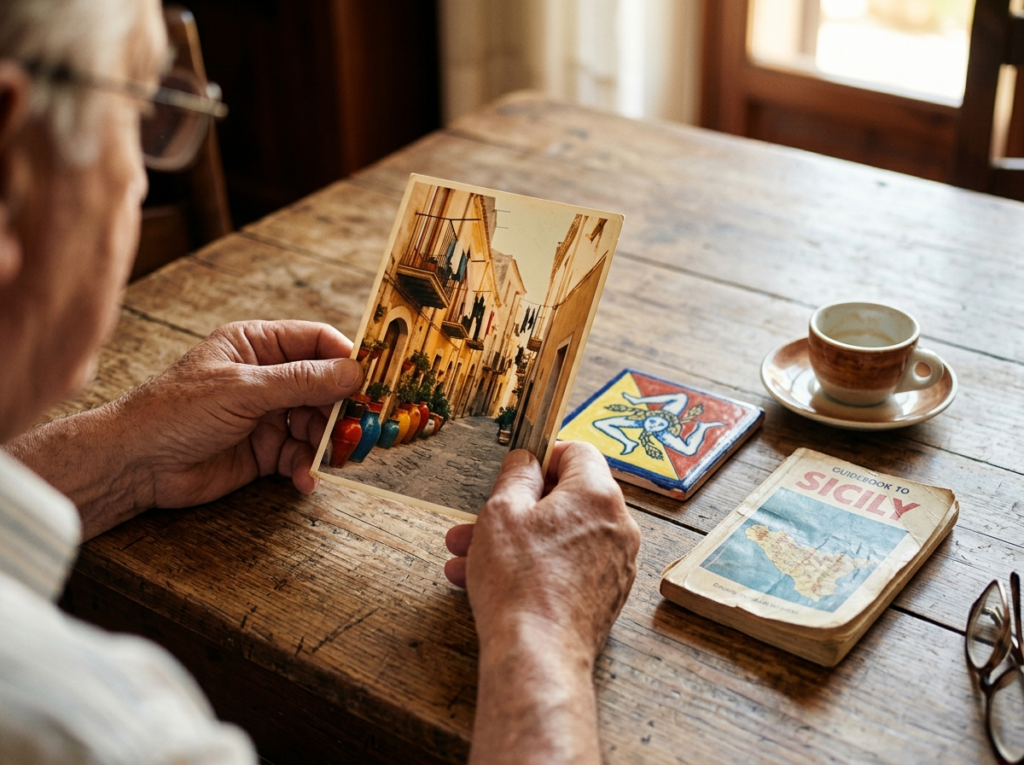
There’s a specific shade of golden light that only exists in Sicily. You notice it late in the afternoon, when it pours over crumbling stone walls and terracotta rooftops, turning everything into something that looks like an old painting. I didn’t plan to fall in love with this island. It just happened — somewhere between my first bite of a warm arancino bought from a street vendor and a glass of Nero d’Avola sipped on a rooftop overlooking the Tyrrhenian Sea.
Reminiscing about Sicily isn’t just about recalling a trip. It’s about reliving a feeling. A pace of life that’s unapologetically slow. Food that tastes like someone’s grandmother spent all morning making it — because she probably did. Conversations with strangers that turn into genuine connections. If you’ve been, you already know what I’m talking about. And if you haven’t, I hope this gives you a reason to start planning.
Why Sicily Gets Under Your Skin
Most places you visit, enjoy, and eventually forget. Sicily isn’t one of those places. It lingers. You’ll be standing in your kitchen six months later, trying to recreate a simple pasta dish, and suddenly you’re back on that tiny side street in Catania where you first tasted it.
Part of it is the sensory overload. The island hits all five senses at once — the smell of jasmine mixed with sea salt, the sound of Vespas buzzing through narrow alleys, the rough texture of ancient limestone under your fingertips. But I think what really makes Sicily stick is the people. There’s a warmth there that doesn’t feel performative. It’s not hospitality for tips or reviews. It’s just… how life works on the island.
Sicily has been shaped by centuries of foreign rule — Greeks, Romans, Arabs, Normans, Spanish — and somehow absorbed the best of all of them without losing its own identity. You taste this history in the food. You see it in the architecture. You feel it in the way Sicilians carry themselves with a kind of proud, relaxed confidence that says, “We’ve seen empires rise and fall. We’re still here.”
The Food — Let’s Be Honest, It’s the Main Character
You can talk about Sicily’s beaches, its ruins, its volcanoes. But let’s not pretend. The food is the reason most people start reminiscing about this island at 2 AM while staring at their fridge.
Street Food That Ruins You for Everything Else
Palermo’s street food scene is legendary, and that word actually feels appropriate here. The city has been named one of the top street food destinations in the world, and after spending time eating my way through its markets, I understand why.
Arancini (or arancine, depending on which side of the Palermo-Catania debate you fall on) are deep-fried rice balls stuffed with ragù, mozzarella, or sometimes pistachios. They’re golden, crunchy on the outside, and creamy inside. You can get them for a couple of euros, and they’re the kind of thing you eat while walking, grease running down your wrist, not caring at all.
Then there’s panelle — chickpea flour fritters that are crispy, salty, and often stuffed into a soft sesame roll. Simple? Absolutely. Forgettable? Not a chance. And if you’re feeling adventurous, pane con la milza (spleen sandwiches) are a Palermo classic. I know, I know — spleen doesn’t exactly sell itself. But the meat is slow-cooked until tender, piled onto bread, and sometimes finished with a squeeze of lemon or a sprinkle of ricotta. It’s one of those foods that reminds you why you should always try the local specialty, even if it sounds questionable.
If you’ve ever experienced a meat fest weekend in Chicago, you’ll appreciate Palermo’s approach — bold flavors, zero pretension, and portions that assume you’re hungry.
Pasta in Sicily is a Different Language
I thought I understood pasta before I went to Sicily. I didn’t.
Pasta alla Norma — named after Bellini’s opera — is Catania’s gift to the world. Fried eggplant, tomato sauce, basil, and a shower of salty ricotta salata. Every component is simple, but together they create something that’s more than the sum of its parts. The key is the eggplant. It needs to be fried properly — golden and almost creamy inside — not the sad, soggy version you sometimes get elsewhere.
Pasta con le sarde is another dish that stopped me mid-bite. Wild sardines, fennel, pine nuts, raisins, saffron — it sounds like a strange combination, but it’s a perfect example of Sicily’s Arab-influenced cuisine. Sweet, savory, briny, herbal — all in one bowl. If you’re someone who loves understanding the history of pasta and how to cook it, Sicily is basically a living museum for pasta evolution.
And don’t sleep on busiate, the hand-rolled corkscrew pasta from Trapani, typically served with pesto Trapanese — a raw sauce of tomatoes, almonds, garlic, and basil. It’s lighter than Genovese pesto, brighter, and perfect for hot summer evenings.
Sweets That Should Be Illegal
Sicilian desserts are serious business. Cannoli — the real ones, filled to order so the shell stays crispy — are nothing like what you’ve had from a bakery case in the States. The ricotta filling is fresh, slightly sweet, and sometimes studded with chocolate chips or candied fruit. One bite and you’ll understand why Sicilians get genuinely offended by pre-filled cannoli.
Granita with brioche is a Sicilian breakfast tradition that I think about constantly. A soft, pillowy brioche bun torn apart and dipped into icy, intensely flavored granita — almond, pistachio, lemon, mulberry, coffee. It’s dessert for breakfast, and nobody questions it. If you appreciate bakeries that are worth the wait, imagine an entire island where every neighborhood pasticceria has been perfecting the same recipes for generations.
Cassata Siciliana, the ornate sponge cake layered with ricotta, marzipan, and candied fruits, is another showstopper. It’s almost too beautiful to eat. Almost.
Beyond the Plate — The Places That Stay With You
Taormina and Mount Etna
Taormina sits on a cliff above the Ionian Sea, with Mount Etna looming in the background. The ancient Greek theater there — Teatro Antico di Taormina, built in the 3rd century BC — offers one of the most dramatic views in all of Europe. You’re sitting in stone seats carved into the hillside, looking out at the sea with Etna’s snow-capped peak rising behind the stage. It’s the kind of view that makes you put your phone down and just sit.
Etna itself is an experience. Europe’s most active volcano (at roughly 3,357 meters, though it keeps changing) dominates the eastern skyline. You can hike up the slopes, drive through vineyards planted in volcanic soil, and taste wines that carry a distinct minerality you won’t find anywhere else. Etna Rosso and Etna Bianco wines have gained serious international recognition over the past decade, and for good reason — the combination of altitude, volcanic terroir, and indigenous grape varieties like Nerello Mascalese creates something truly unique.
If choosing the right wine glass is something you think about, pour yourself an Etna Rosso into a good Burgundy glass. The aromatics will thank you.
The Valley of the Temples
Agrigento’s Valle dei Templi is one of those places that genuinely takes your breath away. Seven ancient Greek temples, some dating back to the 5th century BC, spread across a ridge overlooking the Mediterranean. The Temple of Concordia is one of the best-preserved Greek temples in existence — better preserved than most temples in Greece itself.
Walking through the valley in the early morning, before the tour buses arrive, you can almost hear the centuries layered on top of each other. It’s not a museum experience. It’s something more raw and unfiltered.
Palermo’s Chaotic Beauty
Palermo doesn’t try to be pretty in a polished way. It’s messy, loud, and a little rough around the edges — and that’s exactly why it’s magnetic. The Ballarò and Vucciria markets are sensory experiences that hit you with the smell of frying fish, the shouts of vendors, and tables overflowing with blood oranges, artichokes, and swordfish.
The city’s churches contain some of the finest Norman-Arab-Byzantine art in the world. The Cappella Palatina, inside the Palazzo dei Normanni, is covered floor to ceiling in gold mosaics that shimmer in candlelight. The Catacombe dei Cappuccini — where thousands of mummified bodies line the walls — is haunting and bizarre and something you won’t forget whether you want to or not.
The Sicilian Approach to Life (And Why We Need It)
There’s a concept in Sicily that doesn’t translate perfectly into English. It’s not quite dolce vita — that’s more of a mainland Italian thing. In Sicily, it’s earthier than that. It’s about being present in small moments. A long lunch that stretches into the afternoon. A conversation with a neighbor that has no agenda. The afternoon passeggiata, where everyone strolls through town not because they need exercise, but because walking together is just what you do.
I remember sitting at a tiny restaurant in Syracuse — Ortigia, specifically — where the owner brought out dishes I didn’t order. A plate of local olives. Some bread with olive oil that tasted like green grass and pepper. A small glass of something homemade and slightly sweet. “You eat,” he said. Not a question.
That experience captures something about Sicily that’s hard to replicate. The generosity isn’t transactional. The pace isn’t slow because people are lazy — it’s slow because rushing through a good meal or a good conversation feels disrespectful to the experience itself.
If you’ve ever read about the unifying power of food and how sharing a meal brings us together, Sicily is living proof of that idea, every single day.
Bringing Sicily Home to Your Kitchen
You can’t bottle Sicilian sunlight or import the view from Taormina. But you can bring some of the island’s flavors into your own cooking. And honestly, Sicilian food is perfect for home cooks because it relies on great ingredients treated simply rather than complex techniques.
Start with the produce. Sicilian cooking leans heavily on eggplant, tomatoes, citrus, almonds, pistachios (especially from Bronte), capers from Pantelleria, and wild fennel. If you can get your hands on good-quality versions of these ingredients, you’re already halfway there.
Use good olive oil. Sicily produces some of Italy’s finest olive oil, and the island’s cuisine uses it generously — for cooking, finishing, and everything in between. A good Sicilian olive oil has a peppery kick that wakes up even simple dishes. Understanding how acid and fat work as the yin and yang of cooking helps you use olive oil and citrus the way Sicilian cooks do — balancing richness with brightness.
Don’t overcomplicate things. A perfectly ripe tomato sliced and dressed with olive oil, sea salt, and torn basil is a complete dish in Sicily. Pasta alla Norma has five main ingredients. The best Sicilian meals I had weren’t fussy — they were just made with care and good ingredients.
If you want to organize your small home kitchen like a pro chef before you start cooking Sicilian food, that’s a smart move. Having your workspace set up properly makes it easier to focus on the food itself instead of scrambling for equipment.
Pro Tip: If you’re making arancini at home, use day-old risotto. Fresh rice is too wet and doesn’t hold its shape well during frying. Let it cool completely in the fridge overnight, then shape and fry.
Sicilian Wines — The Secret the Rest of the World is Catching On To
For decades, Sicily was known primarily for bulk wine production. That reputation has changed dramatically. Today, the island produces some of Italy’s most exciting wines, and they’re still relatively affordable compared to bottles from Tuscany or Piedmont.
Nero d’Avola is the flagship red — full-bodied, dark-fruited, with a warmth that feels like the Sicilian sun in a glass. Nerello Mascalese, grown on the slopes of Etna, is lighter, more elegant, sometimes compared to Pinot Noir or Nebbiolo. On the white side, Grillo and Carricante offer bright, mineral-driven wines that pair beautifully with seafood.
And then there’s Marsala — not the cooking wine you buy in a grocery store, but real, aged Marsala from producers like Marco De Bartoli. It’s a fortified wine with layers of caramel, dried fruit, and nuts, and it deserves the same respect as Sherry or Port.
If you’re curious about pairing wines in unexpected ways, the idea of white wine with red meat is worth exploring — and a rich, structured Grillo or an Etna Bianco can actually stand up to heartier Sicilian dishes.
The Best Time to Visit (And What Most Guides Don’t Tell You)
The standard advice says visit Sicily in spring (April–June) or early fall (September–October). That advice is correct. Summer — particularly July and August — brings intense heat (regularly above 40°C) and overwhelming crowds, especially along the coast and in Taormina.
But here’s what most guides skip: late October and November can be genuinely wonderful. The sea is still warm enough for swimming into mid-October. The tourist crowds thin out significantly. And it’s olive harvest season, which means you can visit working farms, watch the pressing process, and taste oil so fresh it’s almost spicy.
February brings the famous Festa di Sant’Agata in Catania — one of the largest religious festivals in Europe, with over a million people flooding the streets for three days of processions, fireworks, and food. It’s intense, emotional, and unlike anything you’ve seen before.
Quick Fact: Sicily receives more annual sunshine hours than any other part of Italy — roughly 2,500 hours per year. Even in the cooler months, you’re likely to get bright, clear days.
FAQ
What food is Sicily most known for?
Sicily is famous for arancini (fried rice balls), pasta alla Norma, cannoli, granita with brioche, and fresh seafood dishes. The island’s cuisine reflects its multicultural history, with strong Arab, Greek, and Spanish influences visible in dishes that blend sweet and savory flavors, use ingredients like pine nuts, raisins, and saffron, and emphasize fresh, seasonal produce.
Is Sicily worth visiting compared to mainland Italy?
Absolutely. Sicily offers a different experience from Rome, Florence, or the Amalfi Coast. It’s less polished, more raw, and feels more authentically lived-in. The food is arguably Italy’s most diverse and interesting regional cuisine. The ancient ruins rival anything in Greece. And the cost of travel — accommodation, dining, transport — is generally lower than in northern Italy or popular mainland tourist destinations.
How many days do you need in Sicily?
A minimum of 7–10 days gives you enough time to explore two or three major areas without rushing. Many travelers focus on the eastern side (Catania, Taormina, Syracuse) or the western side (Palermo, Trapani, Agrigento). If you want to cover both, plan for at least 10–14 days. Sicily is larger than most people expect — it’s the biggest island in the Mediterranean, roughly 25,711 square kilometers — and driving between cities takes longer than the map suggests due to winding roads and limited highways.
Can you enjoy Sicily as a solo traveler?
Sicily is a wonderful solo destination. The culture is social and welcoming, so you’re unlikely to feel isolated. Markets, cooking classes, wine tours, and casual trattorias all lend themselves to meeting people. Just use common sense in larger cities like Palermo and Catania at night, as you would in any major urban area.
What Sicily Really Teaches You
There’s a moment that keeps coming back to me. I was sitting at a seaside table in Cefalù, watching fishing boats bob in the harbor, eating the simplest grilled fish I’ve ever had — just caught that morning, cooked with olive oil, lemon, and salt. Nothing fancy. Nothing Instagram-worthy, really. Just good food, a good view, and absolutely nowhere I needed to be.
Sicily doesn’t teach you how to cook, though you’ll learn plenty if you pay attention. It teaches you how to eat — slowly, gratefully, with people you care about. It teaches you that the best meals don’t need twenty ingredients or complicated techniques. They need good ingredients, honest preparation, and someone across the table to share them with.
If you’ve been holding Sicily on your “someday” list, move it up. And if you’ve already been, you don’t need me to tell you — you’re already planning your return. The island has that effect.
Start small. Make a batch of pasta alla Norma this weekend. Open a bottle of Nero d’Avola. Put your phone away for dinner. That’s as close to Sicily as your kitchen can get. And honestly? It’s not a bad place to start. If you’re looking for more taste memories to inspire your cooking, there’s something powerful about letting travel shape the way you eat at home.
Sicily will wait for you. But don’t make it wait too long.