Nearly 3 billion olive trees grow across the planet right now. That’s roughly one tree for every three people alive. And yet, ask a group of friends how they feel about olives, and you’ll watch the room split right down the middle. Half will reach for the olive bowl before you finish your sentence. The other half will recoil like you just offered them a spoonful of motor oil.
There’s really no fruit — yes, olives are technically a fruit — that provokes such a strong, polarizing reaction. People don’t just “kind of” dislike olives. They despise them. And olive lovers? They don’t just enjoy them. They treat olives like edible treasure.
So what’s going on here? Why does a tiny, unassuming little fruit create such a dramatic divide? And if you’re in the “leave ’em” camp, is there any chance you might cross over?
Let’s talk about it.
What Exactly Is an Olive, Anyway?
Before we pick sides, let’s get something straight. An olive is a stone fruit, closely related to peaches, cherries, and mangoes. It grows on the Olea europaea tree, a species that’s been cultivated for at least 6,000 to 7,000 years. Archaeological evidence from the eastern Mediterranean — places like Crete, Syria, and Palestine — suggests humans figured out olive cultivation long before they had written language to talk about it.
Here’s the thing most people don’t realize: you can’t eat an olive straight off the tree. A fresh, raw olive is intensely bitter. Almost inedibly so. That bitterness comes from a compound called oleuropein, and it’s the tree’s natural defense against insects and animals. Every olive you’ve ever eaten — green, black, Kalamata, Castelvetrano — has gone through a curing process to strip away or reduce that bitterness.
The curing method matters a lot. Some olives are soaked in lye (sodium hydroxide) for a fast cure. Others are salt-cured, brine-cured, or even dry-cured over weeks or months. Each method produces a wildly different texture, salt level, and flavor profile. So saying “I don’t like olives” is a bit like saying “I don’t like cheese” — there are hundreds of varieties, and they taste nothing alike.
Why Do So Many People Hate Olives?
Let’s give the olive-haters their moment, because their reaction isn’t made up. There are real, biological, and psychological reasons why olives make some people gag.
Your taste buds play a role. Olives hit multiple taste receptors at once — they’re bitter, salty, sometimes sour, and deeply savory (that umami quality). For people who are particularly sensitive to bitter flavors — a trait linked to genetics and a specific receptor called TAS2R38 — olives can taste overwhelming in the worst way. Studies published in the American Journal of Clinical Nutrition have shown that about 25% of the population qualifies as “supertasters,” meaning they perceive bitter compounds far more intensely than average.
Texture is the other dealbreaker. Olives have a unique mouthfeel — firm but yielding, slightly slippery, with a pit in the center that catches people off guard. If you’re texture-sensitive (and many people are, often without realizing it), that soft-yet-rubbery quality can trigger an instant “nope.”
Early experiences matter, too. If your first encounter with olives was a mushy black olive from a can — the kind that tastes mostly like tin and salt — that memory might have sealed the deal. Those canned black olives (often California ripe olives, chemically oxidized to turn them black) are to real olives what processed cheese slices are to aged Gruyère. They share a name, but they’re barely in the same conversation.
And honestly? Sometimes it’s just preference. Not every food is for every person, and that’s completely fine.
Why Olive Lovers Can’t Get Enough
On the other side of the fence, olive lovers often describe a moment — almost like a switch flipping — where olives suddenly clicked for them. For some, it happened in childhood. For many, it happened during travel.
There’s a reason for that. Eating a plump, oil-cured Niçoise olive in a market in Provence or biting into a buttery Castelvetrano olive at a trattoria in Sicily is a completely different experience from fishing a sliced black olive off a pizza. Context shapes how we taste things. When you’re relaxed, curious, and surrounded by good food, your palate opens up in ways it simply won’t under fluorescent grocery store lighting.
Olive lovers also tend to be drawn to bold, complex flavors in general. If you enjoy things like aged cheese, dark chocolate, anchovies, capers, or good wine — foods that straddle the line between bitter and savory — olives fit right into your flavor world. There’s a well-documented pattern in food science: people who enjoy one intensely flavored food tend to enjoy others. Your palate has already been trained to find pleasure in complexity.
And then there’s the olive oil connection. Plenty of people who say they hate olives happily drizzle extra virgin olive oil on everything. Good EVOO has those same peppery, grassy, slightly bitter notes that define the fruit itself. If you love olive oil, you’re already halfway to loving olives — you just might not know it yet.
If you’re someone who’s been exploring regional food cultures through travel, you’ve probably noticed that olives show up everywhere in Mediterranean kitchens — not as a garnish, but as a core ingredient that ties dishes together.
A Quick Tour of Olive Varieties Worth Knowing
Here’s where things get interesting for fence-sitters. The olive world is enormous, and picking the right variety can completely change your opinion.
Castelvetrano olives come from Sicily, and they’re the ones I recommend to people who think they hate olives. They’re bright green, buttery, mild, and almost sweet. The bitterness is dialed way down. If olives were music, Castelvetranos would be a gentle acoustic guitar — easy to love, nothing harsh.
Kalamata olives are the deep purple, almond-shaped ones from Greece. They’re brine-cured, meaty, and have a rich, wine-like tang. These are the olives you find in a proper Greek salad, and they’ve got real personality without being aggressive.
Niçoise olives are small, dark, and packed with flavor. They come from the south of France and they’re a key player in salade Niçoise and tapenade. They’re more intense than Castelvetranos — a bit nutty, a bit herby — but still approachable.
Cerignola olives are the big, dramatic ones from Puglia, Italy. They come in green, red, and black varieties, and their size means the flesh-to-pit ratio is generous. They’re crisp, mild, and feel almost like a snack fruit.
Manzanilla olives are the classic Spanish green olives, often stuffed with pimiento. These are the ones you’ll find in your martini or on a charcuterie board. They’re firm, briny, and a little tangy.
Dry-cured Moroccan olives (sometimes labeled “oil-cured”) are wrinkled, intensely concentrated, and deeply savory. These aren’t for beginners. They’re the espresso shot of the olive world — bold and unapologetic.
The point is, writing off all olives because you tried one kind once is like deciding you don’t like music because you heard one song you didn’t enjoy. The range is genuinely that wide.
The Health Side of the Story
You don’t eat olives because they’re healthy. You eat them because they taste good. But it doesn’t hurt that they bring real nutritional value to the table.
Olives are rich in monounsaturated fatty acids, particularly oleic acid — the same heart-healthy fat that gives olive oil its stellar reputation. Research from institutions like the Harvard T.H. Chan School of Public Health has consistently linked regular olive consumption with reduced risk of cardiovascular disease, lower LDL cholesterol, and decreased inflammation markers.
They’re also a decent source of vitamin E, iron, and polyphenols — those powerful antioxidant compounds that help protect cells from oxidative damage. The oleuropein that makes raw olives so bitter? Even in cured olives, residual amounts of it and its metabolites contribute to anti-inflammatory and antimicrobial activity.
The one caveat: sodium. Cured olives are salty. A handful of brined olives can deliver 300–400 milligrams of sodium, which adds up fast if you’re watching your intake. That doesn’t make olives unhealthy — it just means you should be aware, especially if you’re eating them alongside other salty foods. A good move is rinsing brined olives briefly under cold water before serving. You’ll knock off surface salt without losing flavor.
If you’ve been rethinking your approach to healthier eating, olives make a smart swap for less nutritious snacks. A small bowl of good olives with some crusty bread and a glass of wine? That’s a snack with genuine substance.
How to Use Olives If You’re Not Sure About Them
This section is for the olive-curious — people who want to like olives but haven’t found their way in yet.
Start with olives in a dish, not on their own. A whole olive, eaten solo, can be intense. But olives chopped into a pasta sauce, blended into a tapenade, or scattered across a roasted chicken change the dynamic completely. They become a flavor layer rather than the main event.
Pair them with something fatty or creamy. Olives alongside fresh mozzarella, burrata, or even cream cheese on a cracker become more balanced. Fat softens the briny edge and lets the fruity, savory notes come forward.
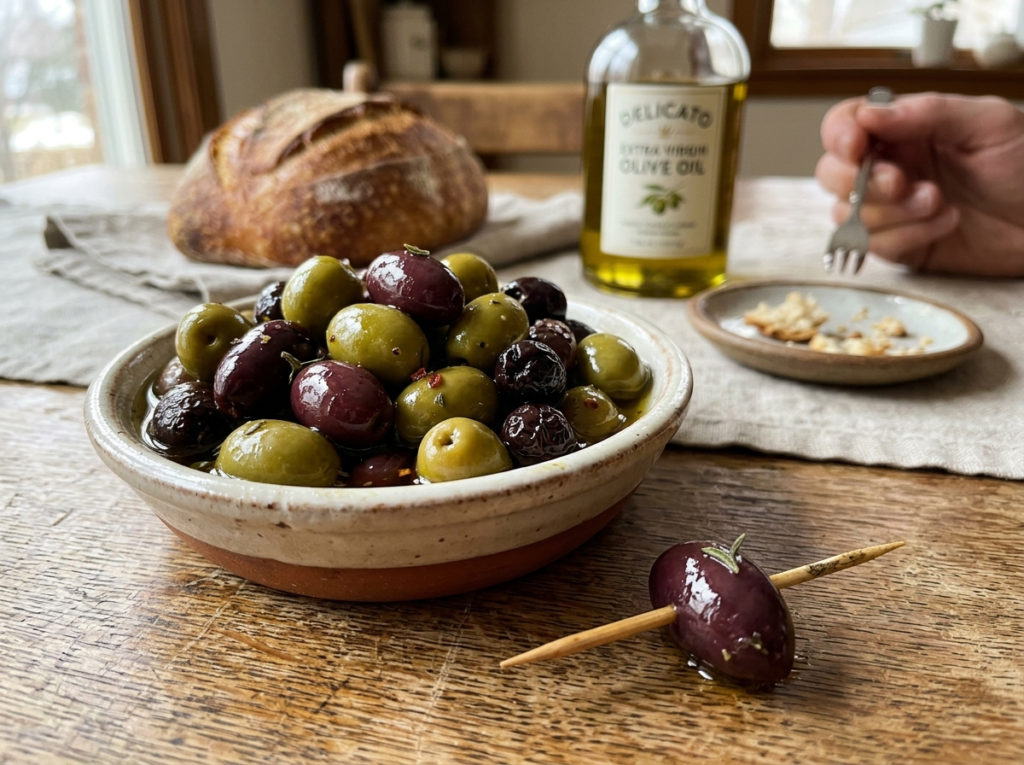
Try them warm. Roasted or warmed olives — tossed with garlic, citrus zest, chili flakes, and good olive oil — taste fundamentally different from cold ones straight out of a jar. Heat mellows the bitterness and brings out a sweeter, more rounded flavor. It’s one of the easiest appetizers you can make, and it wins over skeptics more often than you’d expect.
Build a small olive tasting. Buy three or four different varieties from an olive bar (many grocery stores and specialty shops have them now). Taste them side by side. You’ll be surprised how different they are from each other. Treat it like a wine tasting — notice the differences in salt, texture, fruitiness, and bitterness.
If you enjoy building charcuterie or snack boards for gatherings, olives are almost always a better addition than people expect. Even guests who claim to hate them often reach for the right variety when it’s sitting next to the right cheese.
Olives in the Kitchen: Beyond the Snack Bowl
Olives are workhorse ingredients when you start cooking with them seriously. They bring salt, fat, acidity, and umami all at once — which means they can do heavy lifting in a dish without you needing five other flavor boosters.
Pasta is the obvious starting point. A puttanesca sauce — tomatoes, olives, capers, garlic, anchovies, chili — is one of the great Italian pantry meals. It comes together in under 20 minutes, and the olives are essential to its briny, punchy character. Understanding how pasta works makes dishes like this even better because you start thinking about how the sauce and the noodle interact.
Braises and roasts love olives. Chicken Marbella — the iconic Silver Palate recipe from the 1980s — combines olives with prunes, capers, and white wine in a roasting pan with chicken thighs. The sweet-savory-briny combination is deeply satisfying, and the olives practically melt into the sauce during cooking.
Salads get a serious upgrade. Not just Greek salad (though that’s a classic for a reason). Try chopped Castelvetrano olives in a grain salad with farro, roasted red peppers, and feta. Or toss halved Kalamatas with roasted beets, arugula, and walnuts. Olives add the kind of savory punch that keeps a salad from feeling like a chore.
Bread and baking. Olive focaccia is one of the most rewarding things you can bake at home. Press whole olives into the dough before it goes into the oven, drizzle generously with olive oil, and finish with flaky salt. It’s simple, gorgeous, and disappears fast. If you’ve spent time exploring bakeries, you’ve probably noticed that olive bread is a staple in shops that take their craft seriously.
Tapenade is the gateway drug. Blend Kalamata or Niçoise olives with capers, garlic, anchovies, lemon juice, and olive oil. Spread it on crostini, use it as a sandwich condiment, or stir a spoonful into vinaigrette. Tapenade is concentrated olive flavor, and because it’s blended, the texture issue goes away entirely.
The Cultural Weight of Olives
Olives aren’t just food. They’re woven into the identity of entire civilizations. The Mediterranean diet — recognized by UNESCO as an Intangible Cultural Heritage — places olives and olive oil at its center. In countries like Greece, Italy, Spain, Turkey, and Tunisia, olive trees aren’t just crops. They’re family heirlooms. Some trees in the Mediterranean are over 2,000 years old and still producing fruit.
In ancient Greece, olive oil was so valuable it was used as currency and prize money for Olympic athletes. The olive branch remains a universal symbol of peace. In religious traditions across Christianity, Judaism, and Islam, the olive tree appears repeatedly as a symbol of blessing, purity, and endurance.
Spain is the world’s largest olive oil producer, responsible for nearly half of all global production. Italy and Greece follow, but countries like Tunisia, Turkey, and Morocco are significant players too. California has its own growing olive industry, and regions in Australia, Chile, and Argentina are producing excellent oils as well.
When you eat an olive, you’re connecting — even if just for a moment — to a food tradition that predates most of what we consider “civilization.” That’s not a small thing.
If you’ve traveled to places like Sicily or the Basque Country, you’ve tasted what olives mean in those cultures. They’re not an afterthought. They’re an anchor.
Storing Olives the Right Way
A quick practical note, because bad storage ruins good olives fast.
Olives from an olive bar or deli counter should go into an airtight container, submerged in brine or olive oil. Kept in the fridge, they’ll stay good for two to three weeks. If you notice the brine getting cloudy or the olives developing an off smell, toss them.
Jarred olives last a long time unopened. Once you open the jar, keep it refrigerated and make sure the olives stay submerged in their liquid. They’ll last several weeks this way.
Dry-cured olives are more forgiving. Store them in a sealed container in the fridge with a light drizzle of olive oil to keep them from drying out completely. They’ll keep for a month or more.
One thing worth mentioning: don’t leave olives sitting out at room temperature for hours on end. They won’t make you sick immediately, but the flavor degrades and bacteria can start growing, especially in warm environments. If you’re putting out an olive bowl for a party, keep the portions small and refresh as needed.
Can Olive Haters Actually Change Their Minds?
Short answer: yes. It happens all the time.
Taste preferences aren’t fixed. Research in sensory science — including work done at the Monell Chemical Senses Center in Philadelphia — shows that repeated exposure to a food can genuinely shift how your brain perceives it. The technical term is “mere exposure effect,” and it applies to food just as much as it applies to music or art. The more you encounter something, the more familiar it becomes, and familiarity tends to breed liking.
That doesn’t mean you should force yourself to eat olives you despise. But it does mean that if you try a different variety, in a different context, prepared a different way — maybe roasted with herbs, maybe blended into a dip, maybe alongside a perfectly paired glass of wine — your experience could be completely different from the one that turned you off years ago.
Many adult food conversions happen through travel, through cooking with friends, or through restaurants where a skilled chef presents an ingredient in its best possible light. The olive that changes your mind might be the one you eat on a terrace overlooking the Aegean, or it might be the one your neighbor brings over from an Italian market on a Saturday afternoon. You never know.
FAQ
Are green olives and black olives the same fruit?
Yes. Green olives are picked earlier in the ripening process, while black olives are harvested later when they’ve fully matured. The color difference reflects ripeness, not a different species. Green olives tend to be firmer and more bitter; black olives are softer and milder. Some commercially produced black olives (like canned California olives) are actually green olives that have been treated with oxygen and iron compounds to turn them black — so always check the label if authenticity matters to you.
How many olives is it okay to eat in a day?
There’s no strict medical limit, but most nutritionists suggest about 5 to 10 olives per day as a reasonable serving. That gives you healthy fats and antioxidants without overloading on sodium. If you’re on a low-sodium diet or managing blood pressure, keep it closer to 5 and rinse them before eating.
Can you grow an olive tree at home?
You can, depending on your climate. Olive trees thrive in USDA zones 8 through 11 — they need hot, dry summers and mild winters. They don’t tolerate hard freezes well. In cooler climates, you can grow dwarf olive varieties in large pots and bring them indoors during winter. Just know that it takes a tree 3 to 5 years to start producing fruit, and you’ll still need to cure the olives before eating them.
What’s the best olive for someone who’s never liked olives?
Castelvetrano. Almost everyone in the food world agrees on this. They’re mild, buttery, slightly sweet, and lack the aggressive brine-punch that turns people off. If Castelvetranos don’t win you over, olives might genuinely not be your thing — and that’s perfectly okay.
Is olive oil just as good as eating whole olives?
Olive oil gives you the healthy fats, but whole olives provide more fiber and a broader range of polyphenols and minerals. Think of them as complements, not substitutes. Using both in your diet gives you the fullest benefit.
Where Do You Land?
Olives don’t need everyone to love them. They’ve been around for thousands of years, and they’ll keep going whether you eat them or not. But if you’ve been in the “leave ’em” camp based on a bad experience — a rubbery canned olive on a cafeteria pizza, a too-salty jar from the back of someone’s fridge — maybe give them one more honest shot.
Pick up a handful of Castelvetranos from a good store. Warm some mixed olives with garlic and orange peel. Spread tapenade on warm toast. Try them the way they’re meant to be eaten — with good food, good company, and an open mind.
You might surprise yourself. And if you don’t? More olives for the rest of us.