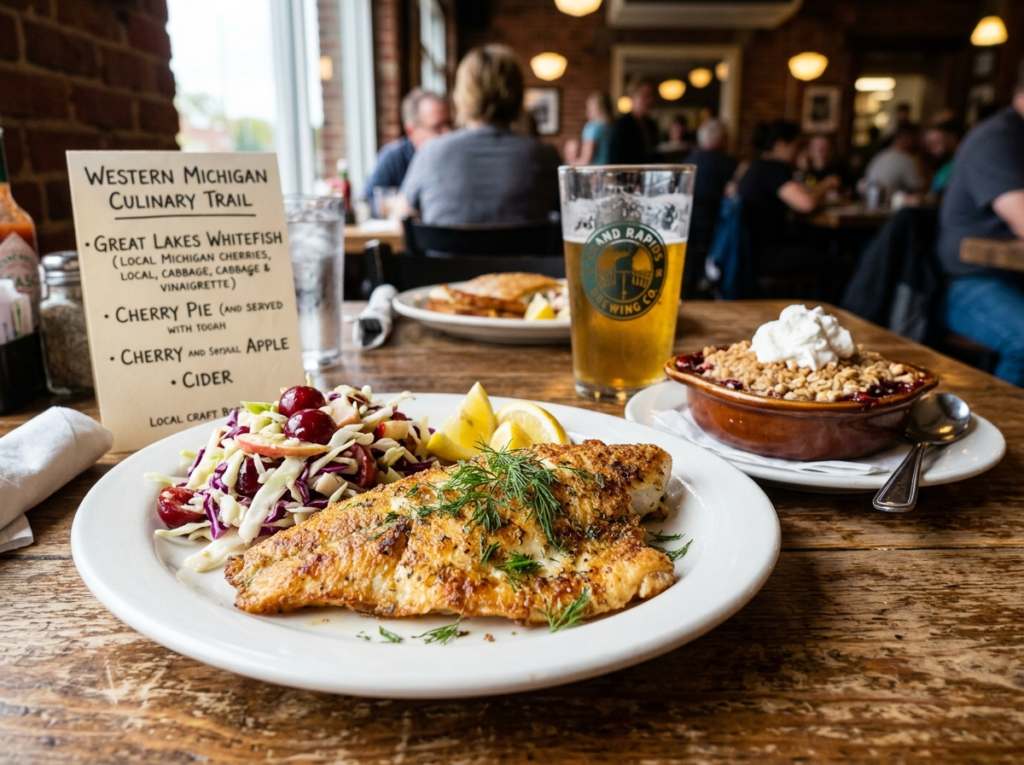
Most people think of Michigan and picture Detroit-style pizza or a Mackinac Island fudge shop. Fair enough. But head to the western side of the state — along Lake Michigan’s shoreline and into the rolling farmland behind it — and you’ll find a food scene that quietly rivals some of the best eating regions in the Midwest. We’re talking farm-to-table restaurants that actually mean it, cherry orchards you can taste your way through, craft breweries tucked into old barns, and fish so fresh the lake breeze practically delivers it to your plate. Western Michigan doesn’t shout about its food. It doesn’t need to. One trip and your taste buds do all the talking.
I spent a good stretch driving through towns like Traverse City, Grand Rapids, Holland, Saugatuck, and a handful of smaller stops most GPS apps barely register. What I found was a region where food isn’t just sustenance — it’s identity. Farmers, chefs, winemakers, and bakers here share a common thread: they care deeply about what goes on your plate and where it came from.
So if you’re planning a trip — or even just daydreaming about one — here’s how to eat your way through western Michigan without missing the good stuff.
Why Western Michigan Deserves a Spot on Your Food Travel List
You might wonder what makes this stretch of Michigan different from any other Midwest food destination. The short answer: geography and stubbornness.
Western Michigan sits along a microclimate zone created by Lake Michigan. The lake tempers harsh winters just enough and extends growing seasons just long enough to support crops you wouldn’t expect this far north. Cherries, blueberries, peaches, apples, asparagus, hops, and wine grapes all thrive here. Michigan is actually the fourth-largest wine-producing state in the U.S., and most of those vineyards cluster along the western lakeshore.
Then there’s the stubbornness part. The farmers and food makers here tend to be generational. They’ve been growing, curing, smoking, and baking for decades — sometimes a century or more. You’ll meet third-generation cherry farmers and fifth-generation Dutch bakers in the same afternoon. That kind of deep-rooted food culture can’t be manufactured. It just exists.
Add to that a booming craft beer scene (Grand Rapids earned the nickname “Beer City, USA” in multiple national polls), a growing community of young chefs choosing small-town kitchens over big-city ones, and a locavore ethos that actually functions year-round thanks to robust winter farmers markets. The pieces fit together into something genuinely special.
If you’ve ever enjoyed a culinary immersion trip through a food-rich region, you’ll recognize the feeling here. Western Michigan has that same energy — a place where eating well isn’t an event, it’s just Tuesday.
Traverse City: The Cherry Capital and So Much More
Most food conversations about western Michigan start in Traverse City, and for good reason. This lakeside town at the base of Grand Traverse Bay has been Michigan’s cherry capital for over a century. Nearly 75% of the country’s tart cherries come from this region.
But calling Traverse City a “cherry town” sells it short. Over the past 15 years, it’s quietly grown into one of the best small-city food destinations in the entire Midwest.
Where to Eat
The Cooks’ House is the kind of restaurant that changes its menu based on what walked in the back door that morning. Chef Eric Patterson works directly with local farms, and the result is a dining experience that feels personal rather than performative. You might get a course built around morel mushrooms foraged that morning or a dessert featuring fruit picked hours ago. It’s prix fixe, it’s intimate, and it’s worth every penny.
For something more casual, Poppycocks on Front Street serves a brunch that draws lines on weekends — and the line moves fast because they know what they’re doing. Their cherry pecan chicken salad has a local cult following. If you prefer a morning meal that doesn’t feel fussy, this is the move. And honestly, the whole idea that breakfast needs to be complicated is something you can happily abandon up here.
Red Ginger surprised me. Pan-Asian food in a northern Michigan town? It works because the chef uses local ingredients through an Asian lens — think Michigan whitefish with ginger-soy glaze, or cherry-based sauces that pull double duty as sweet and savory. It’s creative without trying too hard.
The Wine Trail
Old Mission Peninsula and Leelanau Peninsula extend north from Traverse City like two fingers reaching into Grand Traverse Bay. Between them, they hold over 40 wineries. The Rieslings and Pinot Grigios here are genuinely good — crisp, mineral-driven, and shaped by the cool lake climate. If you’re more of a red wine person, don’t sleep on the Pinot Noirs from places like Black Star Farms or Brys Estate.
Pro Tip: Visit midweek if you can. Weekend tasting rooms get packed in summer, and you’ll have a much better experience (and more conversation with pourers) on a Tuesday or Wednesday. And if you’ve ever wrestled with which wine glass to use for different varietals, tasting rooms are a judgment-free zone to experiment.
Grand Rapids: Beer City With a Serious Food Backbone
Grand Rapids sometimes gets pigeonholed as “just” a beer town. Sure, the craft beer scene here is staggering — Founders Brewing, Brewery Vivant, Perrin Brewing, and dozens more operate within city limits. But the food scene has caught up and, in some spots, surpassed the beer.
The Breweries You Can’t Skip
Founders Brewing Co. is the anchor. Their KBS (Kentucky Breakfast Stout) has a national reputation, and the taproom menu is leagues above typical brewpub fare. The beer cheese soup alone is worth the stop.
Brewery Vivant occupies a converted funeral chapel — yes, really — and serves Belgian-inspired ales alongside a food menu rooted in local sourcing. The duck confit poutine is one of those dishes you think about weeks later.
Harmony Brewing takes a pizza-forward approach, turning out some of the best pies in the city alongside house-brewed beers. It’s the kind of place where you accidentally spend three hours because the vibe is that good.
Beyond Beer
What excites me about Grand Rapids is the restaurant diversity. The Chop House serves steaks that could hold their own in Chicago — and if you’ve ever done a meat-focused food crawl in Chicago, you know that’s a high bar. Reserve Wine & Food Bar does a wine-focused menu with European leanings, and their charcuterie boards are beautifully assembled.
For something completely different, Donkey Taqueria in the Heartside neighborhood serves some of the most authentic tacos in Michigan. Their al pastor is spit-roasted, and the salsas are made fresh every few hours. It doesn’t feel like a Michigan taco joint. It feels like a good taco joint, period.
The Downtown Market is also worth a full morning. It’s an indoor market with local vendors selling everything from artisan cheese to smoked fish to fresh pasta. If you love the history and craft behind pasta, you’ll find fresh-made varieties here that you won’t see in a grocery store.
The Lakeshore Towns: Holland, Saugatuck, and South Haven
The towns strung along Lake Michigan’s eastern shore between Grand Rapids and the Indiana border are small, charming, and deceptively food-savvy. Each one has its own personality, but they share a love of fresh ingredients and unpretentious cooking.
Holland
Holland’s Dutch heritage shows up in its food in the best way. DeBoer Bakkerij & Dutch Brothers Restaurant serves traditional Dutch baked goods — think stroopwafels, almond-filled pastries called banketstaaf, and dense, buttery cookies that pair perfectly with black coffee. The bakery has been operating for decades, and the recipes haven’t changed because they don’t need to. If you appreciate the craft that goes into baking worth waiting for, Holland’s bakeries will speak your language.
New Holland Brewing is here too, producing some excellent spirits alongside their beer lineup. Their Zeppelin Bend whiskey has won national awards, and the pub menu leans into Michigan-sourced ingredients.
Saugatuck
Saugatuck is tiny — barely 1,000 full-time residents — but it punches way above its weight in dining. Bowdies Chophouse is the splurge meal. Their dry-aged steaks and seafood tower are destination-worthy. Phil’s Bar & Grille on Blue Star Highway is the locals’ favorite, serving burgers, whitefish sandwiches, and no-fuss comfort food that tastes exactly right after a day at the beach.
The Saugatuck Brewing Company makes an excellent jalapeño cream ale that sounds weird and tastes perfect on a warm afternoon.
South Haven
South Haven’s big claim is blueberries — the area around this town produces more blueberries than almost anywhere else in the country. You can pick your own at several u-pick farms from mid-July through August. Sherman’s Dairy Bar is an institution for ice cream, with lines that snake around the building on summer evenings. Their blueberry ice cream, made with local berries, tastes like summer in a cone.
For a proper sit-down dinner, Taste offers a seasonal menu that changes frequently and focuses on what’s available from nearby farms. The chef here doesn’t try to be flashy — just accurate and thoughtful, which honestly takes more skill.
The Fruit and Farm Trail: Eating Straight From the Source
One of the best parts about eating through western Michigan is how easy it is to go directly to the source. This isn’t a region where “farm-to-table” is a marketing slogan on a chalkboard. It’s a logistical reality. Some restaurants are literally next door to the farms that supply them.
What’s in Season and When
Timing your trip around the harvest calendar makes a huge difference.
Late May through June brings asparagus season — and Michigan grows a lot of it. If you’ve ever been curious about hunting wild asparagus, western Michigan’s roadsides and farm edges are where locals forage every spring.
July is cherry and blueberry season. Farm stands overflow, and everything from pies to preserves to cherry salsa shows up at roadside markets.
August through September means peaches, apples, and the beginning of grape harvest for the wineries.
October is apple cider season, and the cider mills here are an experience unto themselves — fresh-pressed cider, warm donuts, and corn mazes if you’re traveling with kids.
Farm Stands Worth Stopping For
Kilcherman’s Christmas Cove Farm near Traverse City grows over 200 antique apple varieties. That’s not a typo — two hundred. Many of these varieties aren’t available anywhere else. If you’ve ever thought about comparing apples to apples in a serious way, this is your place.
Bel Lago Vineyard on the Leelanau Peninsula doubles as a farm stand with local cheeses and charcuterie alongside their wines. It’s a great spot for an impromptu picnic with a view of the rolling hills.
Smoked Fish: Western Michigan’s Underrated Specialty
Here’s something most food guides underplay: western Michigan has a smoked fish tradition that’s as deep and flavorful as anything you’d find on the coast. Lake Michigan’s whitefish and trout have been smoked by local fisheries for generations, and the results are extraordinary.
Carlson’s Fishery in Leland (a tiny fishing village on the Leelanau Peninsula) is probably the most famous. Their smoked whitefish pâté is sold at the counter by the pound, and people drive an hour or more just to get it. The texture is silky, the smoke flavor is subtle rather than overpowering, and it spreads on crackers like it was born to do exactly that.
Burritt’s Fresh Market in Traverse City carries locally smoked fish alongside a great selection of Michigan cheeses, making it easy to assemble a picnic spread in about five minutes.
The smoked fish tradition here reminds me a lot of food cultures in other lakeside and coastal regions — places like Sicily where the water shapes what people eat and how they prepare it. There’s something honest about a food culture built around what’s swimming nearby.
A Few Unexpected Stops That Surprised Me
Not everything worth eating in western Michigan shows up on a “best of” list. Some of my favorite discoveries were places I stumbled into with no expectations.
Crane’s Pie Pantry in Fennville sits on a working orchard and serves pies made from fruit growing literally outside the window. Their cherry crumb pie is the stuff of local legend. You can buy a whole pie to take home, and I strongly recommend doing exactly that. If you’ve ever worked on perfecting your pie crust, tasting what a master can do with one is humbling and inspiring.
Baroda Founders Wine Cellar in the Lake Michigan Shore wine region is run by a family that’s been growing grapes since the 1970s. Their tasting room is unpretentious — folding chairs on a porch, a dog wandering around — and the wines are surprisingly polished. Their Malbec has gotten better with each vintage.
Virtue Cider in Fennville makes farmstead ciders using European techniques and Michigan apples. If you think cider is just sweet apple juice with alcohol, this place will change your mind. Their dry ciders are complex and bone-dry, closer to wine than anything you’d find in a six-pack.
Planning Your Western Michigan Food Trip
A few practical notes before you start mapping your route.
How many days do you need? Three to four days is the sweet spot. You can squeeze it into a long weekend, but you’ll feel rushed. Four days lets you cover the Traverse City area, the lakeshore towns, and Grand Rapids without turning meals into a sprint.
When should you go? Late June through early October is prime time. July and August are peak tourist season, so expect crowds in Traverse City and Saugatuck. September is my personal favorite — the crowds thin out, the harvest is in full swing, and the weather is gorgeous.
Should you make reservations? For the higher-end spots like The Cooks’ House and Bowdies, absolutely — especially on weekends. For everything else, you can usually walk in.
Rent a car. Public transit isn’t practical here. The towns are spread out, the farm stands are on back roads, and half the fun is driving past orchards and vineyards with the windows down. It’s a road trip region at heart.
If you love the idea of organizing your meals and snacks for a multi-day trip, a no-plan meal plan approach works beautifully here — let the farm stands and daily specials guide what you eat rather than locking yourself into a rigid itinerary.
FAQ
What food is western Michigan most famous for?
Tart cherries are the headline crop — the Traverse City area produces roughly 75% of the U.S. tart cherry supply. Beyond that, the region is known for craft beer (Grand Rapids has been called Beer City, USA), smoked Lake Michigan whitefish, blueberries from the South Haven area, wine from the Leelanau and Old Mission peninsulas, and a growing farm-to-table restaurant scene.
Is western Michigan a good destination for a food-focused road trip?
It’s one of the best in the Midwest. The combination of wineries, breweries, farm stands, lakeside fish markets, and genuinely excellent restaurants is hard to match in a region this compact. You can cover a lot of ground in three to four days without the prices or pretension you’d find in bigger food cities.
What’s the best time of year to visit western Michigan for food?
Late June through early October gives you the widest range of seasonal produce, open wineries, and outdoor dining. July and August are peak season with the highest crowds. September offers a quieter experience with harvest-season menus, apple cider season kicking off, and comfortable weather. Winter has its own charm with cozy restaurants and hearty menus, but many farm stands and smaller spots close for the season.
Are there vegetarian and vegan options in western Michigan restaurants?
Yes, and they’re better than you might expect. The farm-to-table focus means vegetables are treated as main characters, not afterthoughts. Restaurants like The Cooks’ House and many Grand Rapids spots offer plant-forward dishes that don’t feel like a consolation prize. The abundance of fresh local produce helps — chefs here have access to great ingredients year-round through winter farmers markets and greenhouse operations.
Your Next Trip Starts With a Hungry Stomach
Western Michigan doesn’t try to impress you with Michelin stars or celebrity chef names. What it offers instead is something harder to find — a food culture that’s rooted in place, shaped by seasons, and run by people who genuinely love what they do. You’ll eat cherries still warm from the sun, drink wine made from grapes you can see from the tasting room window, and sit down to meals where the chef knows the farmer by first name.
Pack a cooler in your trunk. You’re going to want to bring things home. And if this trip sparks something in you — a curiosity about food, about where it comes from, about how a region’s identity shows up on a plate — then western Michigan did exactly what it does best. It fed you well and left you wanting to come back.