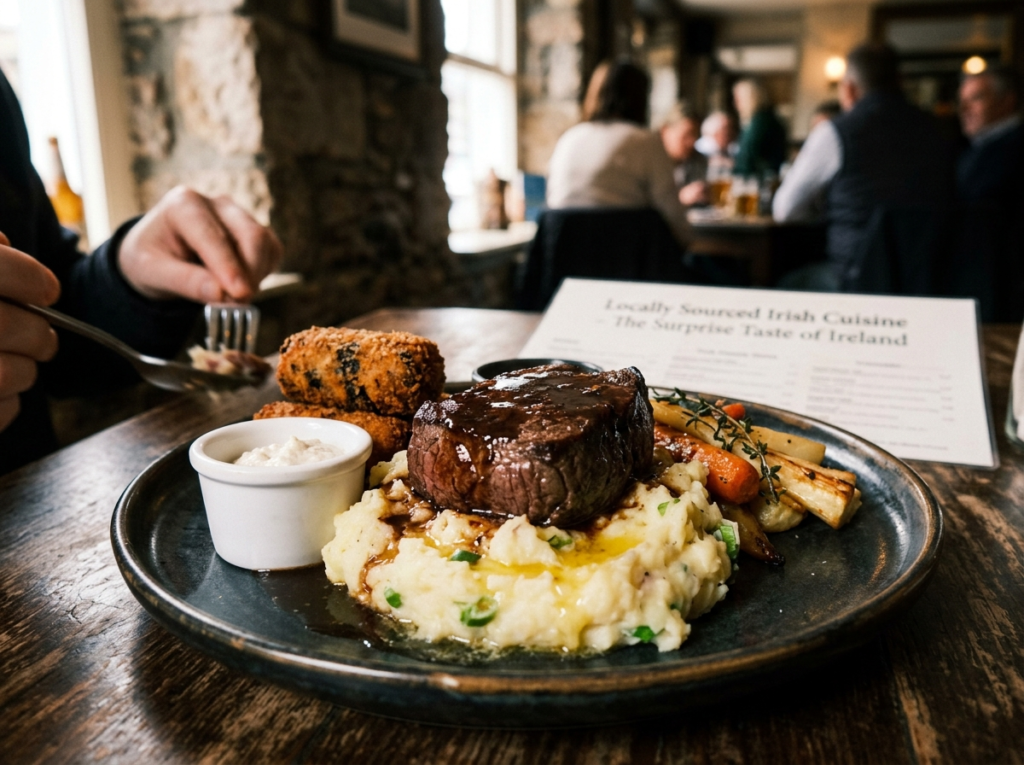
Ireland has two Michelin-starred restaurants for every million people. That ratio puts it ahead of the United States. Let that sit for a second, because most travelers don’t book a flight to Dublin thinking about what they’ll eat. They think about cliffs, castles, pubs, and maybe a pint of Guinness. Food? That’s usually an afterthought — a bowl of stew here, some soda bread there, and the assumption that Irish cuisine starts and ends with potatoes.
That assumption is wrong. And honestly, it’s the best thing about visiting Ireland with an open mind and an empty stomach. You walk in expecting nothing, and you leave wondering why nobody told you sooner.
I’ve spent years writing about food destinations across the globe, and Ireland consistently ranks as one of the most surprising culinary experiences I’ve come across. Not because it competes with Italy’s pasta traditions or Japan’s precision — but because it does something different. It takes simple, honest ingredients and treats them with a kind of respect that feels both modern and deeply rooted at the same time.
So let’s talk about what actually happens when you eat your way through Ireland.
The Reputation Problem Ireland Doesn’t Deserve
Ireland’s food reputation has been shaped by centuries of hard history. The Great Famine of the 1840s decimated the population and left deep scars on the country’s relationship with food. For generations after, Irish cooking was about survival — filling bellies, stretching ingredients, making do. That’s a tough foundation to build a glamorous food identity on.
And then there’s the British influence. Centuries of colonial rule meant that Irish food culture was often overshadowed, suppressed, or simply lumped in with “British Isles cuisine” — which, let’s be honest, doesn’t exactly set hearts racing either.
But here’s what happened while nobody was paying attention: Ireland quietly rebuilt its food identity from the ground up. Starting in the 1990s and accelerating through the 2000s, a new generation of Irish chefs, farmers, and food producers decided that the country’s greatest strength wasn’t in trying to imitate French fine dining or Italian tradition. It was in doubling down on what Ireland already had — some of the cleanest air, purest water, and most fertile farmland in Europe.
The result? A food scene that’s genuinely exciting, deeply local, and completely unpretentious.
What Makes Irish Ingredients So Special
You can’t talk about Irish food without talking about the land. Ireland gets roughly 200 days of rain per year. That sounds miserable for a vacation, but it’s spectacular for grass. And grass is where everything starts.
Irish cattle graze on open pastures for most of the year. That’s not a marketing slogan — it’s just how farming works there. The temperate climate means cows can stay outdoors far longer than in most European countries. The beef and dairy that come from these animals taste different. Richer. More complex. If you’ve ever had Irish butter — Kerrygold is the one most people know — and thought it tasted better than regular butter, you weren’t imagining things. That deep golden color comes from beta-carotene in the grass, and the flavor follows.
The seafood situation is equally impressive. Ireland has over 3,000 kilometers of coastline, and the waters off the Atlantic coast are cold, clean, and teeming with life. You’ll find oysters in Galway that taste like the sea itself — briny, mineral, alive. Smoked salmon from places like Burren Smokehouse isn’t the generic pink fillet you pick up at a supermarket. It’s cured slowly, smoked over oak or beechwood, and the difference hits you on the first bite.
Even the vegetables tell a story. Irish soil is rich in minerals, and the cooler climate means crops grow slowly. Slow growth concentrates flavor. A carrot pulled from Wexford soil or a head of cabbage from a County Cork farm doesn’t need much done to it, because the ingredient is already doing the heavy lifting.
If you’ve ever been curious about how terroir — that French concept usually reserved for wine — applies to everyday cooking, Ireland is a masterclass. Much like the culinary immersion you’d experience in Spain’s Basque Country, Ireland rewards travelers who care about where their food actually comes from.
Dublin’s Food Scene Has Grown Up Fast
Twenty years ago, eating well in Dublin meant finding a decent pub with a good chef. Today, the city is a legitimate food destination with range, depth, and personality.
Start with the neighborhoods. The area around Camden Street and Wexford Street has become a hub for independent restaurants that take food seriously without taking themselves too seriously. You’ll find places like Bastible, where the menu changes based on what’s available that week, and every dish feels like a conversation between chef and farmer. Or Uno Mas, a tapas spot that somehow feels perfectly at home in Dublin because the owners spent time in Spain and brought that energy back with real conviction.
Then there’s the Dublin Food Co-op in Newmarket, which has been running since 1983. It’s not flashy. It doesn’t have a PR team. But it’s one of the best places to understand what local, community-driven food looks like in practice. Saturday mornings there feel alive — stalls selling raw honey, handmade cheeses, organic vegetables, and fresh bread that’s still warm.
The city also has a growing street food culture. Eatyard, an outdoor food market in the city center, showcases vendors who might be running a full restaurant someday but are currently perfecting one dish at a time. That’s where you find the energy — people who are cooking because they love it, not because a business plan told them to.
Pro Tip: Don’t skip breakfast in Dublin. Irish hotels and B&Bs serve a full Irish breakfast that includes black pudding (blood sausage), white pudding, rashers (back bacon), eggs, toast, and grilled tomatoes. It’s hearty, unapologetic, and the kind of meal that’ll carry you through a full day of walking. If you’re someone who doesn’t want to feel burdened by breakfast, you can always go lighter — but at least try the full version once.
The Wild Atlantic Way Is a Food Road Trip in Disguise
Most people drive the Wild Atlantic Way for the scenery. The 2,500-kilometer route along Ireland’s western coast delivers cliffs, beaches, and landscapes that genuinely make you catch your breath. But here’s what the travel brochures don’t emphasize enough: this drive is also one of Europe’s best food road trips.
Start in County Clare at the Burren, a limestone landscape that looks like another planet. Beneath those rocks grows an unusual mix of Arctic, Mediterranean, and Alpine plants — all in the same place. Local producers have figured out how to work with this wild landscape, and you’ll find everything from foraged herbs to wild goat cheese.
Move south to County Kerry, and the Dingle Peninsula becomes your food playground. Dingle town itself has a population of about 2,000 people and an absurd concentration of excellent restaurants. Murphy’s Ice Cream makes flavors using Dingle sea salt and Irish brown bread. The fish shops along the harbor serve whatever came off the boats that morning. There’s a reason Dingle keeps showing up on “best small food towns in Europe” lists.
Head north to Galway, and you hit what many consider the heartbeat of Irish food culture. The Galway International Oyster Festival, running since 1954, is one of the oldest food festivals in the world. But you don’t need a festival to eat well here. Kai Restaurant, run by chef Jess Murphy, has become one of the most talked-about spots in Ireland by doing something radical: cooking food that actually tastes like the place it comes from.
Did you know? Galway was designated a European Region of Gastronomy in 2018 — only the second city to receive that recognition after Catalonia.
The Cheese Situation Deserves Its Own Conversation
Ireland produces some of the finest artisan cheeses in Europe, and almost nobody outside of food circles knows about it. That’s changing, but slowly.
The story usually starts with Milleens, a washed-rind cheese made by Veronica Steele in County Cork since 1978. She’s often credited with kickstarting the Irish artisan cheese movement. Milleens is pungent, creamy, and tastes like the Beara Peninsula where it’s made — wild, a little unpredictable, and completely its own thing.
From there, the list grows quickly. Cashel Blue, Ireland’s first farmhouse blue cheese, has a buttery texture that surprises people who think they don’t like blue cheese. Durrus, another West Cork creation, is a semi-soft cheese with an earthy complexity that changes with the seasons. Crozier Blue, made from sheep’s milk by the same family behind Cashel Blue, is something special — tangy, rich, and hard to stop eating once you’ve started.
County Cork alone has over 20 artisan cheesemakers. That density of production in such a small area means you can literally drive from farm to farm, tasting as you go. Some producers welcome visitors, and a few offer workshops where you can see the process from milk to wheel.
If cheese is your thing — or even if you’ve never given it much thought — Ireland will change your perspective. It’s a similar kind of revelation to discovering that hidden gem restaurant in a place you’d never expect.
Irish Seafood Is Criminally Underrated
Here’s an irony that drives Irish food lovers a little crazy: Ireland exports a huge percentage of its best seafood. Langoustines, crab, and oysters head straight to France and Spain, where they’re served in high-end restaurants. Meanwhile, tourists in Ireland order chicken.
That’s starting to change. More restaurants along the coast are making seafood the star, and the quality is staggering.
Galway Bay oysters are the most famous, but the oysters from Carlingford Lough in County Louth and Cromane in County Kerry deserve equal attention. Each growing region gives the oysters a different flavor profile — some sweeter, some brinier, some with a metallic mineral finish. Tasting them side by side is like a wine flight, except it’s oysters and it’s arguably more fun.
Beyond oysters, look for brown crab. Irish brown crab is sweet, meaty, and often served simply — cracked open, with maybe some butter and soda bread on the side. That simplicity isn’t lazy cooking. It’s confidence. When the ingredient is that good, the best thing a chef can do is get out of the way.
Smoked fish is another area where Ireland excels. Frank Hederman’s smokehouse in Cobh, County Cork, has been smoking salmon, mackerel, and eel over beechwood since the 1980s. His salmon won a gold medal at the World Food Awards, and once you taste it, you understand why. The smoke is gentle, the fish is silky, and the flavor lingers.
Quick Fact: Ireland’s seafood industry is worth over €1.2 billion annually, with over 60 species commercially fished off its coast.
The Pub Food Renaissance You Didn’t See Coming
Let’s address the elephant in the room: pub food. Yes, Ireland has pubs. Lots of them. And yes, the old stereotype of overcooked meat and soggy vegetables in a dimly lit bar used to have some truth to it.
But the modern Irish pub has evolved. Many gastropubs now work directly with local farmers and fishermen, and the food coming out of these kitchens would hold up in any proper restaurant.
Take a place like The Wild Honey Inn in Lisdoonvarna, County Clare. It’s a pub. It has a bar. You can get a pint. It’s also the first pub in Ireland to receive a Michelin star (in 2019). Chef Aidan McGrath serves dishes that are deceptively simple — pan-fried hake with seaweed butter, local lamb with root vegetables — but the execution is precise, and everything on the plate was grown or caught within a short drive.
Or consider Morrissey’s in Doonbeg, a pub that’s been open since 1924 and serves food that respects tradition while acknowledging that people’s palates have evolved. The chowder there — thick, creamy, packed with local shellfish — is the kind of dish that makes you rethink what “pub food” means.
This shift isn’t limited to famous spots. Even smaller, lesser-known pubs across the countryside have started sourcing better ingredients and cooking with more care. You’ll stumble into a random village pub in West Cork or Connemara and find a menu that genuinely surprises you.
That unplanned discovery, where you walk in expecting nothing and leave thinking about what you ate for days afterward — that’s the magic of eating in Ireland. It’s a lot like finding unexpected food excellence in places nobody’s writing about.
The Sweet Side of Ireland Is Worth Exploring Too
Irish desserts and baked goods don’t get the attention they deserve, probably because they’re overshadowed by the savory side. But if you have any interest in baking, pastry, or just eating something sweet with a cup of strong tea, you’ll want to pay attention.
Soda bread is the foundation. Every family has their own recipe, and they’ll defend it fiercely. The basic version uses just flour, buttermilk, baking soda, and salt. No yeast, no waiting, no fuss. The result is a dense, slightly tangy bread with a crackly crust that’s perfect for mopping up stew or spreading with that incredible Irish butter.
Beyond soda bread, look for barmbrack (báirín breac) — a fruit bread traditionally baked around Halloween with small charms hidden inside. Each charm supposedly tells your fortune. It’s part food, part folklore, and entirely delicious.
Ireland’s newer bakery scene has also exploded. In Dublin, places like Bread 41 and the Fumbally are turning out sourdough, croissants, and pastries that rival anything in Paris. It’s the same kind of energy you see in bakeries where people happily wait in line because the quality is that good.
How to Plan a Food-Focused Trip to Ireland
If you’re thinking about visiting Ireland specifically for the food, a few practical things will help you get the most out of your trip.
Timing matters. September and October are peak food season. The harvest is in full swing, food festivals pop up across the country, and the weather is still manageable. The Galway Oyster Festival happens in late September. The Kinsale Gourmet Festival runs in October. The Ballymaloe Cookery School in East Cork offers short courses throughout the year that are perfect for food-obsessed travelers.
Rent a car. Public transport in rural Ireland is limited, and some of the best food experiences are in small towns and farm shops you’d never reach by bus. A car gives you the freedom to follow your appetite instead of a schedule.
Talk to locals. Irish people are famously friendly, and asking for food recommendations is one of the fastest ways to find places that don’t show up on Google. The bartender at your hotel pub probably knows a cheese farm down the road. The shopkeeper might tell you about a fisherman who sells directly from the pier. These conversations lead to the best meals.
Don’t over-plan. Some of the finest food experiences in Ireland happen by accident. You pull over because a hand-painted sign says “fresh crab,” and thirty minutes later you’re sitting on a stone wall, eating the best shellfish of your life, watching the Atlantic roll in. That kind of moment can’t be scheduled, and it’s what makes Ireland different from more “organized” food destinations.
Warning: If you have dietary restrictions, communicate them clearly. Ireland is getting much better at accommodating allergies and preferences, especially in cities, but in very rural areas, menus can be limited. A quick conversation with the kitchen usually sorts things out.
The People Behind the Food
One thing that separates Ireland from many food destinations is accessibility. In France or Italy, the great chefs can feel untouchable — legends working behind closed kitchen doors. In Ireland, you might sit at a 12-seat restaurant and watch the chef cook your dinner while chatting with you about where the lamb came from.
That intimacy isn’t accidental. Ireland’s food community is tight-knit, collaborative, and genuinely welcoming. Farmers know the chefs who buy their produce. Cheesemakers know the restaurant owners who serve their cheese. There’s a chain of relationships that’s short, transparent, and built on trust.
This closeness shows up in the food itself. When a chef can call the fisherman by name, when the farmer drops vegetables off at the kitchen door that morning, there’s a connection between plate and place that you can taste. It’s not a marketing gimmick. It’s just how things work in a country that’s small enough to keep those relationships alive.
That human element — the stories, the pride, the warmth — turns a meal into something more. It’s the same unifying power of food that makes sharing a table with strangers feel natural instead of awkward.
A Few Dishes You Shouldn’t Leave Without Trying
You could spend weeks eating your way around Ireland and still miss things. But if your time is limited, here are the dishes and experiences that capture the essence of what Irish food has become.
Colcannon — mashed potatoes mixed with cabbage or kale, loads of butter, and sometimes scallions. Simple. Perfect. The kind of dish that reminds you why comfort food exists.
Boxty — a traditional potato pancake from the northwest that’s crispy on the outside and soft within. Some restaurants stuff them with fillings; others serve them plain alongside meat or fish.
A proper fish and chips — not from a chain, but from a chipper that fries fresh cod or haddock in proper batter. Leo Burdock’s in Dublin has been doing it since 1913.
Oysters with a pint of stout — preferably in Galway, preferably while sitting near the water. The pairing works because the mineral brine of the oyster cuts through the roasted malt of the stout. It’s science and tradition in one bite.
Afternoon tea with soda bread and homemade jam — at a farmhouse B&B, after a long walk, when you’re tired and cold and someone puts a plate of warm bread in front of you. That’s not a restaurant experience. It’s an Irish experience.
FAQ
Is Ireland expensive for food travel?
Ireland isn’t cheap, especially in Dublin and popular tourist towns. Expect to pay €15–€25 for a good lunch and €35–€60 for dinner at a quality restaurant. That said, farmers’ markets, fish shops, and bakeries offer excellent food at much lower prices. You can eat spectacularly well on a moderate budget if you mix restaurant meals with market finds and pub lunches.
What’s the best region in Ireland for food?
West Cork and County Galway are often considered the twin hearts of Irish food culture. West Cork has the highest concentration of artisan producers — cheese, chocolate, smoked fish, craft beer — while Galway brings the restaurant scene and seafood tradition. But honestly, every region has something worth eating.
Do I need to book restaurants in advance?
For popular spots in Dublin, Galway, and Kinsale — yes, especially on weekends and during festival season. Smaller towns are usually more relaxed, and you can often walk in. But if there’s a specific restaurant you don’t want to miss, book a few days ahead. Places with Michelin stars or strong reputations fill up fast.
Is Irish food suitable for vegetarians or vegans?
Ireland’s food scene has embraced plant-based eating more in recent years, especially in cities. Dublin has several dedicated vegetarian and vegan restaurants, and most good restaurants now include thoughtful meat-free options. Rural areas can be more limited, but the emphasis on fresh vegetables, dairy, and bread means you won’t go hungry.
Ireland doesn’t shout about its food. It doesn’t need to. The flavors speak clearly enough once you actually sit down and pay attention. And that quiet confidence — the sense that good food doesn’t require a spectacle — might be the most Irish thing about the whole experience.
Your next food trip doesn’t have to be to the places everyone already talks about. Sometimes the best meal you’ve ever had is waiting in a country you never considered. Pack a rain jacket, bring your appetite, and let Ireland do the rest.