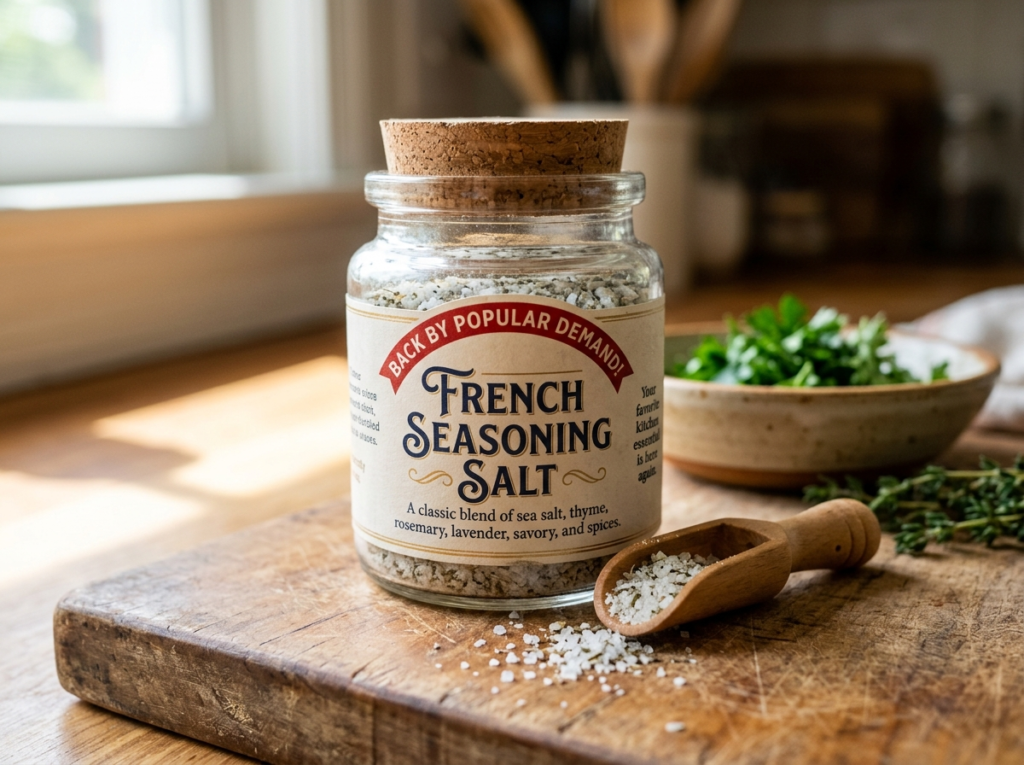
There’s one recipe people ask about more than any other — and it’s not a fancy entrée or a show-stopping dessert. It’s a salt. A French seasoning salt, to be specific. Every time it seems like the conversation has moved on to the next trendy ingredient or technique, someone sends a message: “Can you share that French seasoning salt recipe again?” So here we are. The people spoke, and this recipe is officially back.
What makes a simple seasoned salt so magnetic? That’s actually a more interesting question than it sounds. Because behind this unassuming jar of flavored salt sits a centuries-old French tradition of building flavor from the ground up. And once you understand how it works — and how easy it is to make — you’ll wonder why you ever reached for that store-bought stuff with the little girl and the umbrella on the label.
Let’s get into it.
What Exactly Is French Seasoning Salt?
French seasoning salt — sometimes called sel épicé or sel aromatique — is a blend of fine salt with dried herbs, spices, and sometimes dried aromatics like garlic or shallot. Think of it as the French pantry’s secret handshake. It’s not one fixed recipe. Every French grandmother, every professional chef, every home cook who’s spent enough time in the kitchen has their own version.
The basic idea is brilliantly simple: you take good salt and infuse it with the flavors you reach for most often. That way, instead of pulling out six jars every time you season a chicken breast or roast vegetables, you grab one jar. One pinch does the work of several.
If you’ve ever been to the south of France — the Provence region especially — you’ve tasted this principle in action. Herbs like thyme, rosemary, savory, and lavender grow wild there, and local cooks have been drying and blending them with coarse sea salt for generations. The famous herbes de Provence blend is a close cousin, but French seasoning salt takes it a step further by incorporating the salt directly into the mix.
Quick fact: Professional kitchens often keep multiple seasoning salts on hand — one for poultry, one for fish, one for vegetables. The concept isn’t uniquely French either. You’ll find similar traditions in Basque country kitchens and across the Mediterranean. But the French version, with its emphasis on balance and subtlety, has a particular elegance that keeps drawing people back.
Why Did This Recipe Become So Popular?
Here’s the honest answer: it solves a real problem.
Most home cooks struggle with seasoning. Not because they don’t know salt exists, but because getting the balance right — the herbs, the garlic, the pepper, the proportions — feels like guesswork every single time. You add a pinch of this, a shake of that, taste it, add more, and sometimes it works. Sometimes it doesn’t.
French seasoning salt removes that guesswork. You do the balancing act once, when you make the blend. After that, every pinch is already balanced. It’s like having a tiny sous chef in a jar who’s already measured everything for you.
The other reason? Versatility. People started using it on everything — grilled steaks, scrambled eggs, roasted potatoes, popcorn, buttered pasta, avocado toast — and realized it made all of those things taste noticeably better with zero extra effort. That kind of result gets people talking. And when people talk, other people want to try it. And when they try it, they want the recipe. And here we are, bringing it back by popular demand.
There’s also something satisfying about making your own seasoning blend. It takes maybe ten minutes, costs a fraction of what you’d pay for a specialty salt at a gourmet shop, and you can customize it to your taste. Want more heat? Add more white pepper or a touch of cayenne. Love garlic? Double it. Prefer things more herbal? Load up on the thyme and savory. It becomes yours.
The Recipe: How to Make French Seasoning Salt
Alright, let’s get to the part you actually came here for. This recipe makes roughly one cup of seasoning salt, which — depending on how enthusiastically you use it — lasts most people about four to six weeks.
What You’ll Need
For the base:
- ¾ cup fine sea salt or kosher salt (if using kosher, grind it finer first)
- 1 tablespoon dried thyme
- 1 tablespoon dried marjoram or savory
- 2 teaspoons dried rosemary (ground or very finely chopped)
- 1 teaspoon dried tarragon
- 1 teaspoon ground white pepper
- 1 teaspoon garlic powder (not garlic salt)
- ½ teaspoon onion powder
- ½ teaspoon ground bay leaf (yes, you can grind dried bay leaves in a spice grinder)
- ¼ teaspoon ground nutmeg
- ¼ teaspoon ground cloves
Pro Tip: The quality of your dried herbs matters a lot here. If those jars in your spice rack have been sitting there since 2019, it’s time to replace them. Dried herbs lose potency over time. Give them a sniff — if they smell like dust instead of herbs, they’re done. A well-organized pantry makes blends like this much easier to pull together, and if you need tips on that front, here’s how a pro chef keeps a small kitchen in order.
How to Make It
The process is almost embarrassingly simple.
Put everything in a food processor or spice grinder and pulse it until the mixture is uniform and relatively fine. You don’t want powder — a little texture is good — but you also don’t want big chunks of rosemary needle poking out. About 15 to 20 pulses usually does it.
If you don’t own a spice grinder or food processor, you can do this by hand. Use a mortar and pestle to crush the herbs finer, then whisk everything together in a bowl. It won’t be quite as uniform, but it’ll still work beautifully.
Once blended, transfer the seasoning salt to a clean, airtight jar. Glass is ideal. Store it in a cool, dark spot — not right next to your stove, where heat and steam will degrade the herbs faster.
That’s it. You’re done. Ten minutes, and you’ve got a jar of something that’ll genuinely upgrade your cooking for the next month or more.
How to Use French Seasoning Salt (Beyond the Obvious)
Most people figure out the obvious uses pretty quickly — sprinkle it on meat before cooking, toss it with roasted vegetables, use it anywhere you’d normally reach for plain salt. But there are some less obvious applications that really show off what this blend can do.
On Eggs, Any Style
French seasoning salt and eggs are a match that makes too much sense. Whether you’re making scrambled eggs, a soft omelet, or a fried egg with crispy edges, a pinch of this blend adds depth that plain salt and pepper simply can’t match. The tarragon and white pepper especially shine here — they complement eggs the way a good frame complements a painting.
If you’re someone who struggles with what to make for breakfast beyond the usual rotation, this is a quick way to make your morning eggs feel like a completely different dish.
In Soups and Stocks
Here’s where the salt’s French heritage really shows. Drop a teaspoon into a pot of homemade chicken stock or a simple vegetable soup, and you’ll taste the difference immediately. The blend of herbs and aromatics does in one pinch what usually takes several separate additions. It’s especially useful when you’re making something like a classic consommé, where every layer of flavor counts.
As a Finishing Salt
Don’t limit this to cooking only. Try it as a finishing salt — sprinkled on food just before serving. A pinch over sliced tomatoes with good olive oil. A dusting on buttered bread. A light sprinkle over grilled fish right as it comes off the heat. When you use it this way, you get the full aromatic hit of the herbs because they haven’t been cooked down.
On Popcorn
This sounds casual, and it is. But movie-night popcorn with French seasoning salt and melted butter is the kind of thing that makes people stop mid-chew and ask, “What did you put on this?” It works because the salt-to-herb ratio is already dialed in — you don’t end up with a mouthful of rosemary or a bland, under-seasoned handful.
In Compound Butter
Mix two tablespoons of French seasoning salt into a stick of softened butter. Roll it into a log using plastic wrap, refrigerate it, and slice off coins as needed. Put a coin on top of a grilled steak, a piece of roasted chicken, or a baked potato. This is one of those tricks professional chefs use that seems fancy but takes about three minutes.
What Makes This Different from Store-Bought Seasoning Salts?
You already know the answer, but let’s spell it out anyway.
Pick up a container of commercial seasoning salt — Lawry’s, for example, or any grocery store brand — and read the ingredient list. You’ll typically find salt listed first (obviously), then sugar, then a parade of additives: papain, corn starch, tricalcium phosphate, “natural flavors” (which could mean almost anything), and sometimes MSG. The herb content is minimal. What you’re mostly getting is salty, slightly sweet, vaguely spiced powder.
Homemade French seasoning salt has no fillers, no anti-caking agents, no sugar, and no mystery ingredients. Every component is something you chose and measured yourself. You control the salt level, the herb intensity, the heat, everything. And you can taste the difference immediately. It’s like comparing a fast-food burger to one you grilled yourself with good meat and fresh toppings — technically the same category, but not really the same thing at all.
Did you know? The concept of pre-blended seasoning salts dates back to medieval European kitchens, where spice blends were mixed with salt both for flavor and preservation. French sel épicé recipes appear in cookbooks as far back as the 18th century, with variations popping up in virtually every regional cuisine across the country.
Customizing Your Blend
The recipe above is a solid, versatile, classic French base. But one of the best things about making your own seasoning salt is that you can tailor it.
Here are a few directions you might take it:
Mediterranean lean: Increase the rosemary and thyme, add a teaspoon of dried oregano, and swap the nutmeg for a pinch of dried lemon zest. This version is perfect for lamb, grilled vegetables, and anything cooked with olive oil.
Warm and rich: Add a teaspoon of smoked paprika and a half teaspoon of ground coriander. Drop the tarragon. This version leans into autumn flavors and works beautifully on roasted root vegetables, pork chops, and hearty stews.
Bright and herbal: Double the tarragon, add a teaspoon of dried chervil if you can find it, and include a pinch of dried lavender (just a pinch — lavender gets aggressive fast). This lighter version is ideal for fish, salads, and spring vegetables like white asparagus.
With heat: Stir in half a teaspoon of cayenne pepper or a full teaspoon of crushed red pepper flakes after blending. This gives you a seasoning salt with a kick — great for grilled meats, a weekend cookout, or anything you want to wake up a little.
The point is, once you understand the formula — salt plus dried herbs plus dried aromatics plus a touch of warm spice — you can riff on it endlessly. Keep notes on what you try. Over time, you’ll develop a signature blend that’s uniquely yours.
Storage, Shelf Life, and Making It Last
Homemade seasoning salt doesn’t have preservatives, but the good news is that salt itself is a preservative. Stored properly — in an airtight glass jar, away from heat, moisture, and direct sunlight — your blend will stay potent for about three months.
After that, it won’t go “bad” in a dangerous sense. Salt doesn’t spoil. But the herbs will gradually lose their punch, and you’ll find yourself adding more and more to get the same flavor. At that point, just make a fresh batch. It takes ten minutes, remember?
A couple of practical storage tips: don’t dip a wet spoon into the jar. Moisture is the enemy here — it’ll cause clumping and can even lead to mold if the herbs absorb enough water. Keep a small, dry spoon dedicated to the jar, or just pour directly from the container. And resist the urge to store it right above your stove. That spot is warm and steamy, which is exactly what you want to avoid.
If you want to make a large batch — say, to give jars as gifts (people love receiving these, by the way) — you can safely double or triple the recipe. Just make sure your food processor or grinder can handle the volume. Process in batches if needed so everything blends evenly.
The Bigger Lesson: Building Flavor from Your Pantry
There’s a reason professional chefs talk so much about seasoning. It’s not because they’re obsessed with salt — it’s because proper seasoning is the single biggest difference between food that tastes “fine” and food that tastes good. And seasoning isn’t just about adding salt at the end. It’s about layering flavors from the start.
French seasoning salt fits into a broader philosophy of cooking that values preparation and intention. The French call it mise en place — everything in its place. When you’ve got a jar of seasoning salt ready to go, you’re already one step ahead every time you cook. You’re not scrambling to find the thyme, measuring out the garlic powder, wondering if you added enough pepper. You just reach for the jar.
This same philosophy applies to other kitchen fundamentals, too. Having a good stock in the freezer. Keeping your knife skills sharp. Understanding the balance between acid and fat. These aren’t complicated things, but they separate confident cooks from uncertain ones.
French seasoning salt is a small thing. A jar on a shelf. But it represents a bigger idea: that a little preparation goes a long way, and that the simplest tools often make the biggest difference.
Frequently Asked Questions
Can I use fresh herbs instead of dried for French seasoning salt?
You really want to stick with dried herbs for this recipe. Fresh herbs contain moisture, and moisture mixed with salt creates a paste rather than a sprinkle-able seasoning. That paste will also have a much shorter shelf life — maybe a week in the fridge before it starts to turn. Dried herbs give you the flavor concentration and the shelf stability you need. If you love fresh herbs, save them for finishing dishes or making compound butters, and let the dried versions do the work in your seasoning salt.
Is French seasoning salt the same as herbes de Provence?
They’re related but not the same. Herbes de Provence is a dried herb blend — thyme, rosemary, savory, marjoram, oregano, and sometimes lavender — without salt. French seasoning salt incorporates salt as the primary base and adds spices like white pepper, nutmeg, and cloves alongside the herbs. Think of herbes de Provence as one possible ingredient in a French seasoning salt, but the seasoning salt itself is a more complete, ready-to-use product that replaces both your salt and your herb additions in one pinch.
How much French seasoning salt should I use compared to regular salt?
Start with roughly the same amount you’d normally use of plain salt, then taste and adjust. Because the blend contains herbs and spices that add flavor depth, you may find you actually need a bit less salt overall to make a dish taste fully seasoned. Your palate will guide you. As a rough benchmark, if a recipe calls for a teaspoon of salt, try a teaspoon of your seasoning salt first. You can always add more, but you can’t take it back.
Can I use this seasoning salt for grilling?
Absolutely — and grilling is actually one of its best uses. Rub it generously on steaks, chicken, pork chops, or even thick-cut vegetables before they hit the grill. The herbs and spices form a subtle, flavorful crust as the food cooks. Just keep in mind that dried herbs can burn over very high, direct heat, so if you’re searing at maximum temperature, apply the seasoning salt after the initial sear or use it during indirect cooking.
Your Jar of Flavor Is Waiting
Here’s what usually happens: someone makes their first batch of French seasoning salt, uses it for a week, and then quietly realizes they can’t imagine cooking without it. It becomes one of those kitchen staples you don’t think about until it’s gone — and then you notice its absence immediately.
So make a batch this weekend. It’ll take you less time than deciding what to order for takeout. Put it in a nice jar, set it by your stove (but not too close, remember), and start using it on everything. Your eggs tomorrow morning. Your roasted chicken on Sunday. Your popcorn on Tuesday night.
And when someone takes a bite of your food and says, “This is really good — what did you do differently?” — just smile. You don’t have to share the secret.
But if you do, send them this recipe.