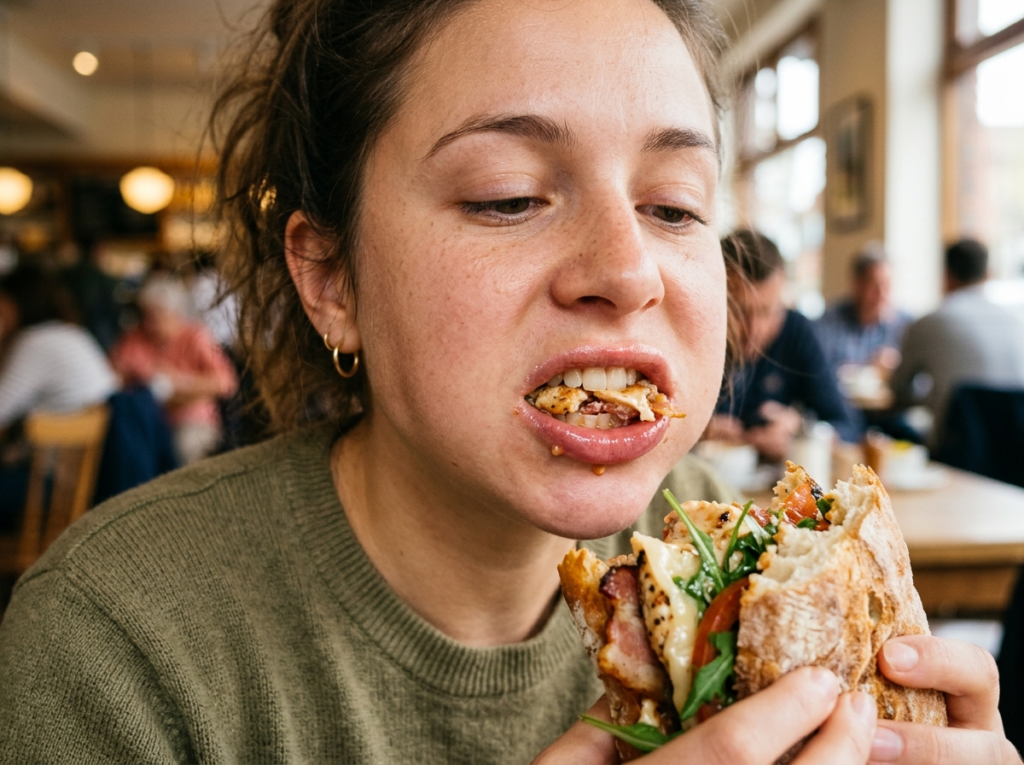
You’re sitting at a nice restaurant. The menu looks gorgeous. And then you see it — a dish name that looks like someone fell asleep on a keyboard. You want to order it, but you don’t want to butcher the pronunciation in front of your date, your friends, or that slightly intimidating server. So you panic-order the burger instead.
Sound familiar? You’re not alone. The culinary world is packed with dishes, ingredients, and techniques that are genuinely hard to say out loud. Some come from French, some from Japanese, some from languages most of us have never studied. And here’s the thing — the food behind those tongue-twisting names is often absolutely worth trying. You just need a little confidence to get the words out of your mouth before the food goes in.
That’s what this piece is all about. We’re going to walk through some of the most notoriously tricky food names, break down how to actually say them, and — more importantly — talk about what they are and why they matter. No judgment. No food snobbery. Just a friend helping you feel at home in any kitchen or restaurant.
Why Do So Many Foods Have Complicated Names?
Before we get into specific words, it helps to understand why food vocabulary can feel so intimidating.
Cooking, as a formal profession, was largely codified in France. Auguste Escoffier, the legendary French chef who organized the modern professional kitchen in the late 1800s, wrote his techniques and recipes in French. That tradition stuck. Culinary schools around the world still teach French terminology as the foundation, which means even an American chef in Ohio might describe a sauce using words that sound like they belong in a Parisian café.
But it’s not just French. As global cuisines have earned the respect and spotlight they deserve, words from Japanese, Italian, Spanish, Korean, Vietnamese, and dozens of other languages have entered everyday food conversations. Think about how casually we say “ramen” or “tacos” now — those were once unfamiliar too.
The tricky part is that English speakers tend to read words phonetically based on English rules. And English rules don’t apply to French nasalized vowels or Japanese vowel pairings. So the disconnect isn’t about intelligence — it’s about exposure. The more you hear and say these words, the more natural they become. Just like “croissant” probably felt weird the first time you said it, but now it rolls off the tongue without a second thought. (Though if you want to explore how even the croissant itself has become a source of debate, the internet’s croissant obsession is a fascinating rabbit hole.)
The French Words That Trip Everyone Up
French culinary terms are the biggest offenders, so let’s start here.
Bouillabaisse — This Provençal fish stew looks absolutely terrifying on paper. Say it like this: boo-yah-BESS. Three syllables once you stop overthinking it. The dish itself is a rustic fisherman’s stew from Marseille, traditionally made with whatever the day’s catch was — rockfish, shellfish, aromatics, saffron, and a brothy tomato base. It’s humble food with a fancy name, which honestly describes half of French cooking.
Charcuterie — The word that launched a thousand Instagram boards. It’s shar-KOO-tuh-ree, not “char-cooter-ee” or “char-cue-terry.” Charcuterie refers specifically to prepared meat products — think pâtés, terrines, cured sausages, and rillettes. That beautiful board you assemble with cheese and crackers and honey? Technically, calling it a “charcuterie board” is only accurate if it’s mostly meat. But language evolves, and most people now use the term for any curated spread. Nobody’s going to correct you at a party. And if they do, find better parties.
Mise en place — If you’ve ever watched a cooking show, you’ve heard this one. It’s MEEZ on plahs, and it means “everything in its place.” It’s the chef’s practice of prepping and organizing all ingredients before cooking starts. This concept alone can transform how you cook at home. Getting your small home kitchen organized like a pro makes mise en place way more practical, even in tight spaces.
Vichyssoise — A chilled potato and leek soup that sounds like a secret society password. It’s vish-ee-SWAHZ. Despite the French name, it was actually popularized by a French chef working in New York City in the early 1900s. Cold soup throws some people off, but on a hot summer day, a well-made vichyssoise is silky, elegant, and refreshing.
Quinoa — Wait, that’s not French. But it trips people up constantly, so it deserves a mention. It’s KEEN-wah, from the Quechua language of South America. Not “kwin-oh-ah.” This one has become so mainstream that most people have heard the correct pronunciation by now, but you’d be surprised how often it still comes up.
Consommé — A perfectly clarified broth that’s crystal clear and deeply flavored. Say kon-soh-MAY. Making a proper consommé is one of those culinary feats that separates a skilled cook from a casual one — it requires a raft of egg whites, ground meat, and careful simmering to pull every impurity out of the stock. If you’re curious about the process, learning how to make consommé is a rewarding challenge.
Italian Words We All Pretend to Know
Italian pronunciation is actually more intuitive than French once you learn a few rules. Vowels are consistent: A sounds like “ah,” E like “eh,” I like “ee,” O like “oh,” and U like “oo.” Double consonants get a slightly longer emphasis. That said, a few words still cause problems.
Gnocchi — This one is almost universally mispronounced. It’s NYOH-kee, not “no-chee” or “guh-notch-ee.” The “gn” in Italian makes a “ny” sound, like the “ñ” in Spanish. These little potato dumplings are pillowy when done right and gummy when done wrong. The difference usually comes down to not overworking the dough.
Bruschetta — Here’s where it gets spicy. Most English speakers say “broo-SHET-uh,” but in Italian, the “ch” makes a hard K sound. So it’s broo-SKET-tah. Will anyone actually care if you say it the English way? Probably not. But knowing the correct pronunciation is a fun flex at dinner.
Mascarpone — It’s mas-kar-POH-neh, not “mars-capone” (that’s Al Pacino’s character in a different story entirely). This rich, creamy Italian cheese is essential for tiramisu, and it’s also wonderful spread on toast with a little honey and fruit.
Prosciutto — Pro-SHOO-toh. The “sci” combination in Italian makes a “sh” sound. This dry-cured ham from Italy — particularly Prosciutto di Parma and Prosciutto di San Daniele — is one of those ingredients that needs nothing more than a good slice and maybe a piece of melon beside it.
The beauty of Italian food vocabulary is that it’s deeply tied to place and tradition. A Ragù Bolognese isn’t just a meat sauce — it’s a specific preparation from Bologna with specific ingredients and techniques. The history of Italian pasta tells a story of regional identity, trade routes, and resourcefulness that makes every bowl more interesting once you know it.
Asian Cuisine: Where Pronunciation Gets Really Interesting
Asian food names often present a double challenge — unfamiliar sounds and unfamiliar writing systems. But with a little practice, these become second nature.
Pho — Vietnam’s beloved noodle soup is fuh, not “foe.” One syllable. The diacritical mark over the “o” in Vietnamese changes the vowel sound entirely. A good bowl of pho is built on a broth that’s been simmered for hours with charred onion, ginger, star anise, and cinnamon. It’s simple and profoundly comforting.
Bánh mì — The Vietnamese sandwich that has taken over the food world is bahn mee. The bread itself — crusty, airy, and lighter than a French baguette — is a product of French colonial influence on Vietnamese cuisine. What goes inside varies, but the classic combination of pâté, cold cuts, pickled daikon and carrot, cilantro, and jalapeño is hard to beat.
Gyoza — Japanese dumplings pronounced gee-YOH-zah. These pan-fried beauties with their crispy bottoms and juicy pork filling are actually descended from Chinese jiaozi — and yes, that word (jow-zuh) is worth knowing too.
Tzatziki — Okay, this one is Greek, not Asian. But it’s so commonly mispronounced that it belongs in any conversation about tricky food words. It’s tsah-TSEE-kee. That opening “tz” sound doesn’t exist naturally in English, which is why people stumble. This yogurt-cucumber-garlic sauce is a staple of Greek cuisine and goes with practically everything grilled.
Worcestershire — And while we’re at it, this English word might be the single most mangled food term on Earth. It’s WOOS-tuh-shur, or even just WOOS-tuh-sher. Three syllables, not five. The sauce itself — a fermented condiment from the English city of Worcester — has been confusing people since it was first bottled in the 1830s.
Spanish and Latin American Terms Worth Knowing
With Mexican, Spanish, and broader Latin American cuisines becoming an ever-larger part of how we eat, a handful of terms deserve attention.
Mole — Not the burrowing animal. MOH-leh. This complex Mexican sauce — there are dozens of varieties — can involve chiles, chocolate, nuts, seeds, spices, and hours of patient preparation. Mole negro from Oaxaca is considered one of the most elaborate sauces in all of world cuisine.
Elote — Grilled Mexican street corn is eh-LOH-teh. Slathered in mayo, cotija cheese, chili powder, and lime, it’s one of those foods that makes you wonder why anyone eats plain corn on the cob.
Chipotle — Chih-POHT-leh. Four syllables. Not “chi-POL-tay” and definitely not “chi-POTL.” A chipotle is simply a smoke-dried jalapeño pepper. The fast-food chain has helped with awareness, but the mispronunciations persist.
If Latin American food culture excites you — and it should — exploring breakfast traditions in Mexico City’s Roma Norte neighborhood or picking up one of these essential Mexican cookbooks will deepen your appreciation enormously.
Beyond Pronunciation: Why the Words Actually Matter
Here’s something that doesn’t get talked about enough. Learning to say food names correctly isn’t just about avoiding embarrassment. It’s a form of respect.
Every dish name carries history. “Bouillabaisse” comes from the Occitan words for “boil” and “lower” — a reference to how the stew is cooked. “Mole” comes from the Nahuatl word “molli,” meaning sauce. “Dim sum” translates roughly to “touch the heart” in Cantonese. When you take the time to learn these words properly, you’re acknowledging the culture and the people who created these foods.
That doesn’t mean you need to speak perfect French or Japanese. It means making an honest effort. Servers at restaurants genuinely appreciate it. Home cooks from other cultures appreciate it. And honestly, you’ll appreciate it because food tastes a little better when you understand what you’re eating and where it came from.
There’s a reason food brings people together across every kind of boundary — language, geography, background. The unifying power of a shared meal is something almost everyone has felt at some point. Learning the words is just another way of showing up to that table with intention.
Tricks for Remembering Tough Pronunciations
So how do you actually get better at this? A few approaches work really well.
Listen before you read. Our brains are wired to process spoken language faster than written language. Before you try to sound out an unfamiliar food word, search for an audio pronunciation online. YouTube, Forvo.com, and even Google’s built-in pronunciation tool are your friends here.
Break it into chunks. Most intimidating food words are just two or three smaller sounds stuck together. “Bouillabaisse” looks scary until you split it into “boo-yah-bess.” “Worcestershire” is just “woos-tuh-shur.” Chunk it, practice each piece, then string them together.
Say it out loud. Repeatedly. In your car, in your kitchen, in the shower. Your mouth muscles need to practice the physical shapes of unfamiliar sounds just like your hands need to practice proper knife skills. It’s muscle memory.
Don’t be afraid to ask. If you’re at a restaurant and you don’t know how to say something, ask your server. A simple “I’d love to try this — how do you pronounce it?” is charming, not embarrassing. Most people in the food industry would rather help you than judge you.
Pro Tip: Keep a running list on your phone of new food words you encounter. Add the phonetic pronunciation next to each one. Review it before you go out to eat. It sounds nerdy, and it is. But it works.
Words You Probably Already Know (But Might Be Saying Wrong)
Sometimes the most common words are the ones we’ve been mispronouncing for years. A quick reality check on a few everyday terms:
Espresso — It’s es-PRESS-oh, not “expresso.” There’s no X. This gets under baristas’ skin more than you’d think.
Açaí — Ah-sah-EE. Three syllables. The “ç” in Portuguese makes an S sound, and the accent over the I tells you that’s where the emphasis falls.
Croissant — In French, it’s closer to kwah-SAHN with a very soft, barely-there final T. The English pronunciation kruh-SAHNT is fine in everyday conversation, but knowing the French version earns you nods from bakers.
Turmeric — This one surprises people. It’s TUR-muh-rik, with three syllables. That first R is there, even though many people skip right over it and say “too-meric.”
Hors d’oeuvres — Possibly the most ridiculous-looking word in all of food. It’s or-DURVZ. Those pre-dinner appetizer bites have been tripping up English speakers for centuries, and honestly, most people just avoid saying the word entirely and call them “appetizers” instead. No shame in that game.
How to Handle a Menu You Can’t Read
Let’s get practical for a moment. You’re at a restaurant. The menu is in a language you don’t speak, or it’s full of culinary terms you’ve never seen. What do you do?
Don’t fake it. Seriously. Confidently mispronouncing something doesn’t make you look worldly — it usually just confuses the server. Instead, point at the menu and say, “I’m interested in this. Can you tell me about it?” You’ll get the pronunciation and a description of the dish, which is way more useful.
If you’re dining at a place that specializes in a cuisine you’re unfamiliar with, spend five minutes beforehand looking up common terms. Going to a Basque restaurant? Knowing that “pintxos” is PEEN-chohs and “txakoli” is chah-koh-LEE goes a long way. A culinary trip through Basque country might not be in your immediate plans, but understanding the vocabulary makes even a local Basque-inspired menu feel accessible.
At a Japanese restaurant, knowing that “omakase” (oh-mah-KAH-seh) means “I’ll leave it up to you” — essentially a chef’s choice tasting menu — can open doors to some of the best dining experiences of your life.
The point is: a little preparation goes a long way, and nobody expects perfection.
FAQ
What’s the hardest food word to pronounce in English?
Most people agree that “Worcestershire” takes the crown. It’s an English word that even native English speakers can’t agree on. WOOS-tuh-shur is the accepted pronunciation, but you’ll hear dozens of creative attempts at restaurants and grocery stores every single day.
Does pronunciation really matter when ordering food?
You won’t get kicked out of a restaurant for mispronouncing “gnocchi.” But making an effort shows respect for the cuisine and often leads to better interactions with staff. Servers and chefs notice when someone cares enough to try, and that can translate into better recommendations and a more enjoyable meal.
How can I learn food pronunciations from other languages?
Forvo.com is a fantastic free resource where native speakers record pronunciations of words from almost every language. YouTube cooking channels from specific cultures are another great option — you hear the words used naturally in context, which makes them stick. Cooking shows like those on NHK World (for Japanese) or Canal Cocina (for Spanish) are also surprisingly helpful.
Is it rude to use anglicized pronunciations?
Not rude, but it depends on context. Saying “kruh-SAHNT” instead of the French “kwah-SAHN” in an American coffee shop is perfectly normal. Using a heavily anglicized version of a word at a traditional restaurant of that cuisine might feel a little off. The safest approach is always to make a genuine effort and not worry about being perfect.
One Last Bite
Food has always been one of humanity’s most universal languages, but the actual languages food comes wrapped in can feel like a barrier. They don’t have to be.
Every mispronounced word is just a word you haven’t practiced yet. Every confusing menu is an invitation to learn something new. And every time you try — even imperfectly — you’re expanding not just your vocabulary but your world.
So next time you see a dish name that looks like it needs its own passport, don’t skip over it. Sound it out. Ask someone. Look it up. And then order it, because the food behind those complicated names is almost always worth the effort of getting the words right.
Your mouth can handle it — both the word and the food.