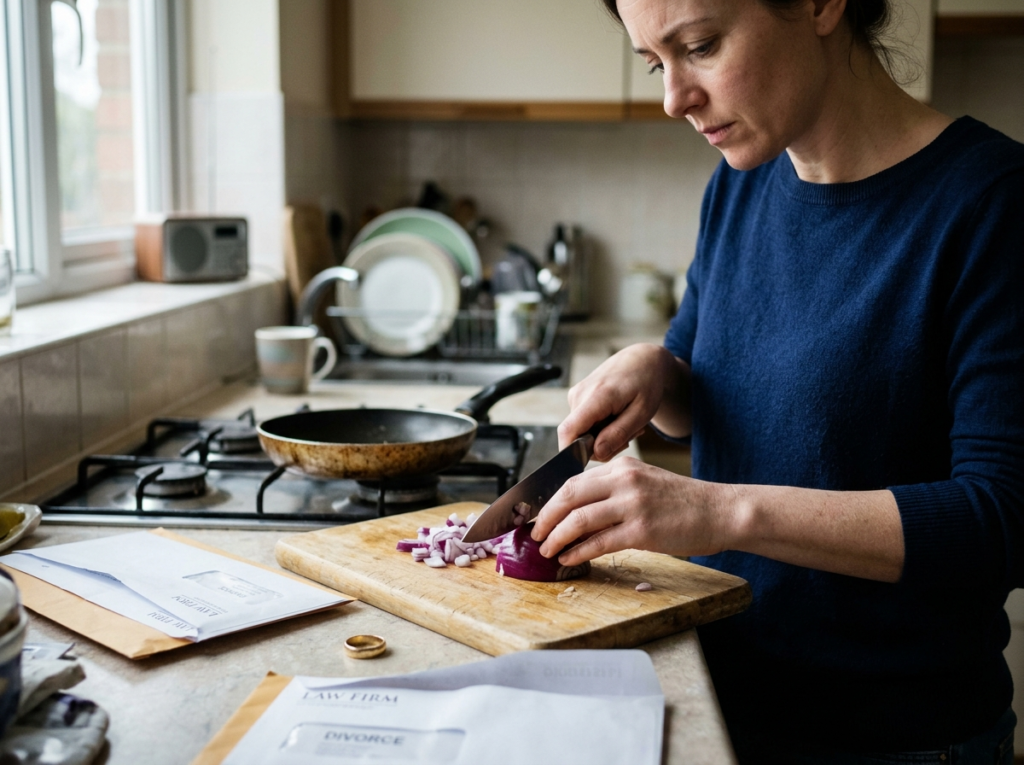
A 2021 study from the Journal of Positive Psychology found that people who engage in small creative tasks — like cooking a meal from scratch — report feeling up to 25% more positive and purposeful the next day. Now imagine you’re going through a divorce. Your world has cracked open. Routines are shattered, the house feels different, and even deciding what to eat for dinner can feel like climbing a mountain. Sounds dramatic? Ask anyone who’s been through it.
Here’s something nobody tells you: the kitchen can quietly become your most trusted space during one of life’s hardest chapters. Not because cooking fixes everything. It doesn’t. But because the simple act of chopping, stirring, and feeding yourself — really feeding yourself — puts something back together inside you that divorce tried to take apart.
This isn’t a fluffy self-help pitch. This is real talk about what happens when your marriage ends and you have to figure out how to cook for one (or for your kids on your custody nights), how to stop associating certain recipes with your ex, and how to use your kitchen as a quiet place to rebuild.
Let’s get into it.
Why Divorce Turns Your Relationship with Food Upside Down
You probably don’t expect your eating habits to fall apart when your marriage does. But they almost always do.
During a divorce, your body is running on stress hormones — cortisol and adrenaline are elevated for weeks or months. That does real things to your appetite. Some people stop eating almost entirely. Others find themselves standing in front of the fridge at 2 AM, eating cold leftovers they don’t even taste. Neither pattern is unusual, and neither one means you’re falling apart. It means you’re human, going through something genuinely hard.
There’s also the identity piece. If you were the one who cooked in your marriage, the kitchen might now feel like a stage where you performed for an audience that left. Every pan, every spice blend, every recipe you perfected for date nights — it all carries memory. And memory, during divorce, can sting.
On the flip side, if your spouse did most of the cooking, you might be standing in your new apartment staring at an empty fridge thinking, “I literally don’t know how to feed myself.” That’s more common than you’d think, and it’s nothing to feel ashamed about.
Quick fact: According to a 2023 survey by the American Psychological Association, divorce consistently ranks in the top five most stressful life events, right alongside the death of a loved one. Your eating habits disrupting during this time isn’t weakness — it’s a predictable stress response.
The Moment Cooking Becomes Something Bigger Than Food
Here’s where things get interesting. At some point during or after a divorce, many people have a small, quiet turning point in the kitchen. It doesn’t look dramatic. There’s no movie montage. It’s more like this:
You’re tired of takeout. Tired of frozen meals. Tired of feeling like you can’t do basic things for yourself. So you decide to cook something. Maybe it’s scrambled eggs. Maybe it’s pasta with garlic and olive oil. Nothing fancy. But you make it yourself, you sit down, and you eat it off a real plate.
And something shifts.
That shift is about agency. Cooking gives you a tiny pocket of control in a season where everything feels out of your hands. You can’t control the custody schedule, the legal fees, or what your ex says about you. But you can decide what goes into your body tonight. You can choose flavors, textures, and portions. You can nourish yourself on purpose.
Psychologists actually have a term for this — it’s called “behavioral activation.” It means doing small, purposeful activities to counteract the withdrawal and numbness that come with depression or grief. Cooking fits perfectly because it engages your senses, demands your attention, and produces a tangible result you can see, smell, and taste.
You don’t need to make anything impressive. A well-seasoned bowl of rice and beans counts. A piece of toast with good butter and flaky salt counts. The act of choosing to cook for yourself — especially when you feel like you’re barely holding it together — is a quiet act of self-respect.
Cooking for One: It’s Not Sad, It’s a Skill
Let’s kill this idea right now: cooking for one person is not pathetic. TV shows and social media have hammered this image of the lonely divorcee eating cereal over the sink, and it’s done real damage. Cooking for one is actually a legitimate skill, and honestly, it can be incredibly freeing once you get the hang of it.
Think about it. For years, you may have cooked based on someone else’s preferences. Maybe your ex hated mushrooms, so you never used them. Maybe they wanted meat and potatoes every night. Maybe you compromised on restaurants, on meal plans, on grocery budgets — for years.
Now? You get to cook exactly what you want.
That realization hits different people at different times. For some, it’s immediate relief. For others, it takes months before the freedom stops feeling like loneliness and starts feeling like possibility.
Pro Tip: Start with one dish you always wanted to make but never did during your marriage. Maybe it’s a spicy Thai curry your ex couldn’t handle. Maybe it’s a slow Sunday brunch that your old schedule never allowed. Cook it for yourself, without apology.
If your knife skills are rusty or you never really learned to handle a chef’s knife properly, that’s a perfect place to start rebuilding confidence in the kitchen. Learning to dice an onion well — evenly, quickly, without tears — sounds small, but it builds a foundation for everything else.
And about portions: cooking for one doesn’t mean you have to scale every recipe down to a single serving. Cook a full recipe, eat one portion tonight, and pack the rest into containers. Future you — the version of you who comes home exhausted from work and doesn’t want to think about dinner — will be grateful.
When Recipes Carry Memories You Didn’t Ask For
This is the part nobody warns you about. You’ll be cooking something completely ordinary, and a memory will hit you like a truck.
Maybe it’s the soup you always made on snow days when you were still married. Maybe it’s the birthday cake recipe you used every year for your ex. Maybe it’s just the smell of garlic in olive oil, because that’s what the kitchen smelled like on the night you knew it was over.
Food and memory are wired together in the brain. The olfactory system — your sense of smell — connects directly to the amygdala and hippocampus, the parts of the brain responsible for emotion and memory. That’s not poetry; it’s neuroscience. A single scent can teleport you back years in a fraction of a second.
So what do you do with recipes that hurt?
You have two options, and both are valid. You can retire them — put those recipes in a drawer, digitally or literally, and leave them alone for a while. There’s no rule that says you have to keep making your ex’s favorite lasagna. Let it go. It doesn’t mean you’re erasing your history; it means you’re giving yourself space to heal.
Or you can reclaim them. Take that recipe and change it. Add a new ingredient. Use a different technique. Make it yours again. A lot of people find this approach almost ceremonial — like rewriting a chapter of your story so the ending belongs to you.
If you’re looking for entirely new culinary inspiration to fill the gap, exploring cuisines from places you’ve never been can open up flavors you never associated with your old life. Basque food, Mexican street food, Sicilian pasta — these can become your new taste memories without any emotional baggage attached.
Teaching Yourself to Cook After Divorce (When You Never Really Knew How)
Some people come out of a marriage realizing they relied on their partner for most meals. There’s no judgment here. Relationships involve division of labor, and sometimes that means one person handles the kitchen while the other handles other parts of life.
But now you’re on your own, and you need to eat.
The good news: you don’t need to become a chef. You need about five to seven reliable meals you can rotate through on weeknights, a basic understanding of how heat and seasoning work, and the willingness to mess up a few times without spiraling.
Start with the absolute basics. Learn how to:
- Cook rice or pasta without burning it
- Roast vegetables at high heat with oil and salt
- Pan-sear a piece of chicken or fish until it’s actually done in the middle
- Make a simple vinaigrette (three parts oil, one part acid, salt, done)
- Scramble or fry an egg properly
That short list covers probably 80% of weeknight dinners. You can mix and match those elements into dozens of different meals. Roasted broccoli with rice and a fried egg. Pan-seared chicken with a salad dressed in homemade vinaigrette. It’s not gourmet, but it’s real food, made by your hands, and it’ll keep you nourished.
Understanding a few chef tricks — like seasoning in layers, tasting as you cook, and letting your pan get hot before you add food — will instantly make your cooking better than most beginners. You don’t need culinary school. You need a few principles and some practice.
And if your kitchen is small (newly-single apartments aren’t known for generous counter space), learning how to organize a small kitchen efficiently will save you frustration every single day.
Cooking With Your Kids After Divorce
If you have children, cooking takes on another dimension entirely.
On your custody nights, the kitchen becomes more than a place to make food. It becomes a place to connect. Kids — even teenagers who pretend they don’t care about anything — respond to the routine and warmth of cooking together. It’s structured enough to avoid awkwardness but relaxed enough to let real conversations happen.
You don’t need to plan elaborate meals. In fact, simpler is usually better with kids in the kitchen. Let them wash vegetables. Let them stir the sauce. Let them crack eggs, even if it means fishing out shell pieces. The point isn’t perfection; it’s presence.
Something important to watch for: don’t use cooking as a competition with your ex. It’s tempting, especially in the early stages of divorce, to try to be the “fun food parent” — the one who makes homemade pizza and bakes cookies every weekend. That impulse usually comes from guilt, and kids can sense it. Just cook normal food, eat together, and let the experience speak for itself.
Did you know? A 2022 study from the University of Montreal found that children who regularly cook with a parent show higher self-esteem and better emotional regulation. During divorce, when kids are navigating their own grief and confusion, that kind of stability matters enormously.
If you want to introduce your kids to cooking in a way that feels fun rather than forced, something like making homemade pickles is a surprisingly great activity. It’s hands-on, a little bit science-experiment-y, and they get to see the results days later when the pickles are ready.
The Social Side: Cooking as a Bridge Back to People
Divorce can be isolating. Friends sometimes take sides. Couples you used to hang out with don’t know how to include a single person. Your social calendar, which was probably tied to your marriage in ways you didn’t realize, might suddenly look very empty.
Cooking can quietly rebuild those connections.
Inviting a friend over for dinner — even a simple one — is an act of vulnerability that people respond to. You’re saying, “I’m still here. I’m rebuilding. Come sit at my table.” That carries weight.
You don’t need to host a dinner party. You don’t need matching plates or cloth napkins. Throw some chicken on a sheet pan with whatever vegetables look good, open a bottle of malbec you’ve been curious about, and sit across from someone who cares about you. That’s enough.
Cooking classes are another surprisingly effective way to meet people post-divorce. They give you a structured social environment with a built-in activity, so there’s less of that painful small talk pressure. You chop, you cook, you eat together, and conversation happens naturally.
The unifying power of food isn’t a cliché — it’s a real, observable phenomenon. Anthropologists have studied communal eating for decades, and the data is consistent: sharing food creates trust, lowers social barriers, and strengthens bonds. After divorce, you need exactly those things.
What About Dating Again? Yes, Cooking Plays a Role
Eventually — maybe months from now, maybe a year — you might start dating again. And here’s a truth that dating apps won’t tell you: being able to cook well is genuinely attractive. Not in a performative, Instagram-influencer way. In a quiet, confident, “I can take care of myself and I’m inviting you into that” way.
Cooking a meal for a new person is intimate without being overwhelming. It shows effort without being over-the-top. It creates a relaxed setting where real conversation can happen — something a loud restaurant can’t always offer.
But here’s a warning: don’t cook your ex’s recipes for your new partner. Seriously. It sounds obvious, but people do it unconsciously because those are the recipes they know best. Make something new. Explore a different cuisine you never tried during your marriage. Let this chapter have its own flavors.
Practical Tips for Getting Through the Hard Nights
Some nights, cooking feels impossible. You’re emotionally drained. The kitchen is a mess. You haven’t gone grocery shopping. You just want to lie on the couch and not think about anything.
Those nights are real, and they’re okay. But here are a few strategies that people who’ve been through it say actually help:
Keep a “zero effort” shelf. Stock your pantry with a few things that require almost no cooking but still count as feeding yourself properly. Good bread, quality cheese, canned beans, eggs, olive oil, and salt. With those six things, you can always make a real meal in under ten minutes.
Batch cook on your good days. When you have energy — and those days will come and go unpredictably during divorce — cook a big pot of something. Soup, chili, a classic consommé if you’re feeling ambitious. Portion it out and freeze it. On your worst days, you’ll have homemade food waiting in the freezer instead of another sad delivery order.
Don’t skip breakfast. It’s tempting to skip meals when you’re stressed. But breakfast doesn’t have to feel like a burden. Two eggs and a piece of toast takes four minutes. Greek yogurt with fruit takes zero. Eating something in the morning gives your brain fuel to handle the emotional weight of the day.
Get one good pan and one good knife. If you moved out and left the kitchen stuff behind, you don’t need to buy a whole set of everything. One solid cast iron pan and one sharp chef’s knife will handle 90% of your cooking. Add a pot for boiling water and you’re set.
FAQ
Can cooking actually help with depression during divorce?
Cooking isn’t a substitute for therapy or medication if you need them. But research supports that engaging in structured, sensory activities like cooking can reduce symptoms of mild to moderate depression. The combination of focus, creativity, and the reward of a finished meal creates a positive feedback loop in the brain. If you’re struggling with severe depression, please talk to a mental health professional — cooking can complement treatment, but it shouldn’t replace it.
What should I cook if I’ve never cooked before and I’m suddenly living alone?
Start with eggs. They’re cheap, fast, versatile, and almost impossible to ruin completely. Learn to scramble them, fry them, and boil them. From there, add pasta with jarred sauce, roasted vegetables, and simple pan-cooked proteins like chicken thighs or salmon. Within a month of cooking these basics, you’ll feel noticeably more comfortable in the kitchen.
How do I stop associating certain foods with my ex?
Give yourself permission to take a break from those foods. You’re not obligated to keep cooking meals that make you emotional. Over time, the associations will soften. Some people find it helpful to deliberately create new “signature dishes” that belong only to their post-divorce life — recipes they discovered on their own, seasoned the way they like, with no connection to the past.
Is it weird to take a cooking class alone after divorce?
Not at all. Cooking classes are full of solo participants — people who are learning for the first time, people who want to sharpen their skills, and yes, people who are rebuilding after a major life change. It’s one of the most naturally social solo activities you can do, and instructors are used to helping beginners feel welcome.
One Last Thing
Divorce takes a lot from you. It takes your routines, your confidence, your sense of who you are. It rearranges your daily life in ways you couldn’t have predicted, right down to what you eat and how you eat it.
But your kitchen is still there. The stove still works. The water still boils. And every time you stand at that counter and decide to make something — even something imperfect, even something burnt around the edges — you’re telling yourself that you’re worth the effort.
You don’t need to become a home chef. You don’t need to post your meals on social media or impress anyone. You just need to feed yourself with intention, one meal at a time. The rest — the healing, the rebuilding, the slow return of joy — has a funny way of following.
Start tonight. Pick one recipe. Keep it simple. And eat it at the table, not standing over the sink.
You’ve got this.